
Athletics Injury Update: Shea Langeliers, Mark Leiter Jr. Set for Surgery
A brutal break for a rebuilding club already short on margin.
 Zane Miller5 min read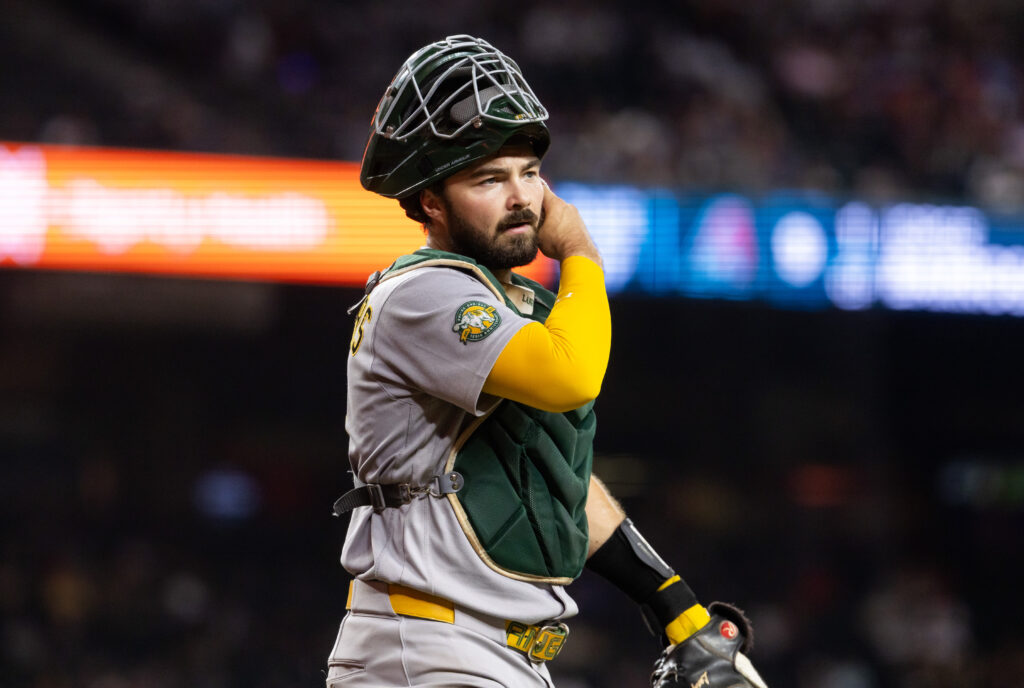
The Athletics just took a double hit that lands exactly where a rebuilding roster is most vulnerable: the catcher who drives the middle of the lineup and the arm the bullpen was trying to lean on. Shea Langeliers is set for surgery on a torn meniscus in his right knee, and Mark Leiter Jr. is headed for an operation of his own. That is not noise. That is depth evaporating in real time.
For a club already living in the margin, losing a catcher like Langeliers is a real problem. Catching is never just catching. It is game-planning, pitch-calling, handling a staff, absorbing foul tips, and still trying to carry offense every few nights. When the guy behind the plate is also one of the few bats opponents have to respect, the entire lineup structure shifts. The A’s do not have the luxury of shrugging this off and just plugging in another middle-order threat.
Langeliers was one of the few stable pieces
Langeliers has become one of the more recognizable names on a roster that has spent years trying to find a new identity. He was not just serviceable. He mattered. He gave the A’s a catcher with power, presence, and enough everyday reliability to make the rest of the lineup feel less like a lottery ticket.
That is what makes this sting. Catchers are already a scarce commodity. Catchers who can drive the ball are scarcer. Catchers who can stay in the lineup and help a young pitching staff? Those are the guys front offices build around, not replace on a whim.
The knee piece matters too. Meniscus injuries can run the spectrum, but once surgery is involved, the calendar starts talking loud. Even if the recovery window does not fully wipe out the season, it can blow up rhythm, timing, and the kind of lower-half stability a catcher needs every single night. That is where offense goes to die first.
The bullpen loses another inning eater
Leiter’s situation might not get the same attention, but bullpens are built on accumulation. Someone has to take the seventh, the eighth, the random fourth-inning mess when the starter exits early and the game is already wobbling. A reliever goes down and the effects ripple fast.
This is where teams like the A’s get punished for roster thinness. Good clubs can absorb a bullpen injury because they have three more arms stashed in Triple-A or sitting in long relief. Rebuilding clubs do not have that same inventory. They are constantly shuffling, constantly looking for a live arm, constantly asking one guy to cover for another guy’s absence.
The result is simple: more stress on the rest of the staff, more exposure for replacement-level innings, and more nights where a game that should stay close turns into a slow bleed.
The A’s are not just losing players. They are losing the little stability a rebuilding club needs to keep from unraveling.
If you want the larger context, this is the same kind of roster pressure that has haunted teams at the bottom of the standings for years. A rebuilding team can survive bad luck. It cannot survive a steady stream of bad luck at the exact positions where it has the fewest alternatives.
Why this matters more for Oakland than for a contender
On a contender, a Langeliers injury would force a call-up and maybe a temporary offensive dip. The machine would keep rolling. On this roster, the absence is louder because the replacements are not just unknowns. They are often young, unproven, or stretched beyond the role they were originally given.
That is the distinction executives think about when they build these clubs. It is not only about talent. It is about redundancy. The Athletics have spent enough time in transition that every injury exposes the same issue: there is very little insulation.
And this is where the trade market math gets interesting. A catcher with pop and a reliever with experience both carry different kinds of value, but once surgery enters the conversation, teams start adjusting their planning fast. If the timeline gets long, the focus shifts from trying to salvage the current season to protecting whatever future value remains.
I’ve seen this movie enough times to know what comes next. A team like this does not usually answer injuries with one big move. It answers them with a dozen smaller ones — a waiver claim, a veteran minor-league signing, a depth trade that barely registers outside the building. That is how front offices patch holes when the payroll and the standings both tell them to be careful.
The front office is staring at the same old equation
Here’s the part people outside the room miss: injuries like this do not just change the roster. They change the tone of every conversation in the building. Do you chase short-term catching help? Do you let the backup run with it and save the reps for a younger bat? Do you keep patching the bullpen or accept some ugly innings and hope the development picture holds?
That is the game for a team in this spot. Not fantasy. Not optimism. Resource allocation.
And yes, the MLB calendar keeps moving whether the A’s are ready or not. That is what makes these updates so brutal. There is no pause button, no reset week, no soft landing. One injury forces another player up the ladder, and then another, and pretty soon the roster starts looking like a list of temporary fixes.
From a bigger-picture lens, this also reinforces how unforgiving the catcher market has become. Teams talk all winter about offense, defense, framing, versatility, and left-right balance. Then one knee surgery reminds everybody that behind the plate, durability is a skill all by itself.
The A’s can survive this on paper. They cannot pretend it does not matter.
Watch the next roster move closely. When a team starts reacting to injury news this quickly, the season’s priorities usually get exposed.
More from Straight From The Bench
Comments
Join the conversation — sign in to leave a comment.
Sign in to commentRelated Stories
Yankees Trade Rumors: Skubal, Miller, Astros, and Deadline Pressure
The deadline clock is ticking and the Yankees are staring at a market that keeps getting tighter. Tarik Skubal, Miller, Houston, and bad news in the Bronx all point the same way.
Guardians Logan Schmidt Signing: What the Draft Miss Means
The Guardians have one notable draft contract unresolved, and the clock has already done its work. In a system built on leverage, every unsigned pick carries a message.

Kyle Shanahan Injury Update: 49ers, Timeline, and the Cover-Up
Kyle Shanahan’s car accident landed like a hammer, but the delayed disclosure is what has everyone talking. For the 49ers, this is now about trust, timing, and optics.