
Brandon Clarke Death: Grizzlies Forward’s Cause Ruled Overdose
A devastating reminder that the box score never tells the whole story.
 Beatrice Kensington5 min read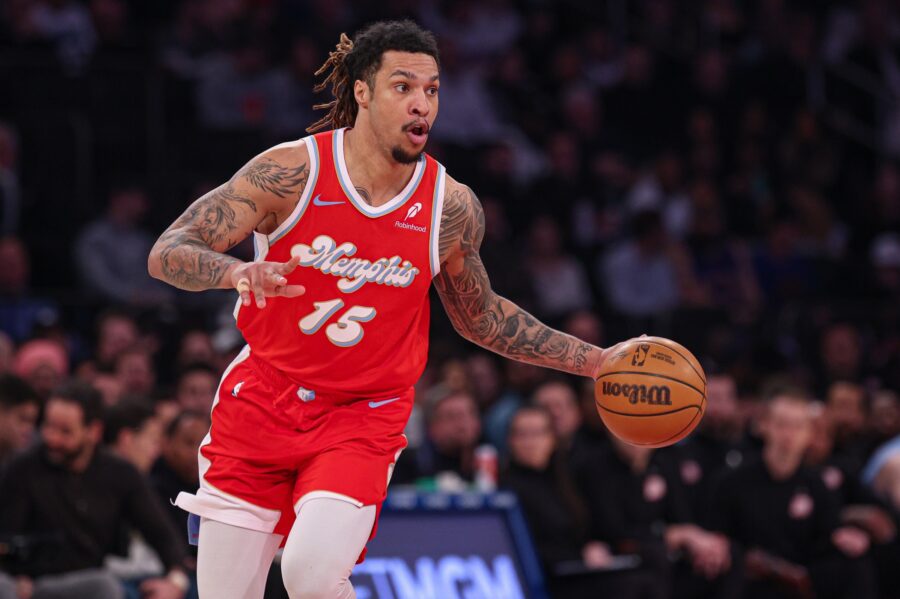
A ruling that turns sorrow into hard reality
The news around Brandon Clarke) arrived with the sterile language of a coroner’s office and the heavy thud of something far less clinical: an accidental overdose of heroin and cocaine. There is no softening that sentence. There is only the fact of it, and the human wreckage left behind.
Clarke was a Memphis Grizzlies forward, a player whose value was never captured entirely by points or rebounds anyway. He made his living in the seams of a game — cutting, finishing, defending, doing the work that keeps a team upright. That same sense of quiet utility makes his death sting in a particular way. Players like Clarke are often the ones teams learn to trust. Fans learn to rely on them. And then, suddenly, the ledger is changed in a way no personnel move can fix.
The medical examiner’s ruling does not invite speculation so much as close it off. That may be its own kind of mercy. Rumor can be cruel in the hours after a death, especially around athletes, whose public lives are often treated like open property. The truth is harsher, but cleaner. Accidental overdose. A phrase that lands with the force of a door shutting.
Memphis loses more than a rotation piece
In basketball terms, the Grizzlies have already had to build, rebuild, and carry on through the familiar churn of modern roster life. But some absences sit differently. Clarke was one of those players who gave a team texture: the hard screens, the second jump, the kind of effort that makes a bench mob feel like a living thing rather than a spreadsheet line.
That matters in Memphis, where identity has always been part basketball, part civic mood. The Grizzlies have long sold grit as a style and a promise. Clarke fit that architecture. He was not the loudest voice, but he helped hold the walls together. Losing that kind of player is not just a basketball problem. It is a reminder that organizations are made of human beings, and human beings are vulnerable in ways the league’s polished stage lights do not show.
This is why the news lands beyond the bounds of Memphis. A franchise can replace a forearm, a pick-and-roll defender, a rim runner. It cannot replace the grief that settles over a locker room when the person who wore the uniform is no longer here.
The league’s oldest opponent is still off the stat sheet
There is a bitter irony in pro sports: the business side knows how to quantify everything except the hazards that matter most. Minutes, usage rate, rim protection, travel load, recovery windows — all of it becomes data. But addiction does not submit to a clean chart, and grief does not obey a schedule.
Teams can scheme against a zone. They cannot scheme against despair.
That is the part the basketball world keeps relearning. The NBA has spent years expanding its language around mental health, wellness, and player support, and it should keep doing so with seriousness rather than ceremonial sympathy. An accidental overdose is not a morality tale. It is a tragedy. And tragedies are often made worse by the stubborn sports culture that still rewards stoicism as if silence were strength.
I have watched this league long enough to know how easily the public turns athletes into symbols before it remembers they are people. We do it with the best of them, and with the most troubled among them. We turn pain into narrative, then act surprised when the narrative breaks. Brandon Clarke should not become a cautionary footnote trotted out for a week and then abandoned to the archives. If the league wants to speak sincerely about care, it has to keep speaking after the cameras move on.
That is not sentiment. It is infrastructure.
What this means for the Grizzlies now
For Memphis, the immediate challenge is emotional before it is competitive. Teams often talk about “next man up” because the phrase is useful, even when it is shallow. But no coach can draw up a play for mourning. The NBA provides the schedule; it does not provide the answer for what a clubhouse does with a loss like this.
There will be memorials. There should be. There will be statements that are careful and gracious. Those, too, have their place. Yet the deeper task will happen out of sight: how teammates speak to one another, how the organization makes room for grief, how the front office and the support staff treat the quiet hours when public attention fades.
If there is a broader lesson here, it is that sports institutions remain behind the curve in understanding how much a player’s private life can shape his public one. We celebrate resilience because it photographs well. We talk about “toughness” because it fits a highlight package. But the realities that undo people are often invisible until they are not. Clarke’s death should push that conversation forward with a seriousness that outlasts the news cycle.
For readers trying to understand the wider context of this moment in the basketball world, the league’s emotional and competitive machinery has been strained by similar stories before, and it will be again. Coverage of the game’s human underbelly has never been optional. It is part of the record. If you want the cleaner edges of the NBA, you need the mess, too.
That is why stories like this sit so close to the bone. They remind us that the game’s bright architecture is built over lives that can fray in private.
The Grizzlies will keep going. The league will keep spinning. But Brandon Clarke’s name will now carry a different kind of silence, one that asks for more than condolences. It asks for memory. It asks for care. And it asks the basketball world to look harder at the people inside the uniforms, before it is too late.
More from Straight From The Bench
Comments
Join the conversation — sign in to leave a comment.
Sign in to commentRelated Stories
WNBA Draft Eligibility: Royce White Sparks New Rule Fight
Royce White’s latest bid aims straight at the WNBA’s eligibility rules, reviving a broader argument about gender, access, and who gets to set the terms of competition.

Kawhi Leonard sponsorship deal: Clippers face fresh scrutiny
Kawhi Leonard and the Clippers are back under the microscope over another alleged no-show sponsorship arrangement. In the NBA, the paperwork can get as important as the box score.
Kawhi Leonard sponsorship deal: Clippers, Daktronics scrutiny mounts
Kawhi Leonard’s alleged undisclosed deal with Daktronics adds another ugly wrinkle to the Clippers’ optics. In the NBA, the paper trail always outlives the press release.