
Chris Olave Saints Extension: New Orleans locks in its WR1
The Saints paid for certainty. That tells you how they view their offense.
 Zane Miller6 min read
Chris Olave is not going anywhere, and the number tells you exactly how the Saints see him. A four-year extension worth $132 million through 2030 is New Orleans planting its flag on a receiver it believes can anchor the offense for the rest of the decade. In a league where teams spend months pretending they can replace elite pass-catching production in bulk, the Saints just chose the cleaner path: keep the difference-maker, pay him early, and stop flirting with risk.
For a franchise that has spent the last few years juggling cap stress, quarterback uncertainty, and a roster that has felt perpetually half-built, this is a real statement. Not a vibes move. Not a token reward. A commitment.
The Saints chose their offensive cornerstone
Olave’s extension is bigger than a contract headline. It’s a roster declaration.
When a team pays a receiver at this level, it is usually saying one of two things: we have our offensive identity, or we are desperate to find one. The Saints are trying to make it the first one. They have spent too much recent time trying to manufacture passing-game answers on the fly, and that is no way to build around a young receiver who wins with route detail, timing, and vertical juice.
New Orleans has seen enough to know Olave belongs in the top tier of building blocks. That matters because the receiver market keeps moving up. Once you decide a player is a core piece, the cost of waiting gets ugly fast. The Saints didn’t wait.
This also sends a very loud message to the rest of the room: Olave is the player they’re willing to shape the offense around, not the player they’re willing to let define a trade market. That part matters. Especially now, with cap management always lurking and every contender pretending it can be “flexible” while quietly choosing favorites.
What this means for the quarterback room
No wideout lives in a vacuum, especially not one as productive and polished as Chris Olave. His extension is also an investment in whoever is throwing him the ball next, and that is where this gets interesting.
The Saints’ quarterback situation has not exactly been a model of long-term certainty. So locking in a receiver like this can be read as a bridge to stability. It can also be read as a hedge against the opposite: if you know the passing game could keep wobbling, you make sure your best weapon is under control and your offense still has a pulse.
That is the executive logic here. Get the premier target secured, then build backward from there.
New Orleans now has a premium receiver in place through 2030, which gives the front office a stronger hand in every other conversation. Draft room. Free agency. Potential trades. Even how they structure the rest of the pass-catching depth chart. When a team has a true WR1, the pressure shifts to everyone else. That includes the quarterback, the play-caller, and the rest of the supporting cast.
The Saints didn’t just pay a receiver. They paid for a cleaner future.
The cap hit is the point, not the panic
Fans will see $132 million and immediately jump to the total. Front offices see something else first: structure, timing, and control.
A long extension on a player like Olave is about locking in value before the market runs ahead of you. The Saints have had to live with enough financial knot-tying over the years that they understand the cost of hesitation. Waiting for a player of this caliber to hit a hotter market is how teams get pushed into worse outcomes and uglier compromises.
That’s why this feels smart even if the price makes people blink. You can debate the exact dollar bands all day. You can’t easily debate what elite receiver play looks like, or how hard it is to find it. The supply is thin. The demand is permanent.
The other piece here is age and trajectory. New Orleans is paying for the part of a receiver’s career where the best ball is usually still ahead if the body holds up. That’s the bet. Not nostalgia. Not past production. Future efficiency.
If you want a broader football context, look at how teams like the NFL keep recalibrating around premium pass-catchers. The league has made it brutally obvious: if you do not have reliable separators who can tilt coverages, you spend Sundays chasing points. The Saints just paid to avoid that trap.
This also says something about the Saints’ timeline
The most telling part of a deal like this is not the star player. It’s the timing.
New Orleans did not wait for a clean, easy summer. They did not play the usual “let’s see how camp goes” game that too often turns into self-inflicted leverage loss. They moved now, which means they believe Olave is central enough to justify the expense and important enough to remove from any possible distraction cycle.
That’s the kind of move teams make when they’re trying to stabilize the building. It doesn’t mean they have every answer. It means they know where one of the answers lives.
And if you’re reading the tea leaves, this pairs naturally with the Saints’ broader roster posture. They’ve already shown they’re willing to shuffle pieces and hunt for efficiency elsewhere, which makes locking in a premier receiver even more important. A top wideout can cover a lot of bad weather. He can’t cover everything, but he can lower the degree of difficulty for everybody else.
If you want the adjacent context, the Saints have also been part of a league-wide conversation about roster prioritization, much like teams navigating deadline pressure in other spots such as the Seattle Mariners trade deadline chatter or the way clubs keep attacking value where it’s hardest to find. Different sport, same executive math: secure the rare piece first.
My read: New Orleans just drew a line
I’ll say it plainly: this is the kind of deal that tells you a front office knows who it wants to be.
I’ve seen enough long-term extensions to know the real signal is not the paper. It’s the confidence behind it. Teams don’t hand out this kind of commitment unless they believe the player is a pillar and the cost of losing him would be worse than the cap headache of keeping him. That is where the Saints are here. They are choosing certainty over theoretical flexibility, and that usually means the evaluation inside the building is stronger than the public one.
I also think this matters because New Orleans has too often looked like a team trying to survive each season instead of shape one. Extensions like this are how that changes. You stop treating your best offensive player like a variable and start treating him like the foundation.
There’s a good chance this deal ages as the kind of move that looks obvious later. Maybe not flashy. Just correct.
The Saints have their receiver. Now the rest of the offense has to catch up.
More from Straight From The Bench
Comments
Join the conversation — sign in to leave a comment.
Sign in to commentRelated Stories
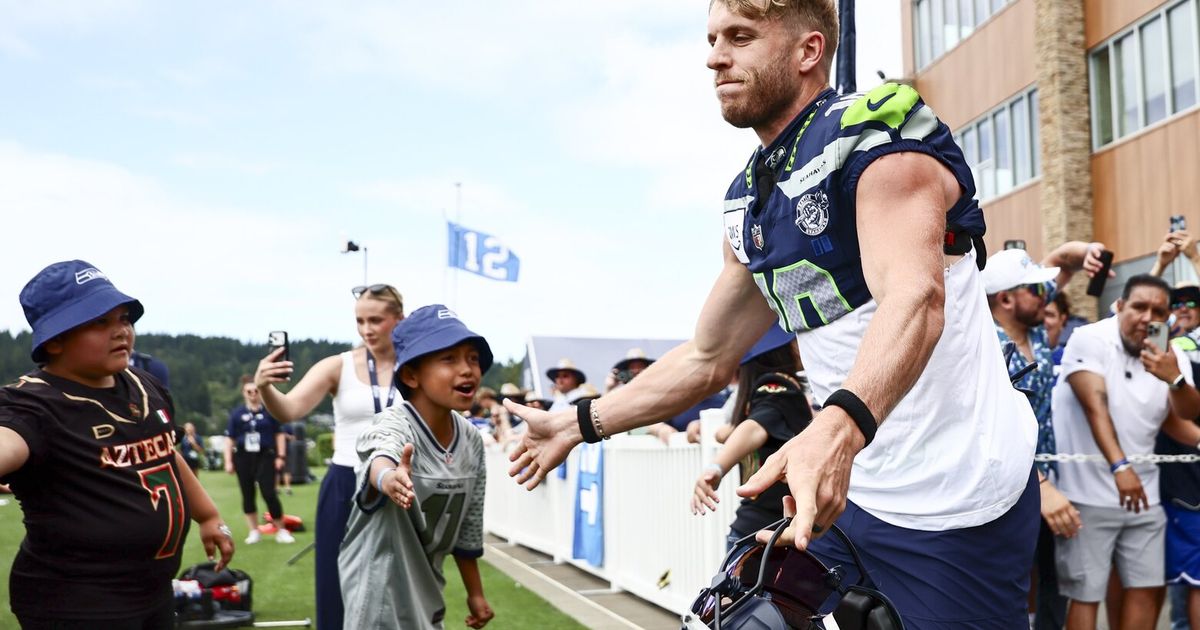
Seahawks Training Camp Pads: First Full Hitting Day After Super Bowl
Seattle finally turned the volume up at the VMAC. Pads came on, the hitting started, and the first real camp tells you a lot about who’s ready.
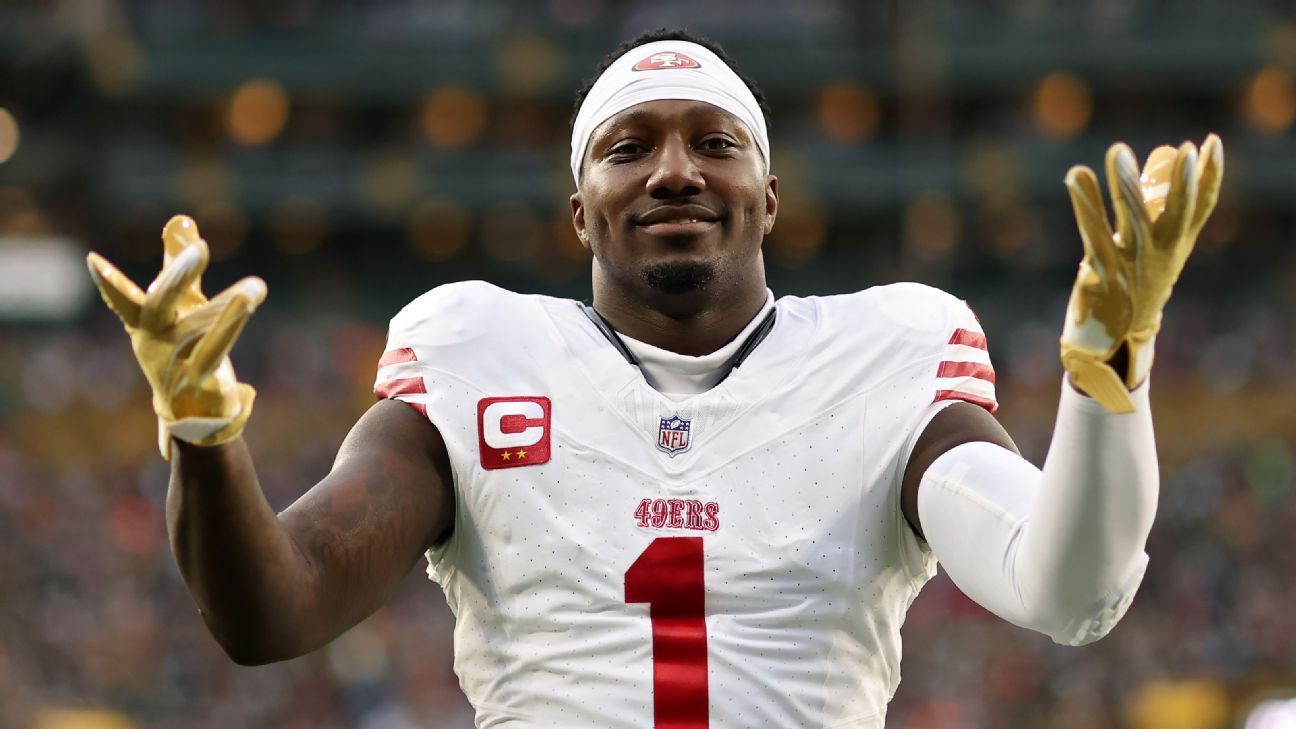
Deebo Samuel returning to 49ers on 1-year deal: what it means
Deebo Samuel is headed back to Santa Clara on a short deal, and the 49ers are choosing continuity over a clean break. That says plenty about where the season may be headed.

Baker Mayfield Contract Update: Bucs Offered Two-Year Deal
The Buccaneers have put a two-year offer on Baker Mayfield’s desk, a signal that Tampa Bay wants continuity at the most fragile position in sports.