
Dodgers at the White House: Trump’s Grandstanding, MLB’s Optics
A baseball visit turned into another reminder that the photo op is the whole point.
 Zane Miller5 min read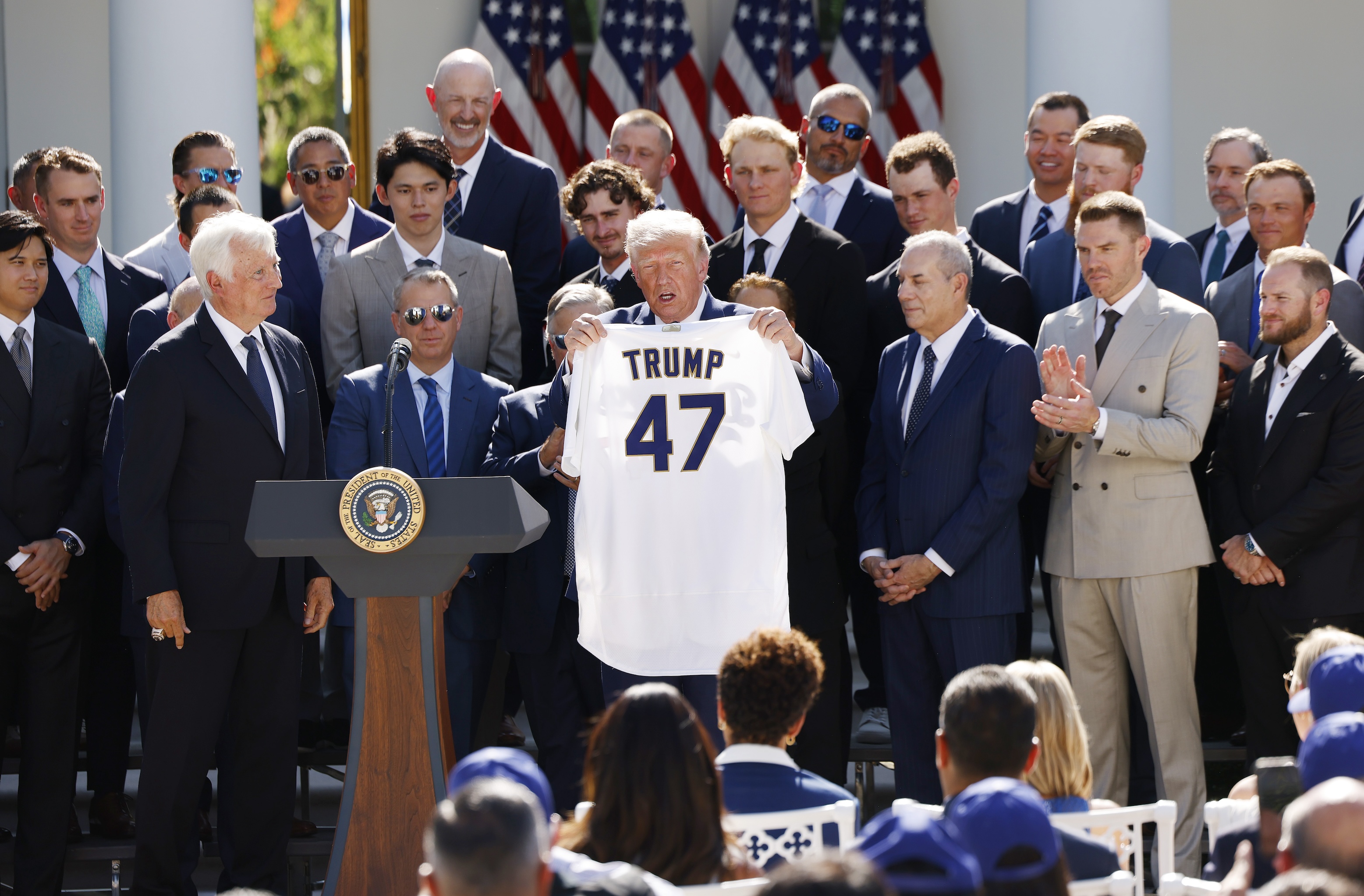
The Los Angeles Dodgers walked into the White House and, predictably, the room stopped being about baseball the second Donald Trump entered it. That is the trick here. The ceremonial part is supposed to look bigger than the politics. With Trump, it usually works the other way around.
This wasn’t a batting-practice photo op. It was a live exercise in optics, legacy management and the kind of high-gloss ambiguity that modern sports teams now inherit whether they want it or not. MLB clubs have always done the presidential visit dance. Championships get celebrated, hands get shaken, the pictures get posted, and everybody pretends the moment is somehow separate from the broader civic mess outside the gates. This one didn’t have that luxury.
The Dodgers walked into a political spotlight they didn’t ask for
The Dodgers are one of the most brand-sensitive organizations in American sports. They’re a global franchise with deep history, big payroll expectations and a fan base that stretches far beyond the sport’s usual borders. That matters. Teams like this don’t just represent a roster. They represent a product, a market identity and, increasingly, a set of values fans think they can read off the press schedule.
That’s why these White House visits always carry more weight than the league wants to admit. On paper, it’s a routine championship tradition. In practice, it’s a compatibility test. Who shows up? Who stands where? Who looks eager? Who looks trapped? The body language becomes the story because the actual baseball part is already done.
For the Dodgers, the stakes were never about whether they could survive the trip. They can. They’re too big, too successful and too accustomed to national attention to be rattled by one event. The real issue is how these moments harden perceptions. In a media environment where everything gets clipped, replayed and turned into a side-by-side comparison, teams don’t just visit the White House anymore. They get filed into a cultural database.
The photo op is the point. Everything else is just the stage dressing.
Why MLB keeps getting dragged into this exact conversation
Baseball has always loved its rituals. Opening Day. The seventh-inning stretch. The championship visit. It’s a sport built on continuity, and continuity is exactly why these political moments land so hard. MLB wants the symbolism without the baggage. That’s impossible now.
The league sits in a weird spot compared with the NFL or NBA. It’s older, whiter, more tradition-forward, and far more dependent on broad civic comfort than lightning-rod star power. That gives moments like this a different flavor. A championship team showing up at the White House is supposed to feel official, almost old-fashioned. Instead, it often feels like a stress test for every unresolved argument in the country.
And make no mistake: executives know this. Team business people know it. Agents know it. So do the broadcasters who have to talk around the room temperature without saying the obvious thing. Nobody wants the baseball side of the story flattened into a culture-war billboard, but once the cameras roll, that’s the risk. The Dodgers are not the first club to get caught in that current, and they won’t be the last.
What this says about the modern championship era
I’ve covered enough of these manufactured “honor” events to know the real agenda is never just honor. It’s access, visibility and leverage. A title team’s visit gives everyone something they can use. The league gets institutional polish. The club gets its official coronation. The politician gets a crowd of recognizable winners in tailored suits.
The problem is the event has lost its innocence, if it ever had any. The second a championship team steps into that building now, people start tallying motives. Are they there because they want to be? Are they there because they have to be? Are they sending a message by attending? By not attending? That’s the modern read. And for a franchise like the Dodgers, which lives in the center of the media economy, there is no neutral.
Personally, I think this is where sports and politics are going to keep colliding in a more obvious way. Not because teams are trying to be political activists. Because the audience is no longer passive. Every ceremonial moment gets interpreted through tribe, status and identity. The old script — show up, smile, take the photo — still exists, but it no longer controls the narrative. The crowd does.
That’s why this visit mattered beyond the usual ceremony. It wasn’t about one team and one president. It was a snapshot of how fragile these old league rituals have become in the age of permanent context. Sports used to borrow prestige from politics. Now it often picks up static instead.
The real takeaway for the Dodgers, and for everyone watching
The Dodgers don’t lose anything on the field from a White House visit. No pennant gets taken away. No lineup gets altered. But the franchise does get folded into a bigger conversation about image management, and that’s where the modern calculus lives. A title team’s brand is no longer built only on wins. It’s built on how cleanly it can navigate the noise around the wins.
That’s the uneasy part for every elite organization in 2026 sports. Success brings the cameras, but the cameras bring the interpretive pile-on. So the next time a championship team is lined up for the traditional visit, don’t just look at the handshake line. Watch who’s comfortable, who’s performing and who understands that the picture will outlive the moment.
The Dodgers did their part. The rest was always going to be about the frame.
More from Straight From The Bench
Comments
Join the conversation — sign in to leave a comment.
Sign in to commentRelated Stories

LeBron James Trump Comments: Racism Claim Deepens Old Rift
Trump’s latest jab at LeBron James says less about basketball than about the country’s appetite for turning its icons into targets. The Lakers star keeps carrying the weight of that collision.

Ronald Acuña Jr. Injury Update: Braves Still Waiting on Return
Acuña is still out, Jorge Mateo gets a strange little cameo, and Atlanta keeps playing the waiting game. That’s baseball, with the clock stuck in mud.

Sophie Cunningham Trans Issues: Trump Officials Seize On Remarks
Sophie Cunningham’s comments are now part of a bigger political push. The WNBA, women’s sports advocates and the White House all just got pulled into the same lane.