
Cristo Fernandez Professional Debut: Ted Lasso Star Plays for El Paso
A fictional footballer finally became the real thing, and the moment carried more weight than a cameo.
 Beatrice Kensington6 min read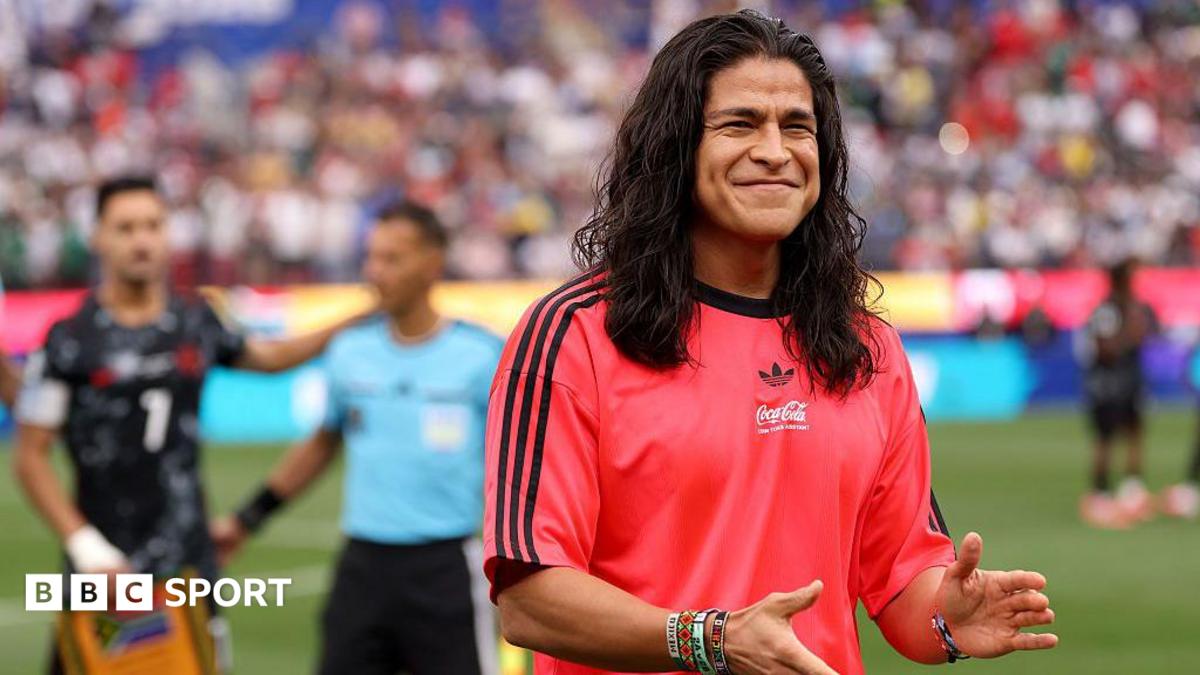
Cristo Fernandez did not arrive in professional football carrying the usual freight of prospect hype, academy polish or a contract written in the language of inevitability. He arrived with a television role, a global audience and a line that became a cultural talisman: football is life. Then, at 35, he walked onto a real pitch for El Paso Locomotive and turned a line that once belonged to fiction into something sturdier, stranger and more moving.
That is the kind of sporting moment that can be mistaken for novelty if you only watch the scoreboard. It was not novelty. It was a late debut in the most literal sense, a footnote with a pulse. In an era obsessed with the accelerated path — teenage phenoms, NIL branding, algorithmic stardom, the whole frantic machinery of instant arrival — Fernandez offered the opposite: a dream held at arm’s length for years, then finally touched.
A debut that carried two lives at once
Fernandez is best known to many fans as Danny Rojas in Ted Lasso, the exuberant striker whose joy was so unguarded it nearly became a philosophy. But his appearance for El Paso Locomotive connected that screen persona to a stubborn, practical reality. The grass is less forgiving than a soundstage. The tempo is less scripted. And the second-tier game in the United States, under the umbrella of USL Championship, does not make ceremonial room for sentiment once the whistle blows.
Still, sentiment mattered here. It always does when a public figure crosses into the private, laboring life of the sport itself. Fernandez was not being crowned. He was being tested. That is what makes the debut resonate beyond the novelty of an actor lacing up in a competitive match. It was a reminder that the professional game remains, at heart, a working-class institution — one that can absorb a celebrity and still ask him to earn every step.
The sweetest part of a late debut is not that it proves a dream; it is that it refuses to let the dream stay decorative.
El Paso, and the meaning of showing up
There is something fitting about El Paso being the stage for this. Border cities understand duality better than most places: languages overlapping, identities mingling, people forever becoming one thing in public while remaining another in private. Fernandez, Mexican-born and publicly beloved, has long lived in that space between entertainer and athlete, between myth and body. Sunday was the first time the body had the final say.
For El Paso Locomotive, the decision to hand him professional minutes was not merely a publicity flourish, though there is no pretending the attention did not help. Clubs outside the top light of the global game are always balancing competitive necessity with business survival. A name that draws eyes can be useful. A name that draws hearts can be priceless. But the best clubs know the difference between exploitation and occasion. If Fernandez earned the moment on merit and commitment, then the club did more than chase a headline. It honored the old bargain of football: if you can play, we will let the game sort the rest.
And that matters in a landscape where the meaning of “professional” is often flattened into payroll. Professionalism in sport is not merely money changing hands. It is repetition, discipline, bruising, humility. It is the willingness to enter a system that does not care who you have played on television.
Why this debut hits harder than a celebrity stunt
The easy read is to call this a stunt with good publicity instincts. That would be lazy, and a little cruel. The harder, truer read is that Fernandez’s debut speaks to the porous edges of modern sport, where fandom, identity and performance increasingly bleed into one another. We live in a time when athletes become entertainers and entertainers become brands, and both are expected to be legible at every hour. Fernandez, curiously, complicates that script by moving in the other direction: he became an entertainer by name, then tried to become an athlete by deed.
I find that almost bracing.
I have watched enough sports to know that the most revealing moments are often the ones that arrive wearing a costume. A first pitch, a ceremonial kickoff, a farewell lap — these things can be empty if the person inside them is only passing through. But when the gesture is rooted in a genuine ache, in years of wanting and waiting, the theater falls away. What remains is the old human urge to be seen trying.
That is why this debut matters even if Fernandez never becomes a regular contributor, and even if he records only a handful of minutes in the professional game. Sport is full of careers that burn hot and end early. It is also full of private pilgrimages that never quite make the light until they are nearly over. Fernandez’s path is not the canonical one, and that is precisely why it lands. He did not climb the ladder in the usual order. He arrived by a side door, carrying a script in one hand and a pair of boots in the other.
For readers who have followed the broader drama around football’s emotional hold, this is the gentler twin of more severe stories about the sport’s power and vulnerability, including the wrenching uncertainty explored in our look at Folarin Balogun's FIFA suspension. In both cases, the game exposes how much identity can ride on a single official decision, a single appearance, a single chance.
What to watch next for Fernandez and El Paso
The obvious question is whether Fernandez’s debut was a one-night flourish or the beginning of a recurring role. That depends on fitness, timing, coaching need and, not least, whether the player himself wants to keep living between sets and sprints. At 35, no one is mistaking him for a developmental project. This is not about upside in the conventional sense. It is about use, desire and the rare liberty to pursue a dream after the market has already decided what you are supposed to be.
El Paso, for its part, gains a story that is larger than the player and potentially useful beyond a single weekend. The club can point to a moment that links local supporters, casual viewers and the vast global audience that knows Fernandez from a streaming screen. But if this is to mean anything lasting, it must remain anchored in sincerity. Football has a long memory for anything that feels manufactured. It has an even longer one for anyone who shows up with humility and leaves with dirt on the shorts.
I suspect this will be remembered not because a famous actor played a few minutes, but because he dared to blur the border between aspiration and occupation. That is rarer than people admit. Plenty of us perform our dreams from a safe distance. Fernandez stepped inside his.
The next chapter will not need spectacle. It will need repetition. And in football, as in life, that is where the truth usually lives.
More from Straight From The Bench
Comments
Join the conversation — sign in to leave a comment.
Sign in to commentRelated Stories
Jayden Adams Death Investigation: South Africa Mourns a Promise
Police are investigating the death of South Africa’s Jayden Adams, found dead in Cape Town at 25 after recently appearing for his country. The grief is immediate; the answers are not.

Folarin Balogun FIFA Suspension: One Call Changed the Story
A suspension that should’ve been routine turned into a political flare-up. The Balogun saga says a lot about FIFA power, U.S. leverage, and how fragile trust is.

Folarin Balogun FIFA Suspension: Official Acted Alone in Waiver
A controversial FIFA call on Folarin Balogun was made by one man, not a panel. In a tournament built on procedure, that matters almost as much as the ruling itself.