
Hamilton’s Silverstone Fight Feels Bigger Than Fourth Place
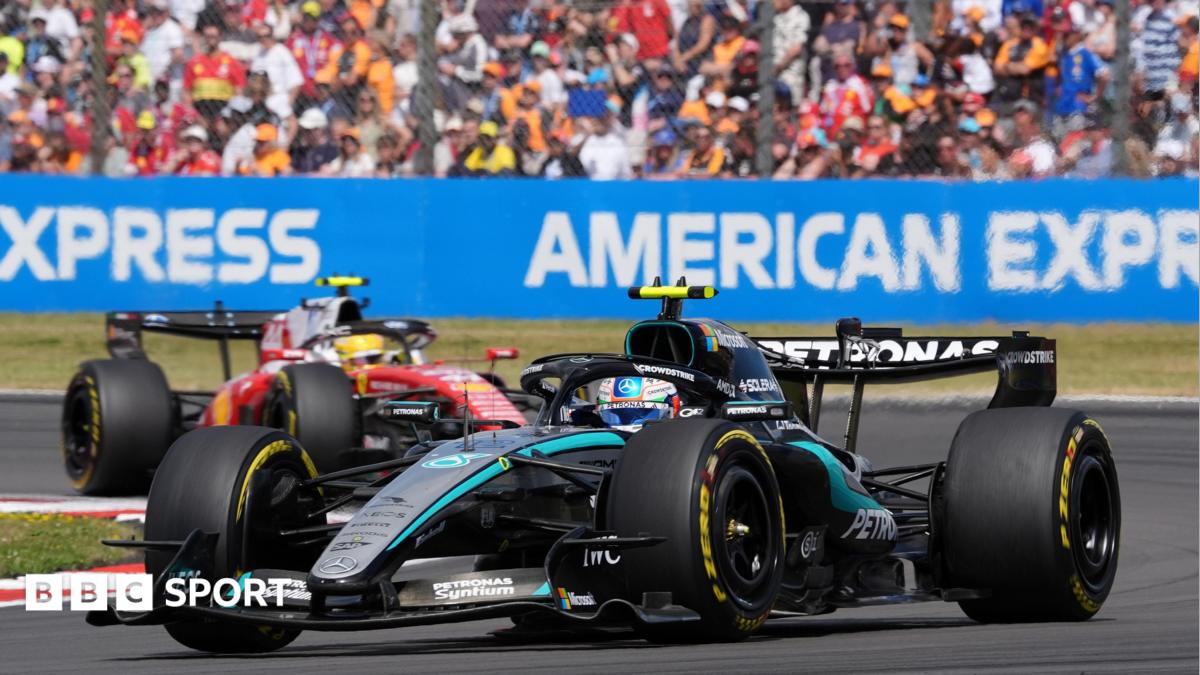
Silverstone doesn’t do quiet, and neither does Hamilton
Lewis Hamilton and Silverstone have always been a little louder than the rest of the calendar. The crowd knows the script by heart, and still it leans in when the old master shows even a flicker of fight. Lap 29 at the British Grand Prix had that exact energy: Hamilton chasing George Russell for fourth, the grandstands rising with every close approach, every dart toward a gap that looked half a car too small. Then came the move at Copse. Clean, decisive, and just aggressive enough to remind everyone that Hamilton does not race like a man content to circulate.
That alone tells you a lot about where we are with him now. This is no longer the all-consuming Hamilton of the title years, the one who turned Sundays into processions of consequence. But it is also not a fading farewell tour. He still reads a race in real time. He still knows where Silverstone breathes. And on a track like this, with Copse Corner demanding bravery and judgment in equal measure, that matters.
The Russell duel is more than a team scrap
Mercedes-versus-Mercedes battles have a strange texture. They are never just about position. They are about timing, status, and who gets to define the afternoon inside the garage. Russell is the younger, sharper corporate future. Hamilton is the legacy, the seven-time benchmark, still carrying a name that changes the temperature of a race when the cameras swing his way.
So when Hamilton made that pass and Russell had battery power in reserve, it became a very modern kind of fight: instinct versus strategy, old-school racecraft versus the electric arithmetic of Formula One. The detail about Russell’s battery support matters because it tells you this wasn’t some simple case of one driver being faster everywhere. It was a layered contest, one where the machinery and energy deployment can turn a clean overtake into a brief, tense statement rather than a permanent transfer of control.
For Mercedes, that kind of intra-team scrap can be useful or corrosive depending on the Sunday. Useful if it sharpens both drivers. Corrosive if it burns up tyres, drains battery management, or leaves one side of the garage feeling like the other side got the priority treatment. At Silverstone, the crowd sees theater. The engineers see risk.
Hamilton still has the kind of racecraft that can make a grandstand sound like a goalmouth.
Why this matters to the home crowd and the title chase behind it
Silverstone is not just another stop. It is the home race that exposes reputations. The British crowd doesn’t just cheer the local names; it judges them. Hamilton gets the royal treatment because he earned it, Russell gets the harder exam because that’s what comes with being the other Brit in a Mercedes and the heir apparent at a team that lives on expectation.
The fourth-place battle also tells us the race has probably settled into the sort of contest that defines the middle of the modern grid: not quite podium drama, but not filler either. These are the positions where points accumulate, confidence hardens, and the narrative of a season quietly takes shape. A move like Hamilton’s at Copse is the sort of moment that can’t be measured only by the finishing order. It changes how a driver is viewed inside the paddock. It changes how the crowd sees him on a weekend built for memory.
It also reminds everyone why a driver’s reputation survives beyond raw pace. Hamilton may not always have the fastest machinery under him anymore, but the instincts are still there. The timing is still there. The willingness to put the car in a place only a few drivers would choose is still there. That’s the difference between a champion’s presence and a merely decorated resume.
What Mercedes gets out of this fight
If Mercedes is paying attention, it sees two useful things at once. First, Hamilton still has enough edge to win moments against a teammate with serious pace and modern racecraft. Second, Russell is not backing down, which is exactly what a team needs from the driver positioned as part of its future.
That creates pressure in the best way. Teams do not want a passive number two and a nostalgic number one. They want tension with boundaries. They want both drivers believing they can take a rival’s place without turning the garage into a civil war. Silverstone delivered a little of that tension without crossing the line, which is about as healthy as it gets in a sport where tiny decisions are magnified by pit walls and microphones.
For Hamilton, this kind of fight also serves a broader purpose. It keeps him relevant not just in headlines, but in the hard, technical language of racing. He is still capable of making someone like Russell defend on instinct. That means something. The pace chart can say one thing; the eye test at Copse says another.
Silverstone still belongs to the driver who dares it
There’s a reason Silverstone keeps producing scenes like this. The track rewards commitment and punishes hesitation. It doesn’t care about reputations, but it absolutely exposes them. Hamilton knows that better than almost anyone. Russell is learning it in real time.
If this battle is a sign of what the rest of the race has left, the final stretch is going to be about who manages energy, tyres, and nerve with the least panic. But the larger story is already set. Hamilton found a proper Silverstone moment, the sort of move that gets remembered because it feels earned rather than gifted. Russell made it work for a while, then got forced into defense by a driver who still knows how to turn a crowd into a weapon.
The last 23 laps will sort the placings. The pass at Copse already sorted the mood.
Comments
Join the conversation — sign in to leave a comment.
Sign in to commentRelated Stories
Antonelli’s Silverstone Shock: The Future Just Passed Hamilton
Kimi Antonelli beat Lewis Hamilton in a wild Silverstone sprint, with Lando Norris charging from sixth to third on lap one. Formula 1’s next era looks very real.
Fog, patience and a clean sheet: Cardinals win the old-school way at Wrigley
A fog delay turned Saturday at Wrigley into a weird, grueling test — and the Cardinals handled it better than the Cubs did.

LeBron in Akron, Cavs in the Frame, and a Familiar Cleveland Whisper Grows Louder
A sighting in Akron won’t sign the paper, but it sure keeps the Cleveland rumor mill humming. LeBron James has a way of making every small move feel enormous.