
Infantino’s Trump Problem Just Turned Into a FIFA Ethics Problem
 Zane Miller5 min read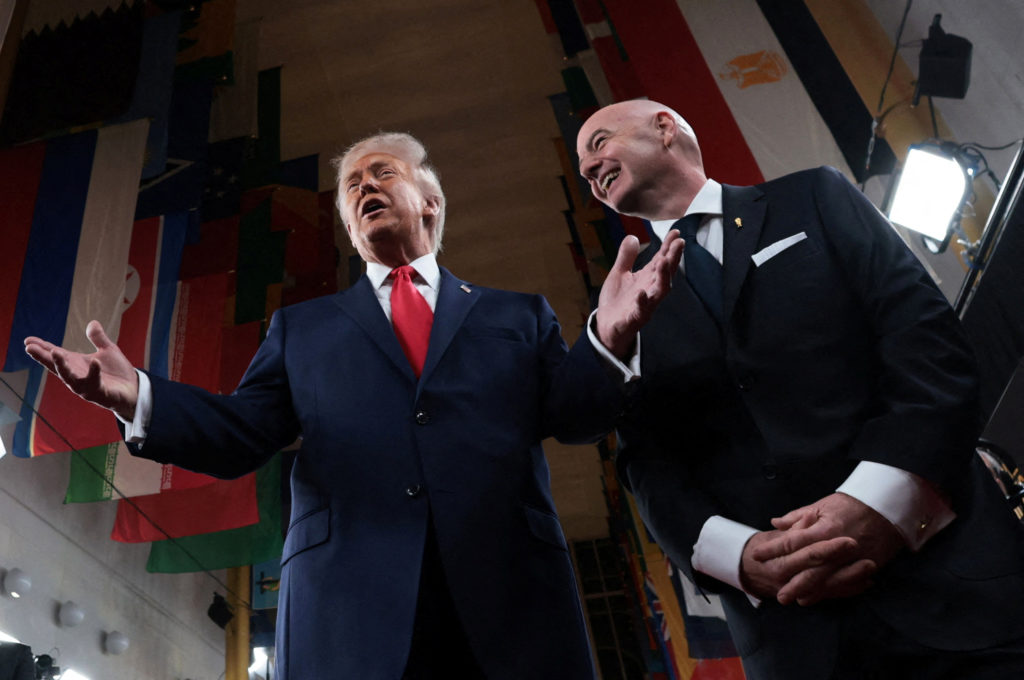
Gianni Infantino has spent years trying to sell FIFA as a cleaner, tighter, more politically neutral operation. That pitch just took a shot to the ribs. The latest mess around U.S. forward Folarin Balogun is bigger than one player, one ban, or one match. It is about who gets to lean on the sport’s biggest power brokers — and what happens when they do.
The sequence is messy, and that’s the point. Balogun was supposed to sit after a red card. Then FIFA reversed course and let him play for the United States against Belgium. Donald Trump took credit. Now Infantino is being referred to Olympic ethics investigators for a possible breach of political neutrality, after a human rights group pushed the issue. This is not how the guardians of global soccer want their governance stories to read.
A ruling that looks clean on paper, but not in the real world
On the field, disciplinary decisions are supposed to live in their own little sealed box. Red card, suspension, appeal, ruling — boring, procedural, and detached from politics. That’s the ideal. The reality is always more fragile, especially when FIFA is involved.
A presidential boast changes the temperature instantly. Even if the underlying decision had a defensible sporting basis, the optics are brutal: a political figure claims influence over a global governing body, and suddenly the institution looks less like a referee and more like a pressure valve. That is the kind of thing integrity watchdogs notice fast.
This also lands in a very modern place. Soccer governance used to survive on distance and bureaucracy. Now every move gets clipped, posted, and interpreted in real time. If an executive wants to avoid a politics story, the worst thing he can do is let politicians narrate the outcome for him.
FIFA doesn’t just have a discipline problem here. It has a credibility problem, and those are much harder to patch.
Why the ethics referral matters more than the ban itself
The ethical question is not whether Balogun should have played one match. It’s whether FIFA can credibly say its decisions are insulated from political influence when the loudest political voice in the room is publicly taking credit.
That’s why this referral matters. Olympic ethics bodies exist to examine whether officials crossed lines around neutrality and governance standards. They are not there to re-litigate tactics or minutes played. They are there to ask whether power was used properly, or at least looked like it was.
And in modern sport, “looked like” is not a throwaway phrase. Ask anyone in the boardroom. Sponsors hate ambiguity. Confederations hate public doubt. Players hate being turned into symbols in somebody else’s culture-war press release. This one touches all three.
The bigger issue for FIFA is structural. A lot of its authority depends on the idea that its rules are applied evenly across continents, federations, and political climates. Once that belief cracks, every future ruling gets viewed through a suspicion filter. That’s a bad place to be heading into any major tournament cycle.
Balogun is the player in the middle, but he is not the story
Balogun is the face on the file, but he is not the point. He is a useful forward for the U.S. setup, a player who matters because depth matters in international soccer. Teams do not get far without attacking options that can press, stretch, and finish. The United States men's national soccer team knows that as well as anyone.
This also shows how quickly a single eligibility or discipline decision can become national theater. In soccer, the line between sporting fairness and political leverage is thin enough already. Add a high-profile U.S. administration, a global governing body, and a player who can swing a match, and you have a governance headache with no easy exit.
The executives I talk to around this stuff are always thinking the same thing: precedent. If you bend once, who asks for the next bend? If a political name can get attached to one disciplinary call, every federation starts wondering who has the loudest microphone when its turn comes.
Infantino’s real problem is the pattern, not the moment
I’ve covered enough of these governance flare-ups to know the damage rarely comes from the initial decision. It comes from the pattern that decision suggests.
That’s why Infantino keeps getting dragged back into the same conversation. FIFA has the size, the cash, and the global footprint to act like a sovereign power. It also has the political instincts of an organization that wants the benefits of power without the scrutiny. That works until someone with real clout starts talking publicly about influence. Then the whole fortress looks a little more like a glass house.
The comparison here is obvious to me. Big sports bodies love neutrality until neutrality becomes inconvenient. Then the language gets slippery, the explanations get technical, and everybody acts surprised that the public can connect the dots. Fans are better at this than executives want to admit.
I’ll say this plainly: if this referral gains traction, it won’t just be about one ethics review. It will be about whether FIFA can still police its own image in a political era where everybody wants a piece of the sport’s symbolism. That’s the real arena now. Not the pitch. The perception game.
The next move will tell us plenty
Watch how FIFA responds, because the wording will matter almost as much as the action. If the organization gets defensive, it feeds the story. If it overcorrects, it admits the story has teeth. Either way, the paper trail is now part of the game.
For the U.S. side, this is a reminder that international soccer does not live in a vacuum. Your roster decisions can become geopolitical content in a heartbeat. And for Balogun, it means a football ruling has been dragged into a much uglier ecosystem.
The whistle has already blown on the optics here. Now the ethics people get their turn, and nobody in FIFA should be pretending that’s a routine stop along the way.
Comments
Join the conversation — sign in to leave a comment.
Sign in to commentRelated Stories
England’s Quarter-Final Snag Is the Old One: Norway, Nerves, and No Room for Pretty Football
England’s quarter-final with Norway looks tidy on paper. It never does on grass. Chris Sutton likes the Three Lions, but the real story is whether they can stay ugly when the knockout knives come out.

Egypt Takes Its Complaint to FIFA After Argentina’s Rough Ride in the Round of 16
Egypt says the whistle hurt them in a 3-2 World Cup loss to Argentina. In knockout football, one bad call can feel like a mugging.

Eight Left Standing, and the Tournament Has Split Into Classes
The quarterfinals have a familiar smell: old powers, fresh ambition, and one or two teams brave enough to believe the bracket can be bullied.