49ers Trade for DeForest Buckner: Why San Francisco Did It
The reunion is loud, the price is light, and the message is even louder.
 Zane Miller5 min read
The 49ers just bought back a pass-rush identity
The 49ers didn’t wait around for the market to get cute. They went and got DeForest Buckner from the Colts for a 2027 fourth-round pick, and the price tells you almost everything you need to know. This isn’t some desperate splash for the headlines. This is a front office seeing an obvious fit, knowing the roster math, and paying a rate that barely stings if the player still looks like himself.
Buckner is not just a name. He’s a type. Size. Length. Interior disruption. The kind of defensive tackle who changes what offenses can do on early downs and forces protection calls to tilt inside. That matters in October, and it matters even more when the games start getting tight and the playoff picture starts chewing up teams that can’t win with their four-man rush.
And yes, the reunion angle sells itself. San Francisco knows exactly what Buckner is, because they already lived this movie once. The league does this all the time: a team lets a good one get away, spends years chasing the same profile, then circles back when the fit and the price finally line up. This one feels like a clean correction.
A fourth-rounder in 2027 says plenty
Let’s not overcomplicate the compensation. A 2027 fourth is real, but it’s also the kind of pick that lets a contender sleep at night. It’s far enough out that the value gets fuzzier, and it doesn’t touch the premium draft capital you save for true franchise swings. For a team built to win now, that’s exactly the zone you want to shop in.
The 49ers aren’t buying a lottery ticket here. They’re buying certainty at a position where certainty is expensive. Interior rushers with Buckner’s pedigree don’t usually change hands for spare change. If the acquisition works, they’ve added a proven leverage player without sacrificing the kind of pick they need to keep the pipeline moving.
That’s the hidden layer in this deal. San Francisco is signaling that it believes the rest of the roster is good enough to justify a surgical move, not a panic one. That’s a contender’s posture. You don’t do that if you think the season is drifting. You do it when you think one more real piece can swing how your defense looks on third down and in the red zone.
Why Buckner still fits what the 49ers want to be
The 49ers have always wanted their front to feel inevitable. Not flashy. Not random. Predictable in the best way. Win up front, squeeze the pocket, make quarterbacks play faster than they want to play. Buckner fits that blueprint because he’s never been just a stat line. He’s a structural player.
That’s why this move lands harder than a typical trade-deadline depth add. An interior rusher who can collapse the pocket changes the downstream math for edge defenders, linebackers, and coverage behind them. It can make a good defense feel suffocating. It can also help cover for the inevitable attrition that hits every roster by midseason.
San Francisco has been living in the same NFL truth as everybody else: the best teams usually don’t just have good players, they have players who compress the field. Buckner does that. He makes the pocket smaller. He makes the quarterback’s clock shorter. He makes every other rusher look a little more dangerous.
What the Colts are really saying by moving him
From Indianapolis’ side, this is the kind of trade that reads like a practical decision, not a surrender. Teams don’t move a player like Buckner unless they’re weighing contract structure, long-term roster age curves, or a broader recalibration of where the franchise is headed. Sometimes it’s about timing. Sometimes it’s about the draft compensation being too clean to ignore.
Either way, the Colts chose flexibility over holding a veteran asset. That has become a very common NFL move for teams straddling the line between competitive and transitional. If you’re not fully convinced the current core is your final answer, cashing out can be the rational play.
This is also why deadline intel can’t be read like a toy box. Every move has a ripple. One team is buying certainty. The other is creating room. The league is built on those trades of posture.
This is the kind of reunion contenders make when they stop pretending the market will hand them a perfect answer later.
My take: this is a grown-up contender move
I like this deal a lot for San Francisco, and not because nostalgia is doing the heavy lifting. I like it because it’s disciplined. The 49ers didn’t mortgage the future for a name. They paid a delayed fourth-rounder for a player they know, in a role they know, in a system that should know exactly how to use him.
That’s the part people miss when they rush to grade trades on instinct. The best front offices don’t just ask whether a player is good. They ask whether the fit is so clean that the error bars shrink. Buckner in San Francisco checks that box. The locker room won’t need a tutorial. The coaching staff won’t need a science project. That matters.
I also think this says something about the broader NFC race. Teams that believe they can get through January usually act like this: a little aggressive, a little selective, and very aware that pass rush is the fastest way to expose everybody else’s flaws. You don’t need to be perfect in October. You need to be dangerous enough that the rest of the conference starts planning around you.
If Buckner looks like Buckner, this won’t be remembered as a cute reunion. It’ll be remembered as the move that gave San Francisco a real edge where it counts.
Watch the snap count. Watch the interior pressure. Watch how quickly opposing quarterbacks start feeling ghosts inside the pocket.
More from Straight From The Bench
Comments
Join the conversation — sign in to leave a comment.
Sign in to commentRelated Stories
NFL Week 8 Latest Intel: Jets, Chiefs, Colts, AFC North
Week 8 is where the league starts tipping its hand. The Jets, Chiefs, Colts, and AFC North all have real decisions looming with the trade deadline close.
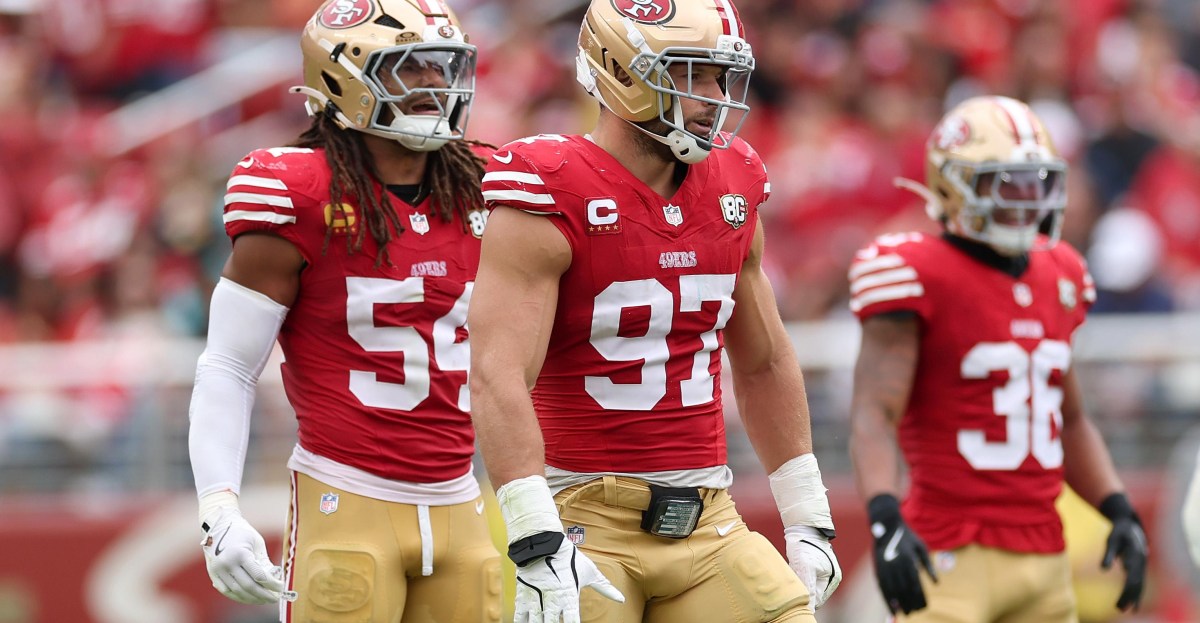
49ers Trade Deadline Moves: Where San Francisco Can Add Next
San Francisco has already made its move, but the Niners are rarely finished shopping when the deadline nears. DeForest Buckner’s return only sharpens the question: what else makes this roster sturdier
Chiefs Justin Tucker Practice Squad Signingsignal for Kansas City
Justin Tucker is back in the NFL, and Kansas City is taking a low-risk swing. For a contender, even a practice squad kicker move tells you where the pressure points are.