
Angel Reese defense: Carmelo Anthony says criticism is 'f--ked up'
A veteran voice steps into the noise around a star learning to carry it.
 Beatrice Kensington6 min read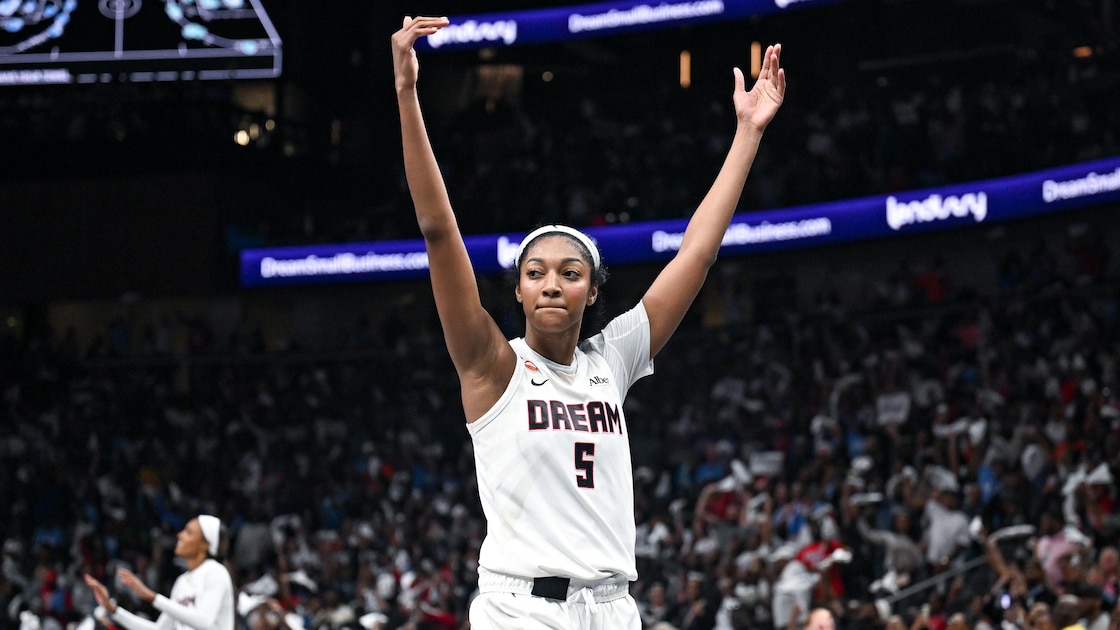
Ten-time NBA All-Star Carmelo Anthony did not bother with lace. He reached for the blunt instrument, the kind of phrase that clears the table and leaves the argument naked: “It’s f--ked up.” That was his answer to the latest round of criticism aimed at Angel Reese, and it landed with the force of a former scoring savant who has spent long enough in the glare to know what it means when a league’s brightest young star is asked to shrink herself so everyone else can feel comfortable.
This is not merely a celebrity basketball moment, nor a retired scorer tossing flowers at a current one. It is a cultural skirmish over how women’s sports are allowed to look, sound, and feel. Reese, who has become one of the defining faces of the modern WNBA, has never played as though she intends to apologize for taking up space. That, to some eyes, is the problem. To others, it is the attraction. Carmelo Anthony made clear which side he stood on.
The old script still lingers around new stars
There is a familiar script in American sports, and it has been run on repeat for decades: a Black athlete displays swagger, edge, or visible emotion, and the public conversation quickly drifts away from competition and into etiquette. The words change; the posture does not. In one era it is “too brash.” In another, “too political.” In another, “not marketable.” The machinery is steady even when the faces are new.
Reese has been living inside that machinery since college. What makes her case especially revealing is how little she has seemed willing to negotiate with it. She celebrates hard. She stares back. She is not interested in sanding off the corners of her personality to satisfy the softer tastes of people who prefer their stars grateful, polished, and suitably small. That can make for uncomfortable television and excellent basketball theater, which is to say it can make people talk.
Anthony understands that better than most. He spent his own career under a microscope that never quite accepted his scoring genius without attaching a moral footnote. The game has always loved a killer instinct right up until it starts to resemble confidence.
Why Carmelo Anthony’s voice carries real weight
This is where Anthony’s defense matters. Not because ex-players are automatic authorities, and not because every retired star should be made a cultural referee. It matters because Anthony is speaking from inside the same long lineage of athletes whose joy and force were turned into public debate. When a player of his stature says, in effect, leave her alone and let the woman compete, he gives permission for a more honest conversation.
That conversation is overdue in the WNBA, a league whose growth has been propelled by star power, rivalry, personality, and friction as much as by cleaner shot charts or better marketing decks. The league’s rise has not come from sanitizing emotion; it has come from stars who make people care. Reese is one of them. So is Caitlin Clark. So are the veterans who have spent years asking for the same visibility now suddenly lavished on a younger generation.
The problem is that visibility brings a second crowd: the people who want to consume the spectacle but resent the self-possession that creates it. They want intensity with the sharp edges filed down. Reese, by simply being herself, refuses that bargain.
The league does not need less fire. It needs a public grown adult enough to stop mistaking fire for disrespect.
Passion is not the scandal here
What gets lost in these cycles is how often “passion” is used as a coded term, a polite wrapper around discomfort. Nobody says they object to effort. They object to the manner in which it is expressed. They do not mind competitiveness. They mind competitiveness with a pulse.
That distinction matters because it shapes what young athletes believe they are allowed to become. When a player like Reese is told, explicitly or implicitly, that her edge is the issue, the lesson does not stay with her alone. It travels. It tells every teenage girl watching that excellence may be welcomed only if it arrives without a heartbeat. That is no way to build a durable sport, and no way to build honest fandom.
I have long thought the most revealing thing about our sports culture is not what it celebrates, but what it tries to discipline. We cheer “mentality” until it becomes inconvenient. We adore “confidence” until it comes from someone who looks too much like a challenge rather than an invitation. Reese challenges people. That is part of her value. If the league’s future is going to be richer, more watched, and more fully alive, it will be because it learned to live with athletes who do not perform gratitude on command.
What this means heading toward the 2026 WNBA Finals
With the 2026 WNBA Finals approaching, this exchange feels bigger than one interview segment or one social media flare-up. The postseason has a way of clarifying a league’s identity, and the WNBA’s identity is now inseparable from player individuality. The coming spotlight will not just track possessions, coaching adjustments, or rebounding margins. It will also track tone, body language, and the stories written around them.
That is the risk of being a leading woman in a loud sport. You are not only judged by your production. You are judged by your posture in victory, your silence in defeat, your face after a whistle, your willingness to remain palatable. Reese has never been built for palatability. Anthony’s defense of her is useful because it pushes back against the old fantasy that the most marketable athlete is the one who asks the fewest uncomfortable questions simply by existing.
If the league is wise, it will treat this moment as an asset, not a headache. Rivalry needs texture. Stars need room. And the public, if it wants a product worth its attention, will have to accept that intensity is part of the entertainment contract.
I suspect we will look back on this era and see that the argument was never really about one player’s emotions. It was about whether women’s basketball would be allowed to sound like itself.
The Finals will arrive. The noise will travel with them. Reese will not be the last player asked to dim her light for other people’s comfort. She should not be the first one made to do it, either.
More from Straight From The Bench
Comments
Join the conversation — sign in to leave a comment.
Sign in to commentRelated Stories
New York Knicks Offseason: James Dolan Burns Goodwill Fast
The Knicks finally had some peace, and James Dolan found a way to kick the door in. That’s not a plan. That’s a habit.

Packers RB Josh Jacobs lawsuit: status in limbo over video fight
Josh Jacobs is missing time, the Packers are missing clarity, and the video at the center of the case remains locked away. The football fallout is only part of the story.

Patriots vs. Jets Injury Report: Week 6 Availability Watch
New England and New York are already shaping Week 6 with the injury sheet. The names missing and limited tell you exactly where this game could tilt.