
Argentina World Cup Banner Row: UK Urges FIFA Probe
A victory lap turned into a diplomatic dirty shirt.
 Leo Lupo5 min read
A banner, a rivalry, and a fresh mess for FIFA
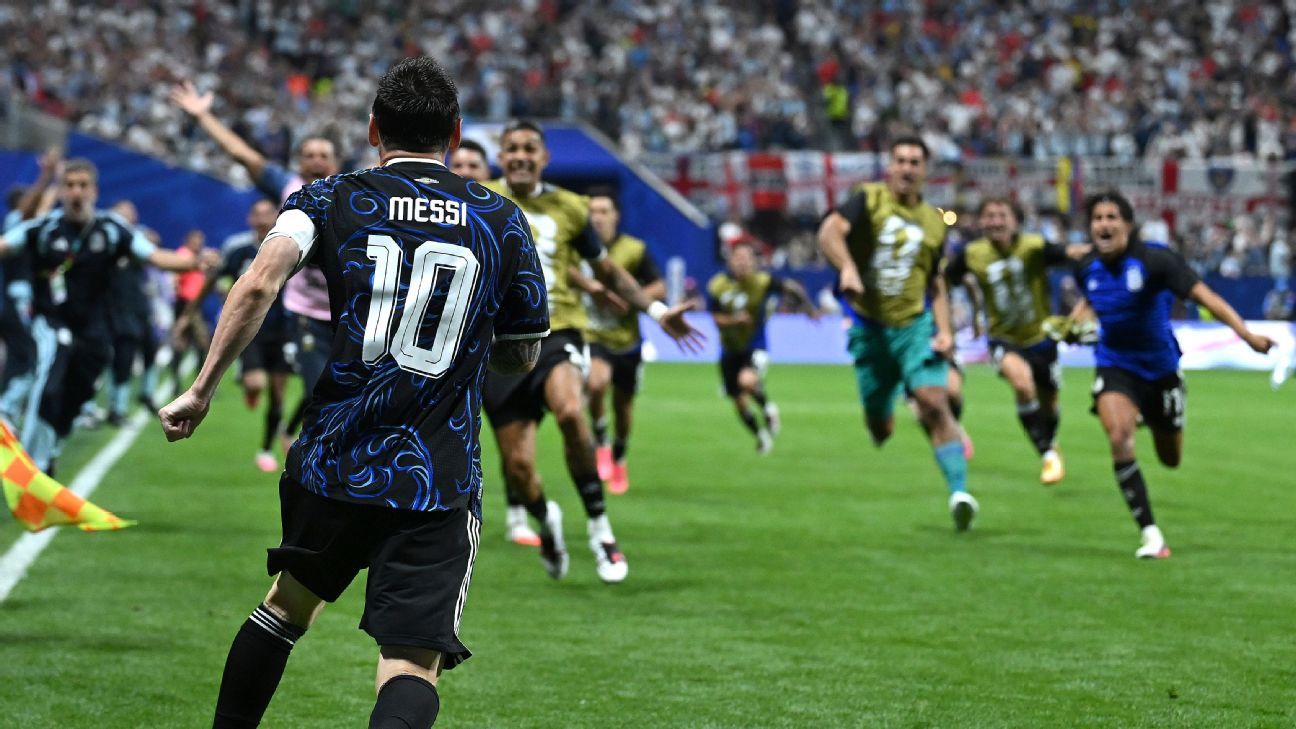
Argentina beat England, then some of the celebration wandered right off the rails. Players posing with a banner claiming sovereignty over the Falkland Islands was never going to stay a locker-room footnote, not with the history attached and not with FIFA forever pretending it can keep the politics out while standing ankle-deep in them.
The British government asking for an investigation was predictable. The whole thing was written the second those pictures hit the public square. You can call it a stunt, a statement, a bad idea dressed up as patriotism. Pick your poison. The result is the same: a World Cup semifinal that should have lived in the column headed “football” is now sitting under “international incident.”
The Falklands never leave the room
The Falkland Islands are not some abstract map squiggle. They carry a long, bruising history between Argentina and the United Kingdom, and the dispute has been hauled into stadiums before by fans looking to turn a match into a manifesto. This time it came from the champions themselves, or at least from players standing in the frame while a banner did the talking.
That is where the trouble starts. When it’s supporters in the stands, FIFA can wrinkle its nose and issue the usual warning labels. When it’s players after the final whistle, in a moment of national celebration, it lands harder. The message looks less like noise and more like endorsement. And that is the sort of thing that makes bureaucrats at soccer’s marble palace reach for the aspirin.
FIFA’s favorite trick: act shocked, then stall
This is not a governing body that thrives on courage. FIFA likes ceremony, television money, and the clean smell of a press conference. It does not like hard edges, especially when they involve diplomacy, nationalism, or anything that might require someone in a blazer to take a stand and mean it.
Still, it will have to do something here. Not because FIFA is suddenly developed a backbone, but because ignoring it would invite the rest of the world to laugh. If one semifinal can turn into a geopolitical billboard and nobody blinks, then every flashpoint country on the schedule will figure it can do the same. The next thing you know, the tournament is half football and half grievance parade.
FIFA loves to preach unity right up until somebody hands it a banner it can’t file away.
This is also where England gets dragged back into the mess whether it wants to or not. Losing to Argentina already hurts enough. Losing and then seeing the other side celebrate with a sovereignty message aimed straight at one of your old national wounds? That’s not just salt in the cut. That’s a boot on it.
What this means for the game, not just the headline
The sport keeps telling itself it can separate football from the flags. Cute story. Doesn’t hold up very long. International tournaments are built on national identity, and national identity is exactly where the landmines live. Every World Cup gives us a fresh reminder that the game is the clean jersey covering a very dirty undershirt.
The broader damage here is trust. Not trust in the scoreline. That part is settled. Trust that the competition can keep from becoming a rolling platform for every border dispute and historic grievance on the planet. That’s a taller order. And because this happened after a semifinal — with cameras rolling and emotions hot — it will get replayed more than the actual goals.
For the players, the lesson is simple and mostly ignored these days: once you’re in the spotlight, your “we meant no harm” routine buys about five seconds. Then comes the review, the statements, the hand-wringing, and the usual parade of suits insisting the image was “not in keeping with the values of the tournament.” That line has the structural integrity of wet cardboard.
Leo’s take: this is what happens when celebrations turn into speeches
I’ve covered enough of this racket to know that the game never stays just the game for long. National teams carry the baggage of their countries, and when the match is a heavyweight one, the baggage gets dragged right through the tunnel. Argentina and England are not strangers to the kind of heat that lives outside soccer. They never were.
What bothers me here isn’t just the banner. It’s how often modern sports blur the line between winning and declaring. Teams want the emotional lift of identity without paying the bill for what identity brings with it. You can’t wave the national flag, bathe in the anthem, and then act surprised when somebody uses the biggest stage in the sport to send a political message. That’s the deal. Ugly, but real.
If FIFA had any appetite for consistency — and I’ve seen more disciplined habits in a hurricane — this would lead to a real look, maybe a suspension of some sort, maybe a warning strong enough to matter. More likely, it gets the familiar treatment: stern language, a committee, and a result soft enough to cushion the officials from their own spine.
The next move will tell us plenty
Watch what FIFA says, and more importantly, what it does not say. That’s usually where the truth lives. If the response is a limp wrist and a news release, then everybody connected to international soccer gets the message: push the line, just don’t push it too hard in the wrong direction.
If there’s any consequence at all, it won’t erase the image. The picture is out there now. The only question is whether soccer’s rulers still have enough nerve to remind the rest of the sport that a World Cup pitch is not a diplomatic bullhorn.
The match is over. The argument isn’t. And this one is going to travel farther than the team celebration ever should have.
More from Straight From The Bench
Comments
Join the conversation — sign in to leave a comment.
Sign in to commentRelated Stories

FIFA World Cup 2026 Semifinals: Biggest Takeaways
After 102 games, the World Cup has reached a final that carries history, symbolism and a little danger. The semifinals didn’t just settle a bracket — they exposed the tournament’s changing center of g

Argentina vs England World Cup Semifinal: Tuchel, Messi, and the Turn
Argentina rode belief, nerve and Lionel Messi’s old magic past England in Atlanta. England’s tactical mess made the comeback far too easy.
Argentina vs Spain World Cup Final: Messi's Farewell Circle
Messi's World Cup path has looped all the way back to Spain, the country that nearly claimed him two decades ago. If this is the end, it's arriving with perfect symmetry.