
FIFA World Cup 2026 Semifinals: Biggest Takeaways
The bracket has narrowed, and the tournament’s old order looks suddenly brittle.
 Beatrice Kensington6 min read
The semifinals did what semifinals are supposed to do: they stripped away the noise, the romantic clutter, the hopeful fiction that everyone still had a path. After 102 matches spread across five weeks, FIFA World Cup 2026 has been reduced to a final that feels both old and startlingly new — the first all-Spanish-speaking title game since 1930, and one that pairs the reigning power of Argentina with a Spain side that has spent the tournament turning control into something almost punitive.
That is the larger truth the semifinal weekend left behind. The World Cup no longer belongs only to the teams with the heaviest shirts or the deepest mythology. It belongs to the ones who can hold their nerve when the field begins to shrink around them. And in a tournament that has stretched across continents, climates and nerves, that distinction has mattered more than pedigree.
A final that feels like history meeting its reflection
The all-Spanish-speaking final carries a kind of poetic symmetry, though the poetry is not especially gentle. Argentina arrive with the emotional ballast of a team that has lived for its captain, for the memory of recent triumph, for the hard-earned conviction that no moment is too large if they keep their heads. Spain arrive with a different confidence — less theatrical, perhaps, but no less dangerous, a side shaped by structure, patience and the slow tightening of a match until the opposition has nowhere left to stand.
This is the sort of final that makes television producers giddy and opposing defenses uneasy. It also says something about the modern game. Tactical discipline has not replaced talent; it has fenced it in, cultivated it, made it more efficient. The final will not merely be a contest of stars, though the stars will loom. It will be a test of which footballing culture can impose its preferred tempo on the most punishing stage in sport.
There is still something inherently dramatic about a final that echoes 1930. But this is not nostalgia. It is evidence. The center of football power keeps shifting, and the sport keeps returning to the same conclusion: technique, calm and cohesion can survive any era.
What the semifinals revealed about pressure
The semifinal round always has a way of revealing who can breathe when the air gets thin. In a World Cup, the tactical plans are never just tactical plans; they are arrangements for panic. The best teams are not always the most inventive teams. They are the ones that know how to stay intact when the game begins to fray around the edges.
That lesson has haunted this tournament in smaller and larger ways. There have been the bruising tempo swings, the tense endings, the moments when a single lapse shifted the emotional weather of a match. The teams left standing did not simply outplay opponents. They outlasted them mentally. They were better at living inside uncertainty.
For the losing semifinalists, that is the cruelest part. There is no comfort in being almost good enough at this level. The margins are too exacting, the disappointment too complete. A World Cup semifinal does not reward moral victories; it only records who gets to keep dreaming and who has to start the long walk home.
In a World Cup, composure is not a style choice. It is survival.
Lionel Messi’s shadow, and the burden Spain must answer
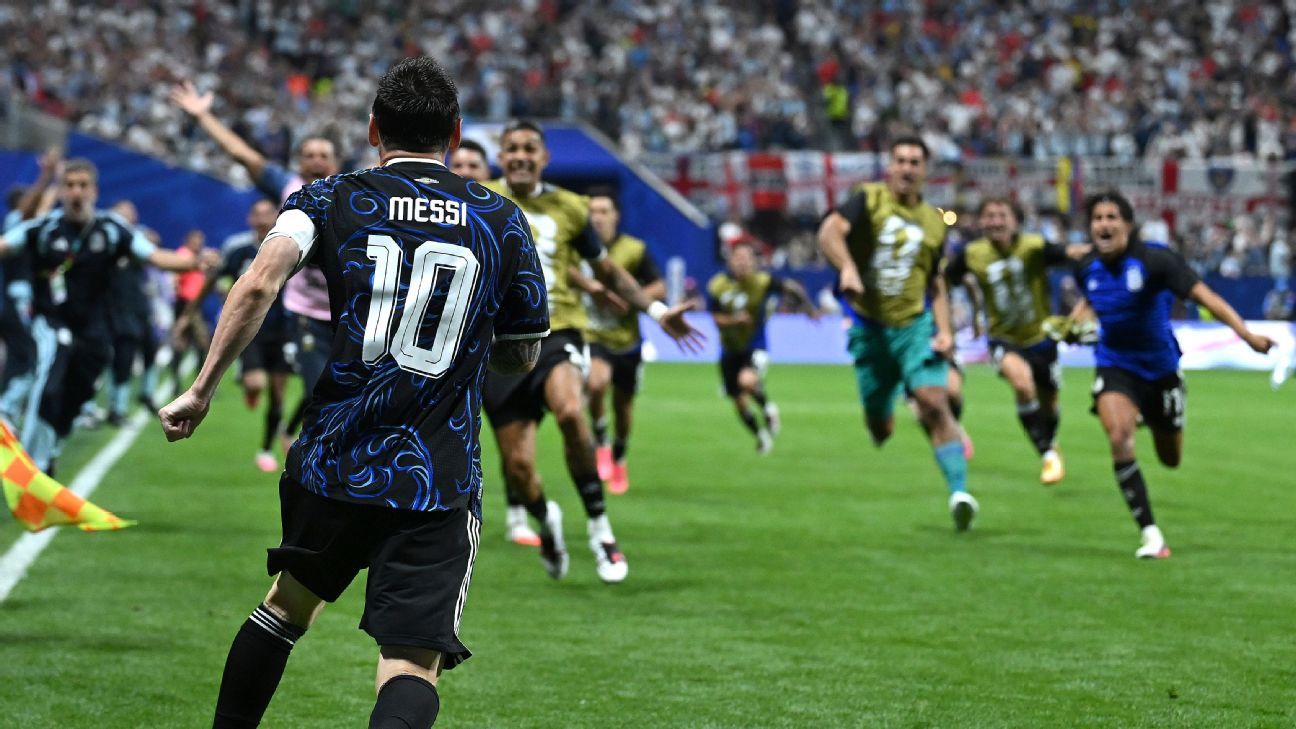
Any Lionel Messi conversation at a World Cup final begins before the ball is even kicked. That is the price of greatness and the gift he has given the tournament: every match involving him arrives carrying its own mythology. By the time the final begins, Argentina will not simply be defending a title. They will be defending a narrative — the idea that this cycle has been theirs, that the ending has already been written in blue and white.
Spain, though, are not a supporting act. They are the sort of opponent that can make a final feel like a long argument, one conducted at passing speed. Their task is obvious and brutally difficult: deny Argentina the emotional rhythm they crave. If they can slow the game down without becoming passive, if they can keep the middle of the pitch clean and deny easy transitions, they can drag the match into territory where nerves, not memories, decide the outcome.
For readers looking for the broader stakes, this is why I keep coming back to Spain’s presence. The tournament has often been framed as a tournament of stars, but Spain remind us that the most enduring football nations are also the most coherent. They do not merely hope for inspiration. They manufacture conditions in which inspiration has somewhere to land.
That matters beyond Sunday. It matters because the global game is constantly tempted by simplification — one heroic figure, one decisive error, one golden moment. Spain challenge that habit. So do Argentina, in their own way, though theirs is the more combustible version of belief.
The tournament’s old hierarchy looks less solid now
Five weeks into a World Cup, you can feel the old assumptions begin to buckle. The game has become more interconnected, more tactically literate, less willing to grant anybody permanent ownership of the stage. The semifinal field, and the final it produced, is a reminder that football’s prestige economy no longer works in straight lines.
I’ve always believed the World Cup tells on the sport. It exposes who has truly adapted and who is still trading on history. This tournament has done that with unusual clarity. The old idea that the final must always be a collision of the same familiar powers has cracked a little further. The result is not chaos. It is health. It means the sport is alive enough to keep surprising itself.
The emotional consequence, though, is more complicated. Fans crave continuity, but they also crave the feeling that the game can still tilt toward wonder. A final between Argentina and Spain offers both: continuity through star power and structure, surprise through the fact that this combination has not been the tournament’s default setting. That is a rare and valuable thing.
I would go even further. The semifinal round suggested that the next frontier in international football may not be greater invention, but greater emotional control. The sides that survive are the ones that can hold their shape when the crowd, the clock and the calendar all begin to press. That is less glamorous than genius. It is also, more often than not, what wins.
Sunday’s final will be about nerve, not just name value
The World Cup has reached the stage where every touch seems to carry the weight of months. That is what five weeks do to a tournament. They make everything feel inevitable until suddenly it is not. The final will not merely settle a champion. It will tell us whether this era belongs more to individual brilliance, collective discipline, or that rare and fragile combination of both.
Argentina know the burden of expectation. Spain know the burden of control. One of those burdens will be lighter on Sunday. Maybe that is what decides it.
Either way, the bracket has done its work. The rest is history waiting for a scoreline.
More from Straight From The Bench
Comments
Join the conversation — sign in to leave a comment.
Sign in to commentRelated Stories
Argentina World Cup Banner Row: UK Urges FIFA Probe
Argentina’s postmatch banner over the Falklands has kicked the match into politics. FIFA now has a headache, and so does everyone who thought this would stay on the grass.

Argentina vs England World Cup Semifinal: Tuchel, Messi, and the Turn
Argentina rode belief, nerve and Lionel Messi’s old magic past England in Atlanta. England’s tactical mess made the comeback far too easy.
Argentina vs Spain World Cup Final: Messi's Farewell Circle
Messi's World Cup path has looped all the way back to Spain, the country that nearly claimed him two decades ago. If this is the end, it's arriving with perfect symmetry.