
Aryna Sabalenka US Open Media Questions: Partying, Next Question
The world No. 1 came to play tennis, not audition for a gossip column.
 Leo Lupo5 min read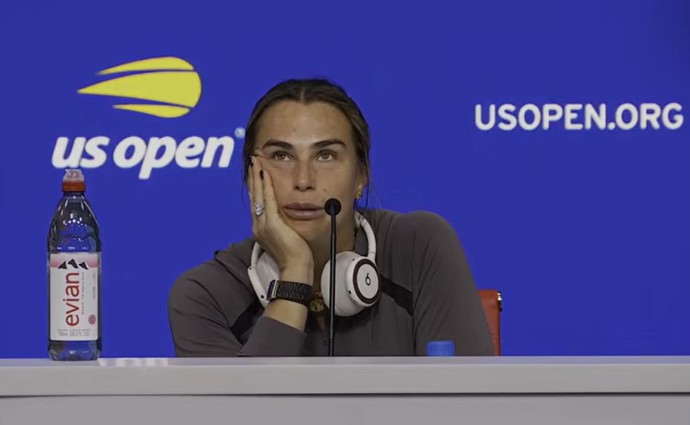
Aryna Sabalenka walked into the US Open spotlight with the usual noise around a top seed: draw, form, nerves, the whole circus. Then came the extra garnish — the kind of question that has nothing to do with forehands and everything to do with somebody trying to manufacture drama out of a player’s schedule. She’d spent part of her week doing sponsor work and brand events, and a reporter wanted to know if that made it hard to switch into tournament mode.
Sabalenka didn’t bite. Good. She’s earned that much. The world No. 1 is one of the few players in the women’s game who can carry the weight of being both a contender and a headline all by herself, and she didn’t get there by pretending every off-court obligation is a moral failing. Tennis has turned into a year-round content machine. Players are expected to train like monks, market like executives, smile for cameras, and then act shocked when someone asks if they were “partying” too hard. Please. Spare me the fake pearl-clutching.
The question wasn’t about tennis, and Sabalenka knew it
The setup was obvious from the jump. The issue wasn’t whether Sabalenka can handle a racket. It was whether a few brand appearances somehow made her less serious about the US Open). That’s the kind of lazy framing athletes get when a microphone is handed to somebody who thinks a tournament week should look like a monastery retreat.
Sabalenka’s reaction mattered because it showed a player who understands the difference between noise and substance. She knows the drill. Win, and the off-court stuff gets called “smart business.” Lose, and suddenly everybody wants to inspect your calendar like a union auditor. Same old racket. Different city.
And make no mistake, the women’s game lives under this microscope more than most. Stars like Sabalenka, Coco Gauff, and Iga Świątek are expected to sell tickets, sell outfits, sell the sport, and still be treated like they’re one late-night dinner away from collapse. The men don’t get a free pass on every question, but the tone around women’s tennis can get awfully nosy, awfully fast.
If a player can win after sponsor week, then maybe the sponsor week wasn’t the problem in the first place.
Why the sponsor grind is part of the modern tennis gig
People like to talk about tennis as if it’s still a tidy little country-club sport where the only thing that matters is what happens between the baselines. That ship sailed a long time ago. Big names are walking billboards because the sport wants them to be. The tours want the reach, the majors want the buzz, and the brands want the face time. Everybody cashes the check. Everybody gets the photo op.
For a player like Sabalenka, that tradeoff is part of the job. She’s not some rank-and-file journeyman trying to squeeze extra hours out of a hotel room. She’s the WTA Tour face of power tennis, a two-time Australian Open champion with the sort of game that can flatten opponents when she’s dialed in. If a few days of appearances could undo all that, then the whole structure would be weaker than we’ve been pretending.
What matters is whether the work is managed. If she’s getting the recovery, hitting the right number of balls, keeping the body fresh, then the rest is window dressing. The mistake is assuming visibility equals carelessness. Sometimes a player does the extra obligations because the sport demands it. Sometimes the sport is greedy and wants the match, the ad, and the soundbite, all before dinner.
The real pressure at the US Open is on the tennis, not the optics
This is where the story gets serious, because Sabalenka isn’t just any name in the draw. She’s the top woman in the sport. That means every eyebrow raise gets turned into a theory, every shrug into a headline, every answer into a referendum on professionalism. That’s the tax that comes with being No. 1.
But the actual tournament doesn’t care about branding schedules. Hard courts don’t ask about media obligations. The USTA Billie Jean King National Tennis Center will punish anyone who shows up flat, whether they spent the week in a recovery room or a sponsor suite. The only honest test is what happens after the first ball toss.
Sabalenka’s edge has always been brutally simple: power, intent, and a willingness to hit through the noise. When she’s on, she can bully a match into her shape. When she’s not, the errors show up like unpaid bills. That’s why the off-court chatter matters only if it leaks into performance. Otherwise, it’s gossip dressed up as analysis.
Leo’s take: the sport needs fewer purity tests and better questions
I’ve covered enough tennis to know this much: the best players are not museum pieces. They’re working pros in a sport that asks them to be athletes, celebrities, and small-business empires all at once. If that bothers somebody, fine. Go complain to the people who built the circus. Don’t act surprised when the lion has to walk through the gift shop.
Sabalenka’s irritation was healthy. Frankly, it was overdue. Too many reporters settle for the softest possible angle because it gives them a tidy little narrative — “Did the partying hurt the prep?” — instead of asking whether the player felt sharp, whether the schedule was managed well, whether the week helped or hurt the body. That’s the real story. The rest is cheap varnish.
And here’s the bigger picture: the modern champion has to guard her attention like cash in a coat pocket. That’s true in tennis, true in basketball, true everywhere. If Sabalenka is going to keep owning big stages, she’ll need the same thing every elite player needs — discipline, recovery, and a thick hide. Sounds boring. Usually is. That’s why it works.
If she brings her level to New York, nobody will care what she did in the sponsor suite. If she doesn’t, the second-guessing will come roaring back. That’s tennis. Cold, petty, and honest all at once.
More from Straight From The Bench
Comments
Join the conversation — sign in to leave a comment.
Sign in to commentRelated Stories

Alexandra Eala U.S. Open: Filipina fans bring the noise
Alexandra Eala’s rise has brought a loud, proud Filipino presence to the U.S. Open. Tennis may clutch its pearls, but the crowd is part of the show.

Daniil Medvedev US Open: bird interruption sparks wild scene
Medvedev got another surreal U.S. Open moment, only this one came with wings. The second-round interruption was bizarre, brief, and completely on brand for New York.

US Open 2026: Gael Monfils wins on 40th birthday
Gael Monfils made his 40th birthday look like a closing act, not a curtain call, and the US Open crowd loved every second of it.