
ASU Hockey Coach Leave: Matthew Mayich collapse raises hard questions
A tragedy in the heat, and a reminder that college sports still asks too much of bodies and trust.
 Beatrice Kensington5 min read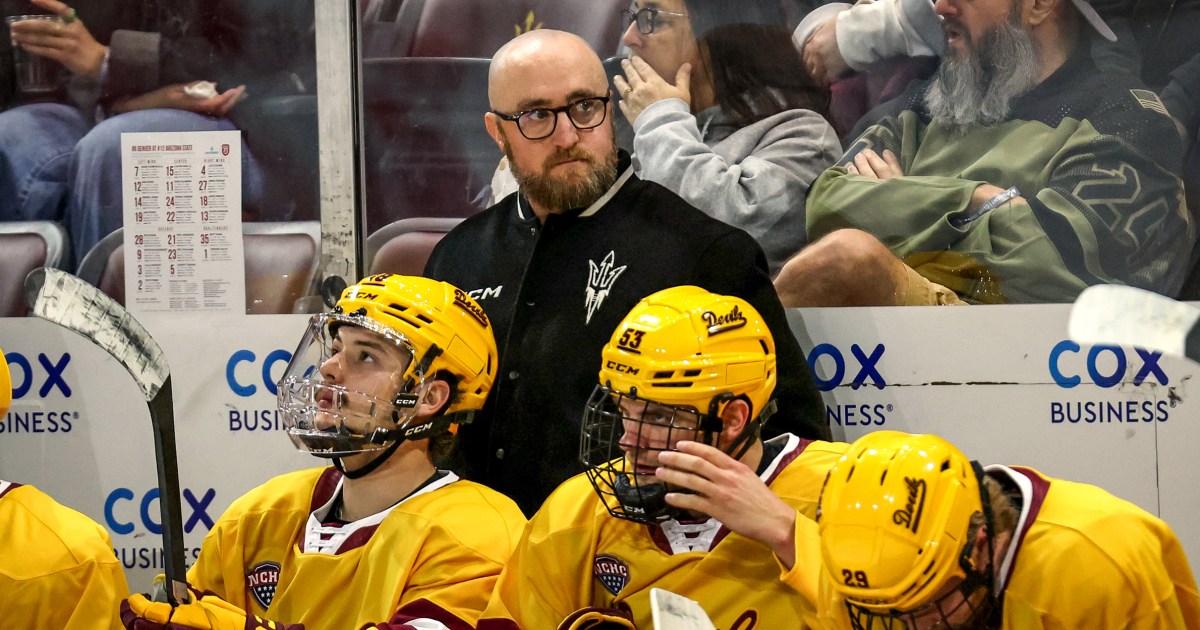
A practice day that turned into a family’s nightmare
The season, the system, the paperwork — all of it recedes when a 21-year-old athlete goes down in the Arizona heat and never comes back the same. Arizona State University has placed hockey coach Greg Powers on leave after Matthew Mayich collapsed during a summer workout on Aug. 20 and suffered extreme heatstroke, a development that should stop any casual talk of discipline-as-the-story and force a harder look at how college programs manage risk when the weather turns punishing.
This is not a hockey problem alone. It is a college sports problem, a power problem, a duty-of-care problem. And it is the kind that reveals itself only after the damage has already been done.
The desert does not negotiate
Arizona August is not a backdrop; it is a character in the scene, a merciless one. Sunlight in that part of the country has a physical weight to it, and anyone who has stood outside in it knows that training there is not merely uncomfortable — it can be dangerous with frightening speed. Heatstroke does not announce itself politely. It arrives with confusion, collapse, and then the long, bitter arithmetic of medical consequences.
That is why this case lands with such force. If a program is going to hold workouts in the desert summer, every part of the operation must be built around prevention, monitoring, and swift response. Water breaks are not enough. A plan on paper is not enough. Athletic departments love the language of “standards,” but standards are only real when they are alive in the heat, in the decisions made minute by minute.
There is a reason sports medicine spends so much time on acclimatization, emergency action plans, and sideline response. The body does not care about ambition. The sun does not care about tradition.
Leave is the easy part; accountability is harder
Putting Powers on leave is the institutional move, the first visible act after a catastrophe begins to peel back the layers. It may be necessary. It may be prudent. But leave is also the kind of administrative sentence that can look decisive while leaving the deeper questions untouched: Who approved the workout? What safeguards were in place? Who recognized the danger first? Was the workload appropriate for the conditions? Did anyone hesitate too long because a session had to be finished, because routines had to be honored, because in sports the culture of pushing through can become its own quiet religion?
The hard truth is that this story will not be resolved by one personnel decision. If there was a failure, it will likely be found in the seams — in communication, oversight, judgment, and the old, familiar tendency in athletics to mistake toughness for wisdom.
In college sports, the most expensive mistake is often the one made in the name of being uncompromising.
That sentence stings because it is true more often than anyone wants to admit.
A young player, a family holding on, and a sport that must learn
Mayich’s condition, as relayed by his family attorney, is devastating. “Unlikely to recover” is the sort of phrase that punches air from a room. It is legal language, yes, but also human language — the language of people bracing for a future they did not choose. There is no clean sports-column ending to that. Only the recognition that a family’s life has been altered beyond the boundaries of any rink.
I have spent long enough around college athletics to know how often the people inside these programs are asked to absorb the unthinkable in private while the machine keeps moving in public. Scholarships get discussed, schedules get adjusted, statements get drafted. But at the center of every such story is a kid who trusted adults to get the basics right. That trust is the real contract. Everything else is administration.
And it is not enough to say tragedies happen. Sometimes they do. But “happen” can become a lazy verb, a refuge for institutions that would rather call an event unforeseeable than ask whether it was preventable. Heat-related collapse in organized athletics is not mysterious. It is studied. It is documented. It is feared. Which means any failure around it carries an especially sharp edge.
Arizona State’s men’s ice hockey program now sits in the harsh light of public scrutiny, and deservedly so. Programs everywhere should be watching. Not because one school’s pain absolves another’s risk, but because this is how the wider sports world learns: through one awful case that forces every other staff to look again at what they are doing in the heat, in the weight room, on the field, in the margins where safety can too easily become assumed.
I keep coming back to the same thought: the most dangerous thing in sports is not always recklessness. Sometimes it is familiarity. The sense that we have done this drill before, in this place, under these conditions, and therefore it can be done again. Summer has a way of punishing that kind of confidence.
What Arizona State must answer now
The university will have to answer carefully and fully, not with polished phrases but with specifics. There will be investigations, interviews, records, and inevitably some measure of legal caution. That is unavoidable. What should not be avoided is candor.
If the school wants to demonstrate that this was not merely a reputational crisis, it will need to show what changed: how workouts are scheduled, how heat thresholds are enforced, how athletic trainers are empowered, how quickly emergency care is mobilized, and how much room coaches have — or do not have — to override common sense in the name of preparation.
For a program still trying to build itself in the shadow of bigger hockey powers, this is a brutal chapter. Yet the competitive angle matters least. The only scoreboard here is the one counting whether institutions treat player welfare as a slogan or a rule.
The silence after a summer collapse is heavy. Arizona State now has to live inside it, and answer for what comes next.
The next step must be more than review. It must be proof.
More from Straight From The Bench
Comments
Join the conversation — sign in to leave a comment.
Sign in to commentRelated Stories
Texas Longhorns vulgar celebrations: Chris Del Conte apologizes
Texas got the win over Tennessee, then handed the athletic director a mess to clean up. Chris Del Conte called the Longhorns’ vulgar celebrations embarrassing, and he wasn’t wrong.

USC's Lincoln Riley Hot Seat: Why the Buyout Won’t Save Him
USC’s standard isn’t “better later.” It’s win now, or start hearing the chairs scrape. Lincoln Riley is already in the pressure cooker.

Ohio State Sub Zero Uniforms vs Iowa: Buckeyes Break Them Out
Ohio State is dusting off the Sub Zero look for Iowa, and the Buckeye Stripes twist gives the throwback gear a fresh bite. It’s fashion, sure — but it’s also a flex.