
Barcelona sign Rodri: what £65m move means for City
A mercenary market, a weary hero, and Barcelona buying a familiar kind of control.
 Beatrice Kensington5 min read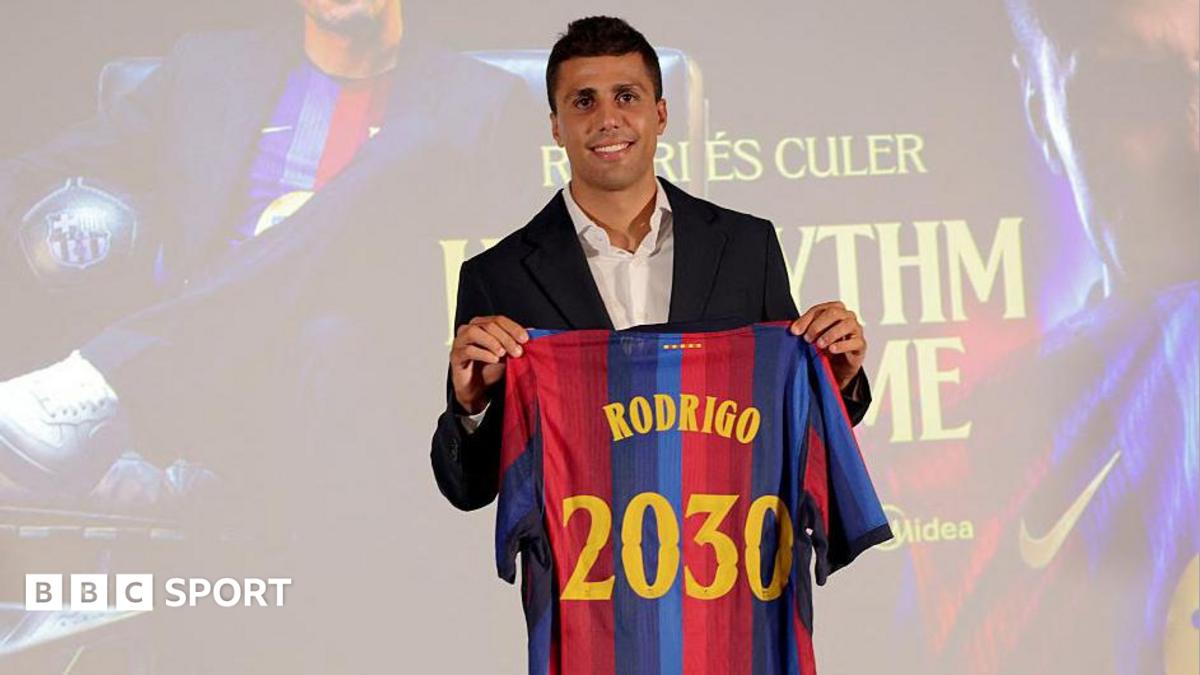
Barcelona have not merely bought a midfielder. They have purchased a shape of calm, a metronome with lungs, a player who can slow a match until it bends toward his team’s will. Rodri’s move from Manchester City to Barcelona for £65 million is the kind of transaction that tells you less about the balance sheet than the mood of two giants: one selling from a position of plenty, the other buying from a place of need.
The story carries a familiar European perfume. A player leaves England after collecting trophies in abundance, then returns to Spain carrying a Ballon d'Or, a reputation burnished by pressure, and the subtle authority that only comes from living in the center of the storm. Barcelona, who have spent too many recent seasons trying to rediscover the grammar of control, have gone for the one midfielder who makes control look like a natural right rather than a tactical luxury.
Barcelona did not buy flair — they bought order
Rodri has never been the player who asks for the spotlight. He is the one who arranges it. In City blue, he became the hinge of everything that followed, the first pass after panic, the final screen against chaos. That is what Barcelona are purchasing here: not romance, but structure.
For a club whose best years were built on possession as philosophy, this is a telling admission. The Camp Nou crowd has seen plenty of attackers arrive with tapes of goals and adjectives attached to their names. Fewer arrivals have come with the promise of making everyone else better simply by occupying the right space. Rodri does that. He turns possession from decoration into doctrine.
This is also a statement about where Barcelona believe they are in the cycle. Clubs do not spend this sort of money on a midfielder of Rodri’s profile unless they think the margins are still there to be seized. They are paying for command in the middle third, and for the kind of player who can let younger legs run around him while he keeps the map in his head.
Barcelona have not bought a headline. They have bought the pause between the headlines.
Manchester City lose more than a body in midfield
Seven years at City gave Rodri the rarest currency in modern football: trust. Pep Guardiola’s sides are ruthless about such things. If a player is indispensable in that ecosystem, it means he has absorbed the hardest truths of the job — where to stand, when to accelerate, when to kill a match with one touch and no apology.
That is why this departure stings more deeply than a simple transfer fee might suggest. City can recruit talent. They have built a machine that attracts it. What they cannot replace quite as easily is the quiet authority of a player who made their football look inevitable. There are plenty of midfielders who can pass. There are very few who can make the game feel smaller.
The English champions have lived through the departure of stars before, of course, and survived. But each exit of this kind changes the texture of a team. The next City midfield will not merely need technical quality; it will need emotional grammar. Someone must now assume the burden of slowing the room down when it starts to rattle.
And there is a human side to that, too. Players spend years building a working life inside a club’s machine, then move on with all the ceremony of commerce and all the private weight of leaving behind a place where they knew the sounds in the corridor and the rhythm of the training ground. Rodri’s note about wanting to “feel that excitement again” lands because it speaks to what even the most decorated professionals eventually miss: not the medals, but the sensation of beginning again.
Spain gains a captain without the armband
Rodri’s return to Spain is more than a sentimental homecoming. It is a recalibration of the national game’s center of gravity. Spain have spent the last decade searching for versions of themselves — post-tiki-taka, post-golden generation, post-certainty. In Rodri, they have a midfielder who embodies the old Spanish love of passing angles, but with the hard edge demanded by the modern game.
That matters in a country where midfielders are not just judged on function, but on temperament. Rodri brings the reassuring realism of someone who has played under the harshest tactical scrutiny in Europe and emerged with his reputation enhanced, not diminished. He can anchor Spain in tournament football, where nerves sharpen and spaces vanish. He can do for Barcelona what the club has often tried to do for itself: make the simplest things feel inevitable.
There is also symbolism here that Barcelona cannot ignore. In an era when the richest clubs buy speed and spectacle, Barca have reached for a player whose genius lies in restraint. That is almost old-fashioned. Almost brave.
What this means for the next season
For Barcelona, the immediate question is how quickly Rodri becomes the axis around which everything else turns. For all the romance of the signing, this will be judged in the old, unforgiving currency of nights and points. Does he make them harder to press? Does he reduce the ugly stretches when possession feels decorative rather than dangerous? Does he give their back line the sense of protection that allows the front line to gamble more freely?
Those are not small questions. They are the season.
I have always believed the smartest transfer is the one that changes what a team can endure. Rodri is that sort of signing. Not flashy. Not noisy. The kind that reveals itself in the second half of difficult matches, when others begin to rush and he appears to be thinking three passes ahead. Barcelona have spent too many years chasing the echo of their own old brilliance. This move suggests they are finally interested in building something sturdier than nostalgia.
That is where the real test begins. Not in the unveiling. Not in the photographs. In the cold minutes of January, in the narrow matches, in the moments when a club discovers whether it has bought a player or a principle.
Rodri arrives with the burden of being both. And that is exactly why Barcelona wanted him.
More from Straight From The Bench
Comments
Join the conversation — sign in to leave a comment.
Sign in to commentRelated Stories
FIFA leadership crisis: Klaveness blasts Infantino’s fear culture
Lise Klaveness didn’t just criticize FIFA. She hit the nerve: power, silence and a leadership style that scares people into compliance. That’s a bad look anywhere, uglier inside football’s biggest hou

Premier League 2026-27 Season Preview: title race, transfers, shocks
The Premier League’s 2026-27 preview is here, and the usual suspects won’t get a free pass. Transfers, tactics, and nerves are all on the line.
Seattle Sounders Loss: Outside Help Suddenly Looks Mandatory
Seattle’s latest defeat laid bare a roster short on answers and shorter on bite. The Sounders don’t need a tweak anymore — they need help.