
Brad Keselowski RFK Racing Ford Departure: What 2026 Means
A slow farewell, and a reminder that racing careers rarely end where they once seemed destined to.
 Beatrice Kensington6 min read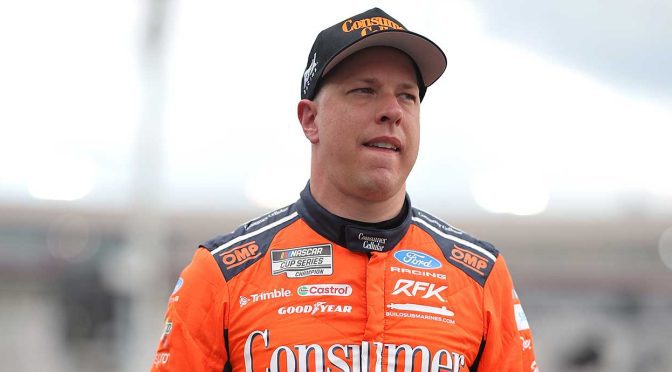
Brad Keselowski’s departure from the No. 6 RFK Racing Ford at the end of 2026 lands with the weight of a closing bell, not a crash. It gives the garage something NASCAR rarely offers: time. Time for the team to plan, time for the driver to shape the final chapter, time for a partnership that helped pull RFK Racing from the middle of the sport’s pack into sharper relevance to write its own ending instead of being cut loose by the calendar.
That matters. In a sport built on velocity, the most important part of this announcement is its patience.
A farewell with the calendar still open
Keselowski is not being pushed out in haste, and that alone tells you something about where RFK believes it stands. The organization has spent years trying to reclaim its place among NASCAR’s serious players, and Keselowski has been both symbol and engine in that effort. He arrived with a champion’s résumé, the kind of hard-edged authority that can steady a team as much as a veteran crew chief can.
Now the team has announced an ending two seasons out, and that changes the story from personnel move to succession plan. It is one thing to replace a driver after disappointment. It is another to begin the handoff while the current one is still intact. The latter requires a little courage and, perhaps more importantly, a little honesty about the future.
For NASCAR, where continuity often gets buried under wreckage and rumor, this is an unusually clean break. No smoke. No melodrama. Just the quiet announcement that the road ahead has a mile marker on it.
The rarest luxury in racing is not speed. It is a clear ending.
What Keselowski still brings to the table
There is still plenty of racing left between now and then, and Keselowski is not drifting into irrelevance. At his best, he remains one of the sport’s most tactically stubborn competitors, the kind who can make a race uncomfortable for everyone else by simply refusing to behave like a passenger in it. That has been his calling card for years, from his Cup Series title in 2012 to the long, grinding work of being both driver and builder.
RFK has benefited from that duality. Some drivers collect hardware; others help forge an identity. Keselowski has tried to do both. He has been the experienced hand in the room and the man willing to speak plainly about what a team needs to become. Those voices are not decorative in stock car racing. They can shape hiring, engineering priorities, and the tone of a shop.
This is why his exit date matters beyond one seat. It asks RFK to decide what sort of organization it wants to be after the final lap of the Keselowski era. Does it lean into youth and upside? Does it chase another established name? Does it promote from within? Each path carries different risks, and each reveals something about how seriously the team believes it can contend.
RFK’s long game is now out in the open
There is a broader American racing truth hiding inside this announcement: teams that wish to matter for more than a season need a plan longer than a sponsor activation. RFK’s public commitment to a future beyond 2026 suggests they are not just reacting to the present tense. They are thinking about the machine after the man.
That is a delicate proposition in motorsport, where talent and timing have a nasty habit of arriving together or not at all. A team can spend years assembling the right pieces and still miss the moment if it misjudges a driver transition. The most successful organizations often look less like monuments than apprenticeships, always training the next pair of hands before the old ones leave the wheel.
Keselowski’s value in this stretch may be partly spiritual. He can help define what RFK should keep and what it must shed. Teams take on the personality of the people who survive their lean years. When those people start to leave, the residue matters. The habits matter. The culture matters.
I have always believed the best driver departures tell you more about an organization than the best driver signings. A signing is aspiration. A departure is a test of whether the aspiration ever truly took root. RFK now has the chance to prove that its recent gains are not dependent on one man’s grip on the steering wheel. If it succeeds, Keselowski’s tenure will read less like a stopgap and more like a foundation.
That is no small thing in a sport where legacies are often measured in decal layers and garage politics as much as trophy cases. The next two seasons will tell us whether RFK’s rise has been real, or merely the sort of promising weather that never quite breaks.
What to watch between now and the end of 2026
The next questions are practical, and they will shape the emotional ones.
First, how does RFK manage the messaging around succession without letting 2026 become a long goodbye that saps urgency from the present? Teams can become sentimental at exactly the wrong moment. Winning requires a clean windshield.
Second, will Keselowski use this runway to sharpen his final act? There is dignity in a driver leaning into the closing stretch with purpose, not nostalgia. If he has another signature win in him, or another playoff run that matters, the announcement could become a frame rather than a footnote.
Third, who is positioned to inherit the seat, the expectations, and the pressure? The answer will tell us whether RFK is hunting for stability, upside, or a little of both. Each choice sends a different signal to sponsors, competitors, and the broader garage.
For readers tracking the wider NASCAR landscape, this sits alongside the sport’s other ongoing questions about leadership and identity, including the way teams are managing change in the wake of hard lessons and public scrutiny. We have seen how quickly a season can turn on confidence inside a team, as explored in our look at Nick Sirianni's sideline regret and the emotional toll of public accountability. Different sport, same human truth: what a team says about its future often matters as much as the results on Sunday.
Keselowski’s exit date is a promise, but also a pressure point. The clock is now visible. That makes every lap between here and the final flag feel a little heavier.
The road to 2026 is long. The hard part is already here.
More from Straight From The Bench
Comments
Join the conversation — sign in to leave a comment.
Sign in to commentRelated Stories
Garrett Crochet Wild Card Roster: Red Sox Get Their Ace Back
Garrett Crochet is back on the Red Sox’ Wild Card roster, and that changes the temperature of this series fast. Boston didn’t wait around for a future debate — it chose its best arm for the moment tha

Fantasy Football Waiver Wire Week 4: Braelon Allen Tops Pickups
Week 4 brings fresh injuries, shaky depth charts, and a few backs worth burning FAAB on. Braelon Allen and Ollie Gordon II are the names to know.
J.J. McCarthy Update: Vikings End the Quick-Exit Experiment
Minnesota is moving on from the J.J. McCarthy era after just 10 starts, a stark reminder that first-round quarterbacks rarely get the same mercy as first-round reputations.