
Brewers Trade Rumors: Tarik Skubal and Mason Miller Checked In On
Milwaukee is acting like a contender that refuses to wait politely.
 Beatrice Kensington6 min read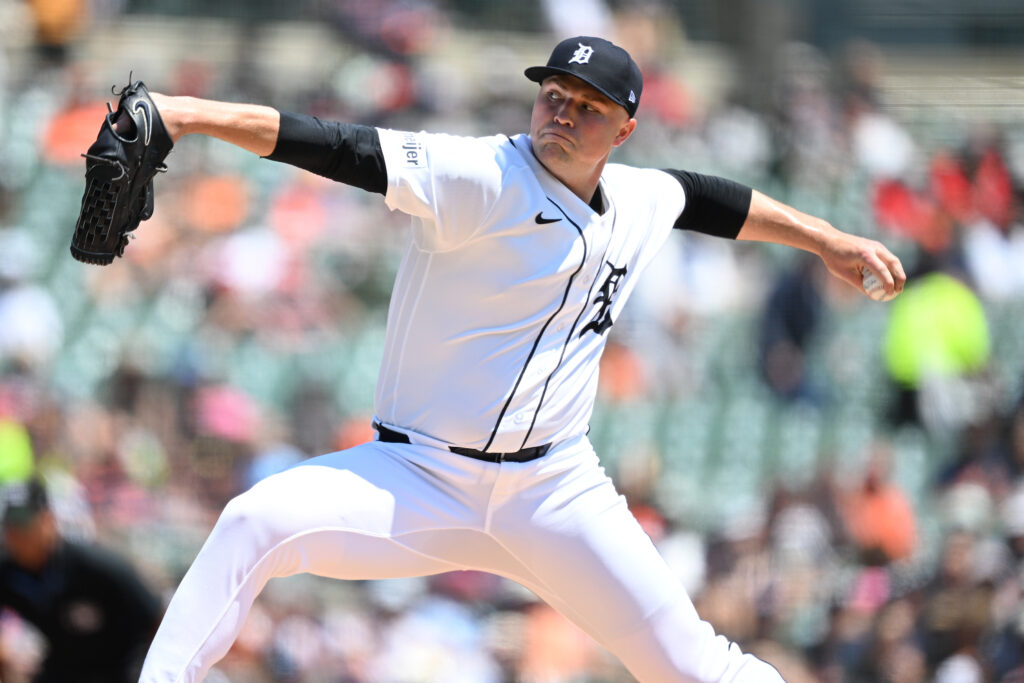
The Milwaukee Brewers have spent the summer looking like a team that knows exactly where it lives on the baseball map: not quite the sport’s wealthiest realm, but no longer content to shop in the bargain aisle while the contenders dine upstairs. Their reported check-ins on Tarik Skubal and Mason Miller are not merely due diligence. They are a declaration.
Milwaukee, one of the best clubs in the game, is signaling that this season deserves more than a cautious nudge. It deserves force. It deserves risk. And in a market where the premium is always paid in prospects, the Brewers appear ready to ask a hard question of themselves: how much of tomorrow are we willing to cash in for October?
Milwaukee is not acting like a polite buyer
The Brewers’ posture matters as much as the names attached to it. Checking in on Tarik Skubal and Mason Miller) is the kind of call only a serious club makes. Those are not second-tier reinforcements. They are front-of-the-rotation, back-of-the-bullpen weapons — the sort of pitchers who change the silhouette of a postseason series.
And that is the point. Milwaukee has already established itself as a legitimate threat, not a hopeful interloper. When a team in that position starts poking at elite arms, it is usually because the front office sees a narrow, valuable window and intends to walk through it with mud on its cleats.
The Brewers have lived too often in the uncomfortable space between competitiveness and true financial muscle. This is what makes their current moment so interesting. They are not behaving like a club content to admire the upper tier from a safe distance. They are behaving like one that believes the ladder can be climbed if the right rung is seized firmly enough.
Tarik Skubal and Mason Miller are different kinds of thunder
Skubal and Miller are not interchangeable, and that distinction says a great deal about what Milwaukee could be hunting.
Skubal is the kind of starter who can change the geometry of a playoff rotation. A pitcher like that shortens a series before it even begins. He forces opposing managers to redraw their plans, to think twice about matchups they thought were settled. He is the kind of acquisition that can turn a good rotation into a fearsome one.
Leonardo da Vinci once said that simplicity is the ultimate sophistication; baseball, with its endless front-office machinations, often proves the opposite. Sometimes the simplest path is the most brutal one: get the best arm, and let the rest fall into place.
Miller, meanwhile, is the kind of bullpen force that can suffocate a game in one inning and alter the way a manager handles the previous eight. Relief aces have become postseason currency precisely because they compress the danger. They are emergency exits and padlocks at once. If Milwaukee is interested there, it suggests a team not merely trying to survive the ninth inning, but trying to control the terms of the entire inning-to-inning fight.
The Brewers are not shopping for help. They are shopping for leverage.
That is a different kind of ambition, and a more revealing one.
Why this matters for a small-to-mid market contender
There is always a cultural undertone to moves like this. Big-market clubs can mistake urgency for inevitability, as though money alone confers destiny. Milwaukee cannot afford that luxury. Every meaningful trade for a franchise of this scale is an argument with its own future.
That is why the Brewers’ reported aggressiveness feels notable beyond the box score. The club has already shown, through the shape of its season, that it belongs among the National League’s real threats. Now the front office appears willing to reinforce that reality with actual force rather than comforting language.
It also sends a message to the clubhouse. Players know the difference between an organization that says it wants to win and one that behaves as if winning is the only acceptable outcome. A team chasing an upgrade on Skubal or Miller is telling its roster: we see you, we trust you, and we’re not asking you to carry this alone.
That matters. In a long season, belief can be as useful as velocity.
The prospect cost will define the decision
Of course, every brave deadline pursuit has its invoice. Milwaukee does not get to explore the top shelf for free. A move for either pitcher would almost certainly require real young talent, the kind of cost that can leave a system thinner and a front office exposed if the gamble misfires.
And that is where the judgment gets sharp. Deadline acquisitions are often celebrated in July and judged in November, which is baseball’s merciless little joke. A club can come out looking shrewd for the season and foolish for the future in the same breath.
I’ve always believed the most revealing deadline decisions are the ones that force a franchise to reveal its own self-image. Does Milwaukee think of itself as a perennial almost-there club, careful with its chips and proud of the restraint? Or does it see the current roster — the current year — as rare enough to warrant discomfort?
My own reading is this: if you believe you have a team capable of surviving the National League tournament table, you do not sit around waiting for the market to become polite. You go where the force is. You pay for it. Then you live with the bill.
That is especially true for a franchise like the Brewers, whose best windows have often been narrow and precious. A club does not get many summers when the standings, the clubhouse, and the calendar all seem to point in the same direction. When that alignment arrives, hesitation can become its own form of waste.
What to watch before the deadline
The next question is whether these check-ins become something heavier. Monitoring elite arms is one thing. Actually landing one is another matter entirely.
Keep an eye on whether Milwaukee broadens its search beyond the obvious marquee names. If the asking prices on Skubal or Miller prove too rich, the Brewers may pivot to a lesser—but still meaningful—addition that deepens the roster without detonating the farm. That would still fit the larger story: this is not a team waiting to be invited into the conversation. It is already in it.
And if the Brewers do make a major strike, the ripple effect will be felt across the league. Other contenders will have to respond. Rival front offices will recalibrate. The deadline will start to look less like a market and more like a bidding war with October in the background.
The Brewers have opened the door. Now comes the harder part: deciding whether to step fully through it, and how much of the future they are willing to leave on the threshold.
More from Straight From The Bench
Comments
Join the conversation — sign in to leave a comment.
Sign in to commentRelated Stories

MLB Trade Deadline: 20 players likely changing teams
The 2026 deadline is messy, crowded and full of bad math. That usually means one thing: useful players move, and teams pretend they saw it coming.

Tampa Bay Rays Stadium Vote: Redevelopment Agency Cuts August Agenda
Tampa’s redevelopment agency has pulled a stadium vote from its August agenda, while Rays CEO Ken Babby says the club may move ahead without city money.
Dodgers White House Visit: Trump Hosts World Series Champions
The Dodgers took the White House stage after another title, but the optics were as loud as the ceremony. This is what the visit says about the team, the brand, and the moment.