
Caitlin Clark WNBA Officiating Debate: Adam Silver Weighs In
The Clark debate is bigger than one whistle. The league knows it.
 Zane Miller5 min read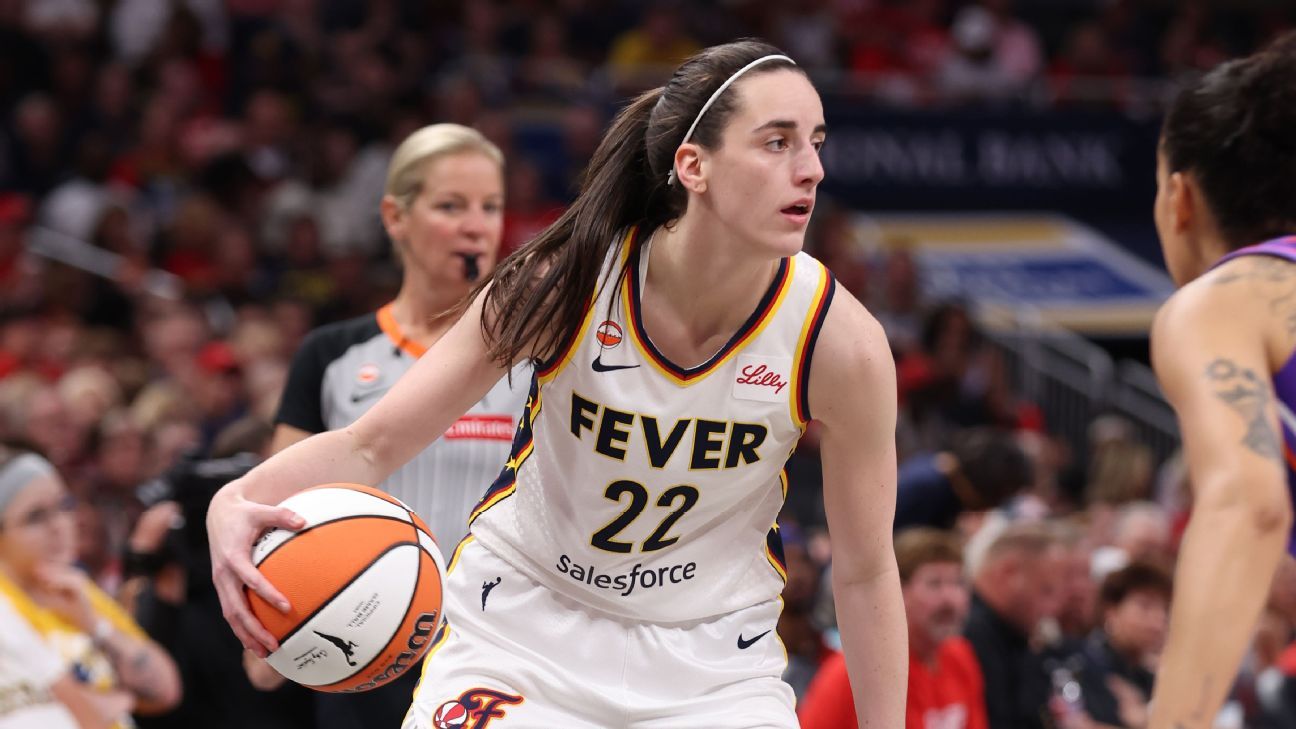
The Caitlin Clark conversation has officially outgrown the WNBA’s usual noise cycle. When Adam Silver starts calling her a “political football,” that’s not commissioner-speak for routine. That’s the NBA chief acknowledging that the league’s most bankable young star has become a battlefield for every argument about officiating, physicality, popularity, and fair treatment in women’s basketball.
This is bigger than one weekend’s whistle. Bigger than one hard foul. Bigger than one clip bouncing around social media with the usual 15-second certainty and zero context. Clark has been at the center of a leaguewide pressure point since she arrived, and now the debate has climbed to the top of the basketball food chain.
Silver didn’t say that by accident
Silver is careful with words. Always has been. So when he labels Clark a political football, he’s not just describing the discourse — he’s signaling that the noise has become impossible to ignore.
The WNBA has spent the last stretch trying to balance a simple truth: physical playoff-style basketball is part of the product, but so is protecting the league’s biggest draw. Those things are not always in harmony. That tension is nothing new in pro sports, but Clark makes it louder because every possession gets replayed like evidence in a courtroom.
The league has been here before in different forms. Star treatment. Rival fan bases. Officiating complaints that spiral into identity politics and culture-war nonsense because everyone with a phone wants a side. Clark just happens to be the star of the moment, and the moment is massive. She is not a normal rookie, not a normal market driver, and definitely not a normal social-media magnet.
Why this suddenly matters across the league
What Silver’s comment really tells you is that the WNBA’s officiating issue is no longer being treated as an internal basketball conversation. It is now part of the broader business story.
That matters because the league’s growth depends on trust. Players need to believe the whistle is consistent. Coaches need to know the standard won’t change from night to night. Fans need to feel like they’re watching basketball, not a referendum on whether one player is “too popular” or “not protected enough.” The second that trust slips, every physical matchup gets judged through suspicion.
Clark also changes the math. She pulls massive attention, and attention amplifies every whistle. On a normal night, a missed call is a missed call. With Clark, it becomes a viral clip, a debate segment, and a referendum on the league’s tone. That’s a brutal environment for officials, but it’s also the reality of the modern sports economy.
Clark doesn’t just draw defenders. She draws narratives, and those are harder to referee than any box score.
There’s a business layer here too. The WNBA’s momentum is tied to stars who can move ratings, tickets, and conversation. If the public starts believing the league cannot manage the treatment of its biggest name, that becomes a front-office problem fast. Not because one commissioner comment changes everything, but because these things snowball. Sponsors notice. Partners notice. So do players around the league who want a standard that feels stable, not reactive.
The politics around a basketball player are now the story
This is where the Clark debate gets messy. People love to pretend the argument is only about contact and enforcement. It isn’t. It’s also about who gets believed, who gets defended, and who gets turned into a symbol.
That’s the part Silver is pointing at. Clark has become a proxy for way more than basketball. Some fans see her as underprotected. Others see the reaction around her as overblown. Some see the whole conversation as proof that every big moment in women’s sports gets dragged into culture-war sludge the second it catches fire.
And that’s exactly why the commissioner’s framing matters. He’s not picking a side in a fan war. He’s acknowledging that the discourse has broken out of normal sports lanes and into something much uglier and more political.
I’ve seen this pattern before in leagues trying to manage a transcendent player before the ecosystem is ready for the volume they create. The league wants the star power, the viral reach, the sold-out arenas. It also wants everyone to chill out when the star draws hard contact and every possession turns into a referendum. You do not get the upside without the mess. Never have.
My read: the WNBA is going to keep hearing this all summer, because Clark is the rare player who turns every officiating complaint into a national topic. And once that happens, the league has two choices — tighten the standard and live with the scrutiny, or keep defending itself in fragments while the noise gets louder. One of those paths is cleaner. The other is more common.
What the league has to get right next
The next move is not about silencing debate. That ship is long gone. It’s about credibility.
Officials have to look consistent from game to game. Teams have to feel the line is clear. The league office has to stop every Clark-related controversy from looking like a separate fire drill. If they can do that, the conversation cools. Not all the way. Never all the way. But enough that basketball can breathe again.
And Clark herself? She keeps doing what stars do. Playing through the noise, carrying the attention, and forcing the league to evolve around her gravity. That’s the real story here. Not the political part. The gravitational part.
This one isn’t going away soon. The loudest voices will keep talking, the clips will keep circulating, and the whistle will keep getting audited in real time. The only question is whether the league can get ahead of the storm before it becomes the whole season.
More from Straight From The Bench
Comments
Join the conversation — sign in to leave a comment.
Sign in to commentRelated Stories

Portland Trail Blazers Lease Talks: City Sends First Term Sheet
Portland has made its first formal move in the Trail Blazers lease talks, a sign that the relationship is still salvageable. The real test is whether this term sheet is a bridge or a holding pattern.

Caitlin Clark Face of the WNBA Debate: Kareem Pushes Back
Kareem Abdul-Jabbar isn’t buying the easy label for Caitlin Clark. His criticism says as much about the league’s branding habits as it does about Clark.
Heat LeBron James Pursuit: Pat Riley Keeps the Door Cracked
Pat Riley didn’t slam the door on LeBron, and in Miami that’s enough to set the whole town buzzing. The Heat know how to keep pressure on a summer.