
De'Von Achane workload: Jeff Hafley says Dolphins will feed him
Miami’s new coach is betting on touch count — and on the body to survive it.
 Beatrice Kensington6 min read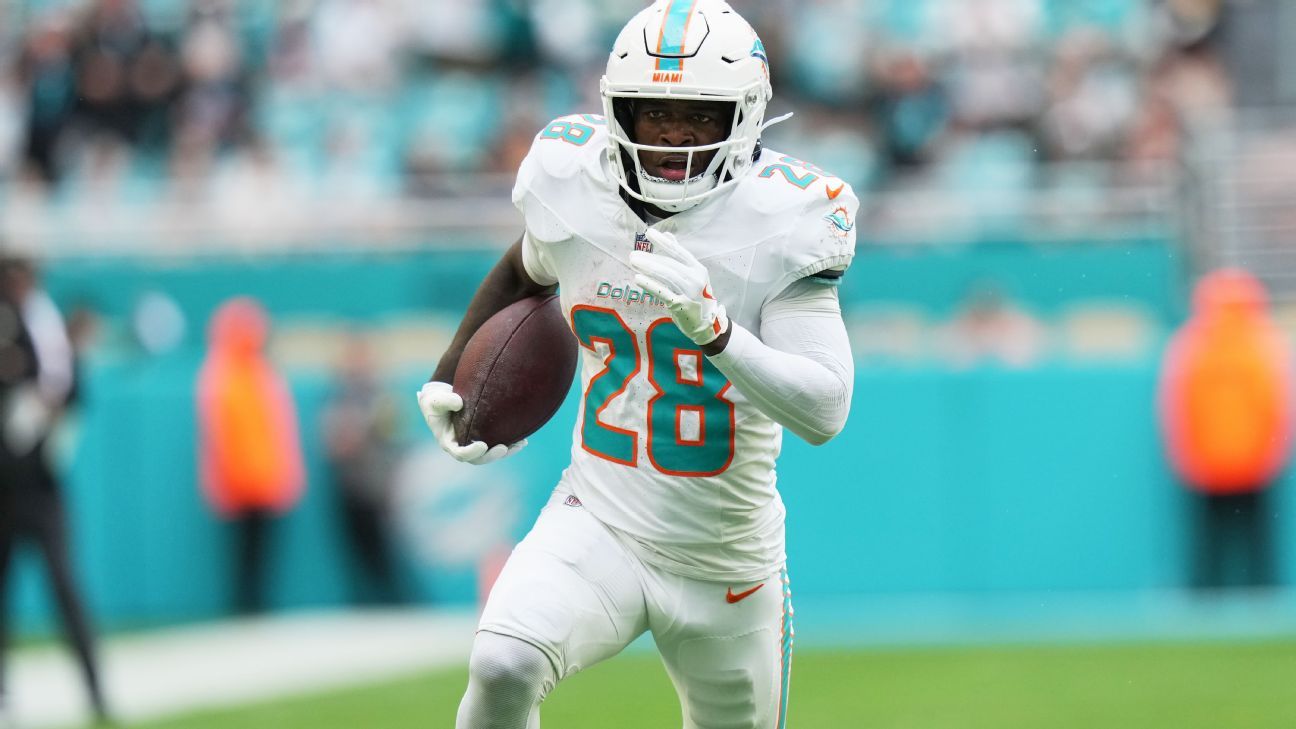
Miami is no longer whispering about De'Von Achane
Jeff Hafley has not arrived in Miami with a feather in one hand and a caution sign in the other. He has arrived talking like a man who looked at the Dolphins’ offense, found the brightest lantern in the room, and decided to leave the switch on. De'Von Achane, already one of the league’s most electric runners, is being promised volume — real volume, the kind that turns a backfield into a daily reckoning.
That is not a small thing for a player built on burst and balance, on the thin knife-edge between a crease and a highlight. Achane has always looked like a runner designed for sudden weather changes: one cut, one seam, one linebacker leaning the wrong way, and the night tilts. Miami, under a first-year coach trying to put his stamp on the place, appears ready to make him not merely a feature but the feature.
And this is where the story leaves the box score and enters the bloodstream. Touches are not abstract. They are contact, repetition, and the bruising arithmetic of a season. A back can be brilliant and still be asked to do too much. The league has taught that lesson with almost cruel patience.
Hafley’s promise says plenty about the offense he wants
A coach does not talk openly about 40-touch games unless he is comfortable with the consequences or convinced the player can absorb them. Hafley’s tone suggests the Dolphins want a harder spine, a more deliberate identity, one less dependent on the occasional flare of speed and more committed to controlling the terms of engagement.
That would mark a useful correction if Miami truly believes its offense has drifted too often into dependence on quick-strike plays and timing perfection. Give the ball to your best player. Let him drag the defense into the mud and make them feel him on first down, second down, and in the flat. There is an old football morality to that idea, one rooted in the belief that talent should not be rationed when the game is there to be won.
Still, there is a fine line between trust and strain. The Dolphins are not just asking Achane to touch the ball more. They are asking him to become the insurance policy, the stabilizer, the stress test for every defensive front in the AFC East.
Volume is a compliment until it becomes a burden.
That line matters because players like Achane are often celebrated for what they can do in smaller doses and then quietly expected to survive the larger assignment without their efficiency cracking. It is a familiar NFL bargain. The team wants explosive; the player becomes expendable if the explosion stops arriving.
What a 40-touch game really means for Achane
A workload north of 40 touches is not just a coaching note, it is a philosophical statement. It tells the locker room that Miami wants the ball in one set of hands when the game tightens. It tells opponents they can game-plan all they like, but the counterpunch may still be Achane in space, Achane on angle routes, Achane on handoffs until the defense grows tired of chasing shadows.
It also tells fantasy managers, and the larger football public that lives one eye on the standings and the other on weekly usage, that Achane could become one of the most valuable players in the sport if this is more than a rhetorical flourish. There is obvious upside in that. More touches mean more chances to tilt a game, and Miami has long needed a back who can turn routine snaps into field-position theft.
But there is a reason the phrase “workload management” entered the league’s vocabulary and never left. Smaller backs have made whole careers out of violence masked as efficiency, only to discover that the schedule does not care about style points. A heavy touch count can enhance a season for six weeks, even eight. It can also sap the late-season burst that made the idea appealing in the first place.
For a player like Achane, the question is not whether he can carry more. It is whether the Dolphins have built enough around him to keep carrying from becoming wearing down.
Miami’s new look runs through one dangerous idea
The Dolphins are entering a season with a first-year coach and the usual pressure that comes with any attempt to redraw an identity in a place that has been waiting for one that holds up in January. A team can survive uncertainty at quarterback if the run game gives it a heartbeat. It can survive a rough passing stretch if the backfield becomes a pressure valve. What it cannot do, for long, is lean on one dynamic player and assume gravity will do the rest.
That is the gamble here. Achane’s speed has the power to change a game on one snap, but a heavy workload asks for durability more than spectacle. The Dolphins are betting that he can be both lightning and load-bearing beam. That is a bold bet, and not a cheap one.
I have always believed there is a romantic strain running through football, especially in the way coaches talk about their best players. Give him the ball more. Let him settle the game. Let the defense feel the message. It sounds clean, almost noble. But football has a way of charging interest on every romantic idea. If you ask a back to be the day’s answer repeatedly, the body keeps the bill.
And so my read is this: Hafley is not merely complimenting Achane; he is announcing the offense’s center of gravity. That matters. It says Miami intends to be more forceful, less ornamental, and perhaps a little less patient with the idea that big plays should arrive as gifts. The AFC is crowded with teams that can score. The ones that last tend to be the ones that can also impose themselves.
The next test is not volume, but balance
What comes next will tell us whether this is a genuine plan or simply preseason swagger with sharper vocabulary. If Miami can pair Achane’s expanded role with enough protection — from the line, from the passing game, from game scripts that do not force him to absorb every collision — then the Dolphins may have stumbled into a more mature offense.
If not, the season could become a familiar cautionary tale: a gifted runner asked to carry a little too much because he made the impossible look easy.
The league is full of teams that discover, too late, that their best player was also their most fragile assumption. Miami would do well not to learn that lesson the hard way. Expect the ball to find Achane early, often, and in every conceivable way. The real question is how long the Dolphins can keep asking him to be this central before the season starts asking something back.
More from Straight From The Bench
Comments
Join the conversation — sign in to leave a comment.
Sign in to commentRelated Stories
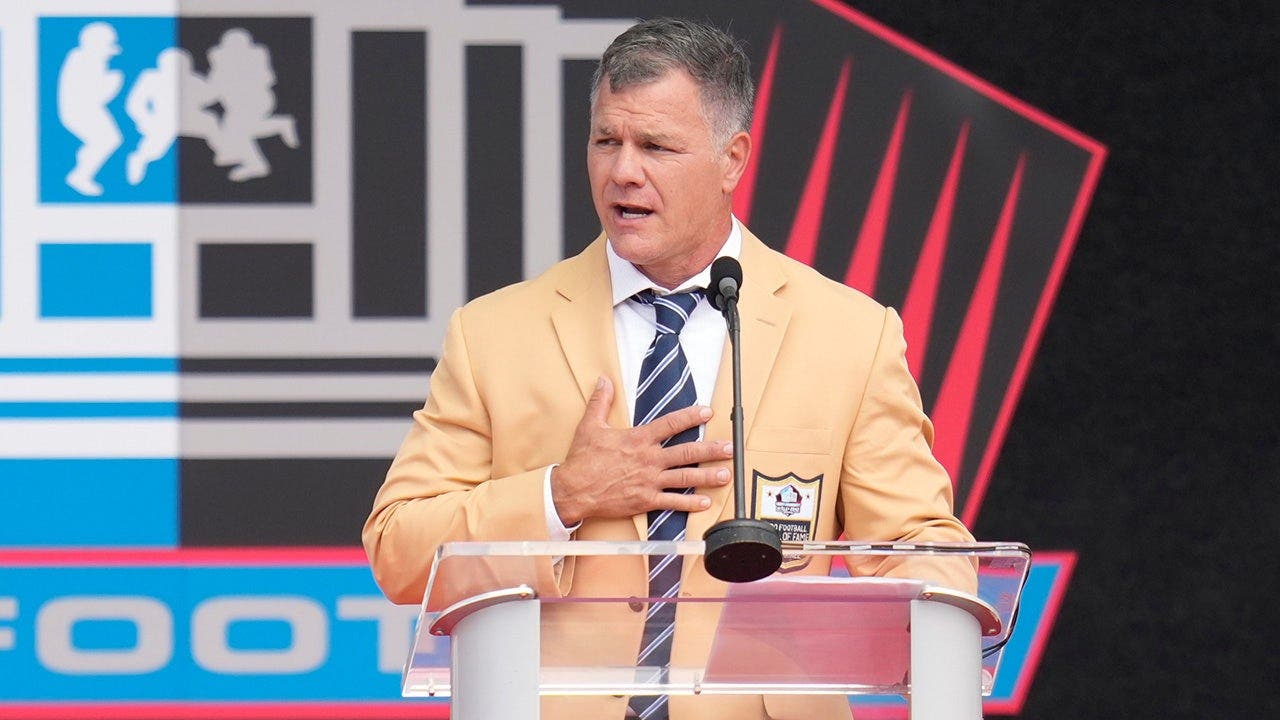
Adam Vinatieri Hall of Fame Speech: Why He Apologized After
Adam Vinatieri turned his Hall of Fame moment into a roast of NFL royalty before pivoting to an emotional tribute. The backlash forced a quick explanation.

Raiders Depth Chart 2026: Fernando Mendoza lands at QB2
Fernando Mendoza showed up where expected on the first Raiders depth chart: behind the starter, not in front of him. That’s football, not theater.
Raiders Depth Chart 2026: First Look Before Cardinals Preseason
Las Vegas has put names to spots, but the first unofficial depth chart is really a mirror. It shows where the Raiders think they stand — and where the pressure begins.