
Dodgers Don’t Just Dominate July—They Own the All-Star Stage Too
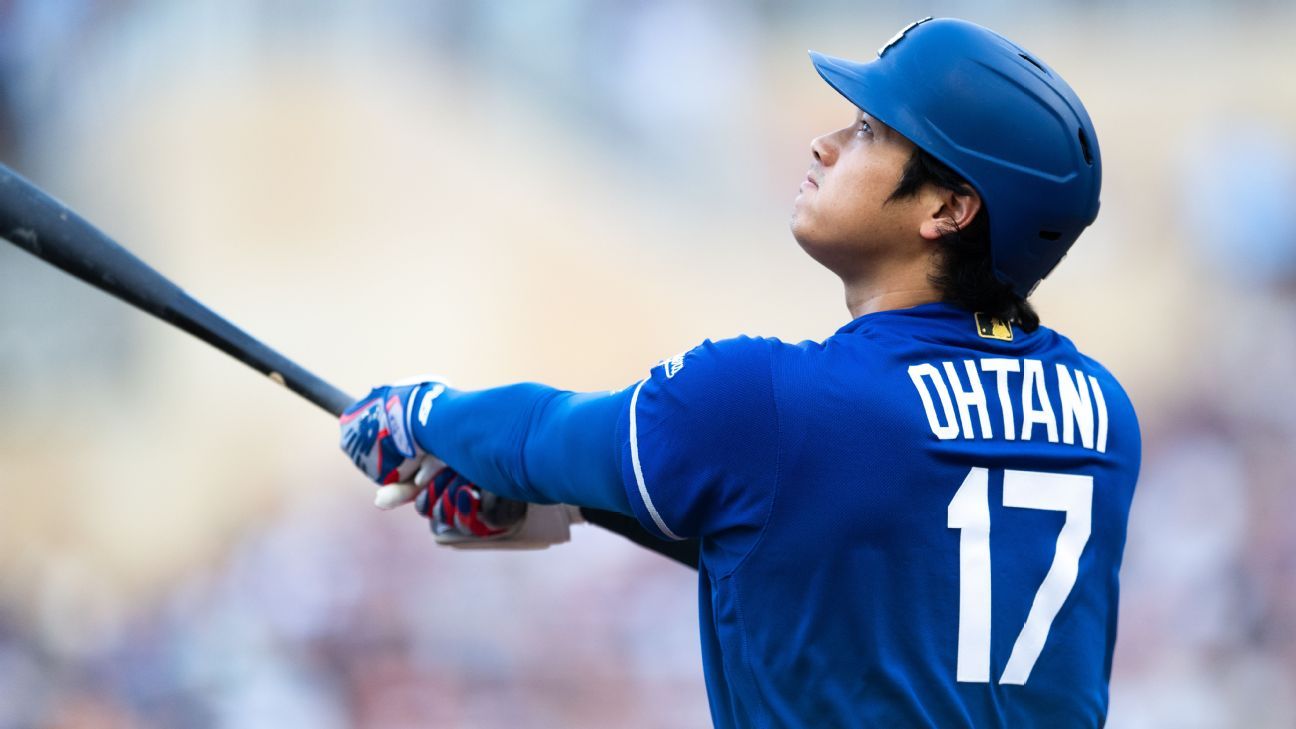
Shohei Ohtani and Freddie Freeman are no longer novelty acts in the same uniform. They’re the front line of a machine that keeps sending bodies, resumes and all, to the All-Star Game. Now the Los Angeles Dodgers are doing what good franchises do when they get hot and stay hot: turning a deep roster into a parade of starters, reserves and headlines.
Five Dodgers are headed to the 2025 MLB All-Star Game in Atlanta, and four of them will start for the National League. That’s not a flex. That’s a census. The best team in the sport is being recognized the way dynasties usually are — not with polite applause, but with a ballot box full of obvious choices.
Ohtani and Freeman are the easy calls. The rest say plenty.
Ohtani starting is almost an annual formality now. He has become so singular that the sport has to keep finding new ways to describe him, and none of them quite fit. He is a designated hitter, a draw, and a gravitational force. Freeman, meanwhile, keeps doing the opposite of aging gracefully. He just keeps hitting, keeps moving the lineup, keeps looking like the smartest player in the stadium.
Those two are the names everyone knew would be there. The interesting part is that they’re not alone. Three more Dodgers from the same core got the nod to Atlanta, and that’s the real story here. This isn’t a one-man showcase or a cute nod to the reigning champs. It’s a reflection of how thoroughly Los Angeles has stacked the roster, top to bottom.
That matters because All-Star selections, for all their pageantry, are a pretty clean way of measuring how much talent a team has absorbed and kept productive. The Dodgers have done it with money, scouting, development, and an endless appetite for depth. No shortcuts. No empty slogans. Just a lot of very good baseball players wearing the same uniform.
Atlanta gets a Dodgers-sized footprint
The league also announced that the Dodgers, Atlanta Braves and Philadelphia Phillies will each send five players to the game. That’s a strong snapshot of the National League’s power structure. Those are three franchises that expect October baseball, and in most years they expect to be talked about from March onward too.
The Braves and Phillies have earned their share of the spotlight, but the Dodgers keep making this feel inevitable. Their stars are obvious. Their depth is annoying in the best possible way. Even when injuries, slumps or roster churn nibble at the edges, Los Angeles still finds a way to fill the lineup card with names that belong on a marquee.
Atlanta hosting the game adds another layer. This isn’t just a star turn for the Dodgers; it’s a road show in enemy territory, with a lot of blue uniforms walking into a city that knows a little something about star power itself. That should give the night some bite.
The Dodgers have turned star power into infrastructure
There’s a difference between having stars and building around them. A lot of teams collect the first part and fail at the second. The Dodgers have made star power feel like infrastructure. It’s not just Ohtani and Freeman carrying the brand. It’s the constant churn of players who can plug into the machine and keep it humming.
That’s why these selections land with more force than a standard midseason honor roll. They’re not just individual awards. They’re evidence that the Dodgers’ model still works. They identify elite talent, keep it healthy enough to matter, and place it in a context where good players can become All-Stars simply by playing next to other good players.
If you want a historical comparison, think about the great teams that felt overrepresented every July because they were overrepresented every night. That’s the Dodgers now. Not because the league is doing them favors. Because the lineup keeps backing up the reputation.
The Dodgers don’t merely collect stars; they normalize them.
That’s the uncomfortable truth for the rest of the league. It’s one thing to beat Los Angeles in a series. It’s another to build something that keeps producing stars at this rate year after year.
What this means for the second half
All-Star selections don’t win pennants, but they do reveal pressure points. The Dodgers are the class of the National League, and now everyone knows it in the most public way possible. That puts a target on them, sure. It also reinforces the standard inside the room. When your roster keeps producing All-Star starters, the expectation shifts from contending to controlling the conversation.
For Ohtani, Freeman and the rest of that Dodger contingent, Atlanta is more than a showcase. It’s a reminder that the season’s second act is where reputations get stress-tested. The first half says who you are. The second half decides whether the whole thing holds.
And for everyone else, the message is plain: if you’re going to take the Dodgers down, you’re not just beating a team. You’re beating a system that keeps churning out stars without breaking stride.
The All-Star Game will give Los Angeles a nice spotlight. The real test comes after the lights go back down, when the Dodgers return to the grind and try to make this look normal again.
Comments
Join the conversation — sign in to leave a comment.
Sign in to commentRelated Stories
Padres’ Roster Bruise Gets Deeper as Vásquez and Fermin Hit the IL
San Diego’s rotation is thinning, and now its primary catcher is down too. The Padres are staring at a stretch where depth has to play like a strength.

Tim Ream’s America, and the U.S. team trying to live up to it
Tim Ream sees the U.S. men as a true reflection of the country. In Seattle, they’re also chasing something bigger: a quarterfinal berth and a shot at history.
Visma’s Barcelona blast sent an early Tour warning nobody can ignore
The Tour’s team time trial came back with a bang in Barcelona, and Visma-Lease a Bike turned the opener into a statement. Jonas Vingegaard already looks like a man in charge.