
Fantasy Football 2026 Rankings: Sleepers, Breakouts, Busts
The board is settling, but the margins still decide championships.
 Beatrice Kensington6 min read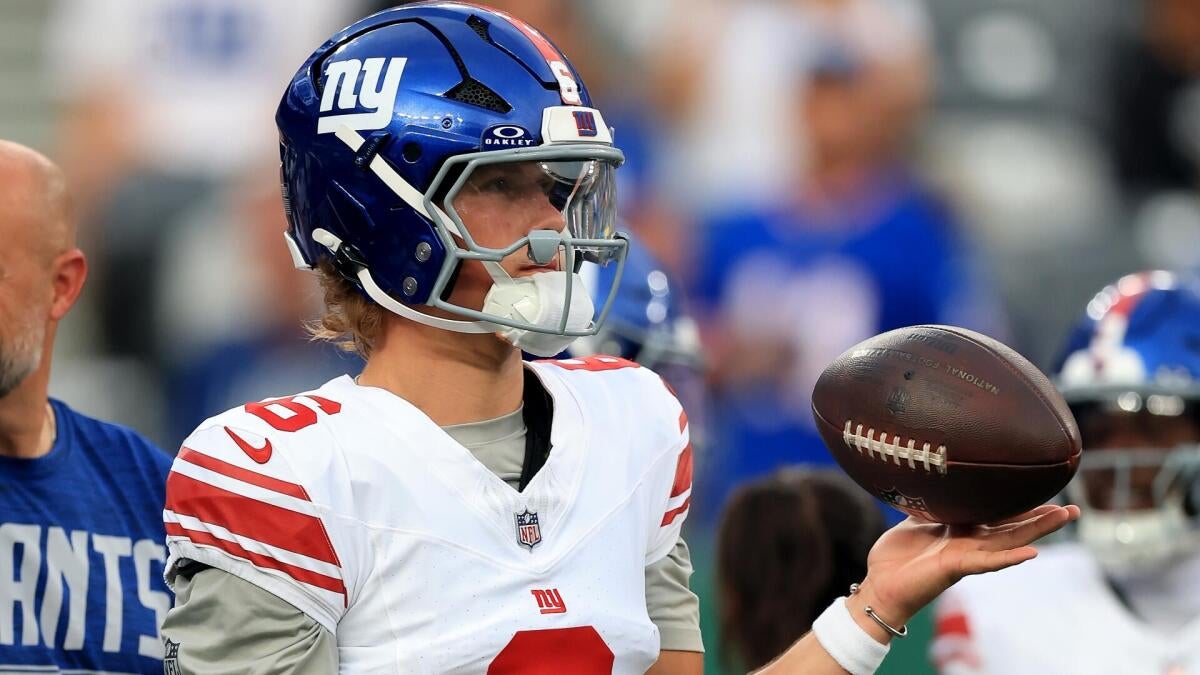
The first true edges of fantasy season are usually not found in the top of the board, where everyone already knows the names, but in the quiet places beneath it — the backs who inherit volume, the receivers who slide into one more route tree, the quarterbacks who stop being theories and become weekly habits. That is where a 10,000-simulation model earns its keep, and where 2026 fantasy managers may soon make or miss their year.
The broad shape of the draft is already visible. The elite tier has a gravity of its own, and that does not change much once preseason dust settles. But after the stars, the season gets fugitive. Training camp whispers harden into ADP. One depth-chart tweak becomes an opportunity. One coaching preference becomes a full-blown market correction. The trick, as ever, is to know which movement is real and which is merely the calendar pretending to be wisdom.
The top tier is stable — the real fight is over the middle
The headline names are not where drafts are won. They are where drafts are safeguarded.
That is why the early read on 2026 matters more for the second and third rounds than for the first. Players such as Jahmyr Gibbs, Bijan Robinson, and Ja'Marr Chase sit in that rare zone where talent, role, and trust from drafters all point in the same direction. The market is not searching for a reason to move them; it is searching for a reason not to.
And that is the part fantasy players often miss. Stability at the top creates pressure elsewhere. If you start with one of these anchor pieces, your later picks need to be sharper, not safer. The league’s shifting economics — especially at running back — have made the middle rounds the new battlefield. You no longer simply take a player with a pulse and call it depth. You need leverage. You need a bet that can outrun ADP.
The championship often belongs to the manager who trusts the uncomfortable name in Round 7.
That sentence has a way of sounding dramatic in August and brutally practical by November.
Why a Daniel Jones model matters more than the name itself
The note that this model caught Daniel Jones) before his big year is the part worth weighing, because it speaks to process rather than prophecy. Fantasy is littered with people who claim they “saw” the breakout after the fact. Fewer can point to a repeatable method that spotted the conditions before the market did.
That matters in a season like this, when the league keeps turning the quarterback position into both a floor and a tax. A passer who adds useful rushing volume can change the arithmetic of an entire roster. Suddenly a quarterback who looks ordinary in real football becomes a weekly edge in fantasy. The same goes for pass-catchers tethered to that quarterback, because volume tends to find its way downhill.
If the simulations are identifying players whose roles are about to expand, then the lesson is not to memorize the list and move on. It is to understand the mechanism. Was the usage real? Was the late-season spike driven by injuries elsewhere? Did the coaching staff reveal something with the route distribution, the red-zone share, the snap counts? The model is only valuable if it teaches you what to look for next time.
That is why I always prefer process over certainty. Certainty is a sales pitch. Process is a way of surviving September.
Sleepers, breakouts, and busts are really about volume and leverage
Every fantasy season dresses itself up as a talent contest. It is not. It is a workload contest with a talent filter.
The sleeper category is usually where that truth shows itself first. These are the players whose role is likely to grow faster than their draft cost. Maybe it is a second-year receiver who has earned the trust of the quarterback. Maybe it is a veteran back who has quietly become the preferred goal-line option. Maybe it is a tight end whose route rate finally matches the size of the hype file that has followed him for two summers.
Breakouts are a different animal. They are not merely cheap players who get more work; they are players whose work becomes high-leverage work. Touches near the goal line. Targets on third down. Designed touches that travel with game script instead of being discarded by it. Fantasy managers too often confuse “more” with “better.” They are not the same. A running back can see 15 carries and still matter less than a receiver who sees six meaningful targets.
Busts, meanwhile, are where the market still gets sentimental. Big names age, offensive lines wobble, depth charts change, and the public keeps drafting last year’s memory instead of this year’s workload. That is how a player becomes expensive long before his production falls off. The danger is rarely that a star becomes useless; it is that his cost assumes immortality.
The middle of the draft is where discipline has to be cold. There is no reward for loyalty to a name. Only points.
What this means for your draft room in 2026
There is a temptation, every preseason, to treat fantasy draft prep like a scavenger hunt for one magical edge. It is never one thing. It is a stack of small advantages: knowing which backs have the cleanest path to volume, which receivers are likely to live on the field in two-wide sets, which quarterbacks can buy you 4 to 6 points with their legs before they even throw a touchdown.
That is why the simulated approach resonates. It does not promise certainty; it maps probability. And probability is the only honest currency in fantasy. Even the best managers fail often. The goal is not perfection. It is to be right a little earlier than the room.
I have long believed that preseason fantasy rankings are less a portrait of football than a portrait of our appetites. We love stars, naturally, but we are also seduced by narrative: the comeback, the sophomore leap, the new coach, the changed role, the late camp report that arrives like weather. The sharper managers are the ones who can admire the story without being trapped by it.
I still remember the old fantasy rooms where everyone drafted as if volume were a moral virtue and every sleeper was just a rumor with cleats. The modern game is sterner. The margins are thinner. Data has made the board less romantic, but not less human. You still have to decide whether you trust the player, the scheme, or the market — and those are not always the same thing.
If this model is right again, the winners in 2026 will not be the people who drafted loudest. They will be the ones who waited for the hidden role to become visible.
That is the season, really. Not the names everyone already knows. The names that arrive a round too late for everyone else.
More from Straight From The Bench
Comments
Join the conversation — sign in to leave a comment.
Sign in to commentRelated Stories

Detroit Lions Updated Depth Chart: 53-Man Roster Reset
The Lions have set their initial 53 and nearly finished the practice squad. This is the first real snapshot of how Dan Campbell’s 2026 roster is built.
Fantasy Football 2026 Rankings: Best QB, RB, WR, TE Picks
With preseason over and opening week near, the 2026 fantasy landscape is starting to harden. The smartest drafters are chasing tier breaks, not names.
Kyle Van Noy Vikings Practice Squad: Brian Flores Reunion
Kyle Van Noy is back in purple, reuniting with Brian Flores on Minnesota's practice squad. The move says as much about trust and timing as it does depth.