
FIFA 2026 World Cup Criticism: Infantino Hits Back at Detractors
The sport’s grandest stage is already shadowed by its loudest defender.
 Beatrice Kensington5 min read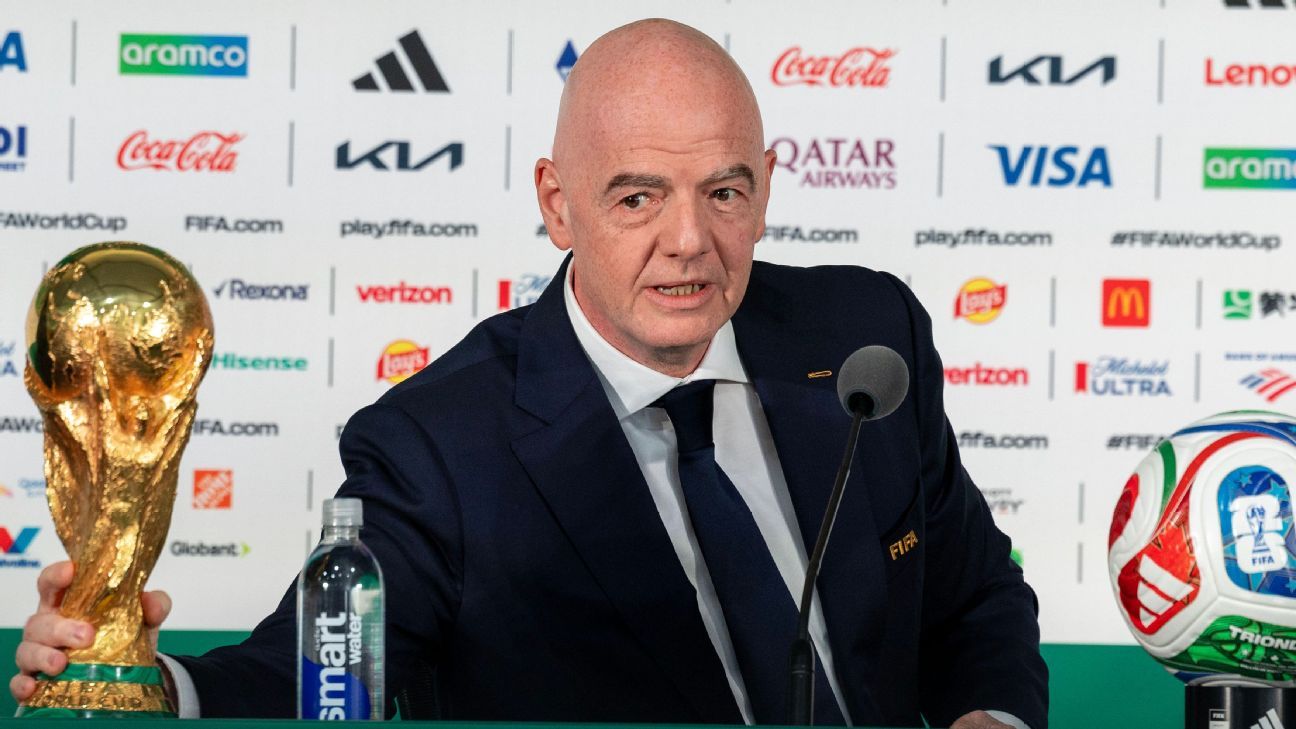
Gianni Infantino did not merely answer his critics; he tried to shame them into silence. In his latest blast at those questioning the 2026 World Cup, the FIFA president accused detractors of being “consumed by hate” and suggested they should “reflect, meditate, pray, or watch a football match.” It was a remarkable choice of language, less the measured tone of a steward of the global game than the clipped rebuke of a man who has spent too long mistaking authority for persuasion.
This matters because the World Cup is not just another tournament with a gleaming trophy and a parade of sponsors. It is the largest civic ritual in modern sport, a traveling festival that lands on cities, strains transit systems, fills hotels, and asks ordinary people to absorb extraordinary promises. By 2026, the event will stretch across the United States, Canada, and Mexico, a three-country pageant whose scale is both its selling point and its problem. The questions around logistics, labor, access, pricing, and FIFA’s long habit of acting untouchable do not disappear because the president finds the criticism impolite.
Infantino’s war on skeptics says as much about FIFA as the critics do
The most revealing part of Infantino’s statement is not its anger. It is its thin skin. FIFA has never been a body that welcomed discomfort; it has long preferred pageantry, leverage, and the soft glow of inevitability. Yet the modern sports public is less obedient than it used to be. Fans can admire the game and still resent the machinery around it. They can love a World Cup and still dislike the institution that sells it back to them at premium prices with sermons attached.
That tension is not new. The beauty of football has always been used to launder the rougher edges of power. FIFA knows this better than anyone. It trades in emotion, in belonging, in the idea that a nation can be briefly remade by a ball rolling across grass. But the more sprawling the tournament becomes, the harder it is to hide the bill. Security, travel, stadium costs, scheduling, ticketing, labor conditions — all of it arrives with the confetti. When critics point at those realities, they are not vandalizing football. They are asking who gets to profit from its glow.
FIFA does not get to market the World Cup as a civic blessing and then denounce scrutiny as hatred the moment the invoice comes due.
The 2026 World Cup will live or die on trust, not just spectacle
There is a reason this tone is risky. The 2026 tournament is meant to be a triumph of scale, a 48-team sprawl that promises more nations, more matches, more nights when the game feels larger than borders. But the larger the event, the more it depends on trust from the public that pays for it, hosts it, and fills the stands. If the message from the top is that skepticism is a moral failing, then FIFA is not building trust. It is building distance.
And distance is dangerous in a sport that sells intimacy. Football’s power lies in its ability to make people feel included — the kid in a park, the cab driver listening on the radio, the migrant family waking before dawn to watch from three time zones away. The institution governing that game ought to be wary of sounding like a priest scolding parishioners for asking what happened to the donation box.
The criticism around 2026 is also bigger than one man’s temperament. It touches the long shadow of FIFA’s governance, an organization whose scandals have left fans trained to hear every grand pronouncement with a raised eyebrow. 2026 FIFA World Cup should be an advertisement for the sport’s future. Instead, it arrives already entangled in questions of tone, transparency, and who exactly the tournament is for.
My read: this is what happens when institutions confuse reverence with consent
I have covered enough sports institutions to know the old trick: wrap yourself in the language of joy, then accuse anyone who notices the cracks of spoiling the celebration. It is a tactic as old as organized power. But football fans, especially the modern ones, are no longer content to be told that gratitude is the proper response to spectacle.
Infantino’s words also reveal a deeper insecurity. If the 2026 World Cup were already widely trusted, he would not need to lash out with such force. He could ignore the noise. He could let the tournament’s merit speak for itself. Instead, he has chosen to personalize the dispute, which suggests FIFA understands exactly how fragile the goodwill around its marquee event may be. That fragility is not solved by telling people to pray.
I think this episode will be remembered less for the insult than for the instinct behind it. Institutions reveal themselves in moments like this. Some answer criticism with specifics, with numbers, with restraint. Others reach for moral theater. FIFA, too often, belongs to the second category. And the sport pays for it, because every time the governing body behaves like a fortress, it asks fans to cheer from the moat.
The irony, of course, is that the World Cup does not need this kind of defense. It is already powerful enough. It only needs to be worthy of that power.
What to watch next as 2026 approaches
The coming months will tell us whether this is a passing flare-up or the beginning of a longer, uglier cycle around the tournament. Watch for how FIFA responds to legitimate complaints about access and atmosphere. Watch how host cities talk about cost and readiness. Watch whether the organization learns to treat scrutiny as part of the bargain rather than an act of betrayal.
If the governing body wants the public to believe in the 2026 World Cup, it will need more than spectacle and sanctimony. It will need humility. It will need receipts. And it will need to remember that the game is bigger than the gatekeepers.
Football will go on, as it always does. The question is whether FIFA can stop mistaking the noise for the problem.
More from Straight From The Bench
Comments
Join the conversation — sign in to leave a comment.
Sign in to commentRelated Stories

Real Madrid Transfer Rumors: Vinicius Jr U-Turn, Tchouameni Bid
Vinicius Jr’s reported rethink and Manchester United’s push for Aurélien Tchouaméni say less about gossip than about power. The market is testing Madrid’s spine.

Jacoby Brissett New Deal: Cardinals Rework Contract
The Cardinals aren’t guessing at quarterback depth. Brissett’s reworked deal signals Arizona wants stability, leverage, and a cleaner camp plan.
Nuggets Salary Cap Update: Spencer Jones Deal Pushes Denver Into Second Apron
Denver kept Spencer Jones, but the roster math just got mean. The Nuggets are shopping in the hard-part aisle now, where every move comes with a tax receipt.