
Gianni Infantino FIFA Warning: Trump Backs Embattled Boss
A political blast radius around soccer’s power center just got wider.
 Zane Miller5 min read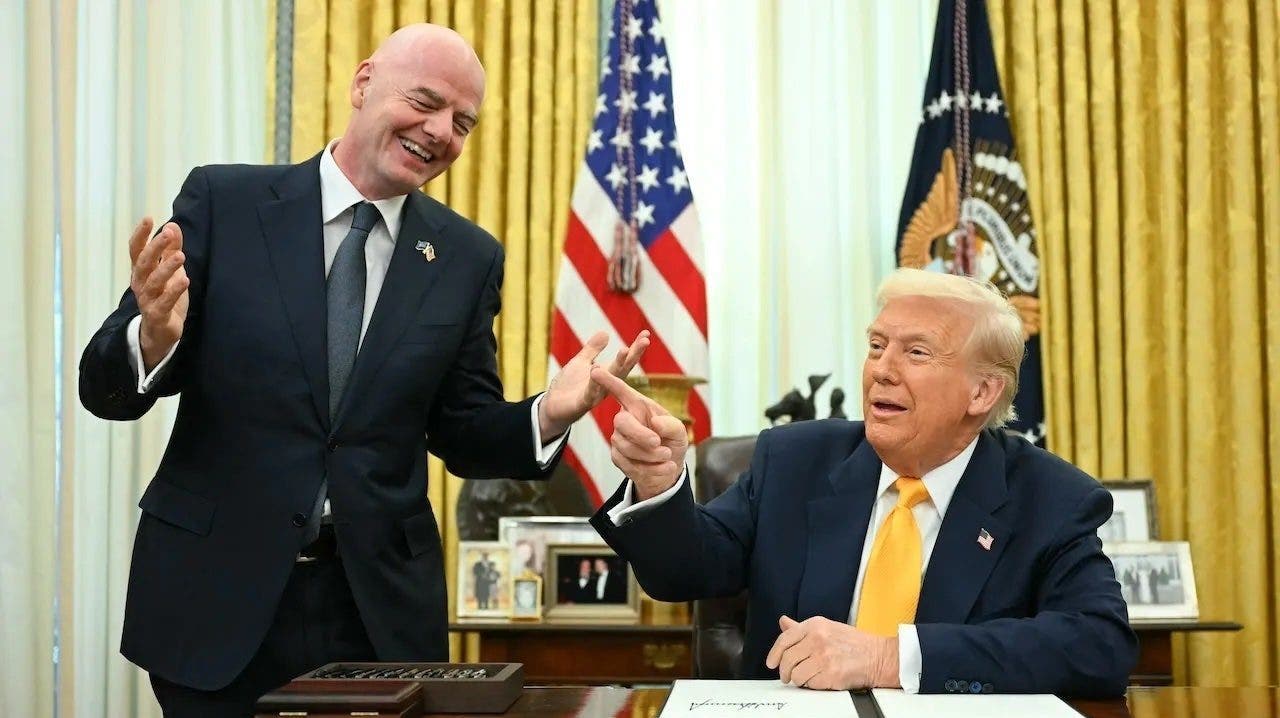
Trump throws his weight into FIFA’s boardroom fight
Donald Trump doesn’t usually walk into a governance mess quietly. He stomps in, turns the lights on, and makes everyone in the room pick a side. That’s what happened here, with the president warning FIFA’s power brokers that removing Gianni Infantino would be a disastrous move. The timing matters. FIFA is already dealing with internal revolt, and the flashpoint is not some minor procedural squabble. This is about private equity influence, control, and who gets to steer the next era of global soccer money.
Infantino has spent years building close ties with political power, and now that network is doing what it was always meant to do: create a shield. Trump calling him “fantastic” is not a neutral endorsement. It is a loud signal to anyone in FIFA thinking about a reset that the cost of doing so may not stay inside the building.
The other thing to keep in mind: FIFA is not a normal sports league, not even close. It’s a global political machine wrapped around the sport itself. The FIFA presidency is less like an ordinary job and more like a seat in a fragile coalition. Once the private equity debate starts touching commercial rights, governance, and future revenue streams, the knives come out fast.
Why this fight is about more than Infantino
The internal revolt is the story underneath the headline. A lot of these governance battles get dressed up as personality conflicts, but the money is the real engine. Private equity has a way of making people who used to nod politely start sounding like revolutionaries. It changes the conversation from stewardship to ownership. And in FIFA land, that is never just about balance sheets. It’s about leverage.
Infantino has long been a controversial figure, but he’s also proven incredibly durable. That’s part skill, part timing, and part understanding the kind of boardroom ecosystem he operates in. Presidents of global federations survive by building enough support across regions, enough commercial momentum, and enough alliances with the powerful to make the alternative look risky. If you’re trying to oust him, you need more than frustration. You need a clean path to replace him without blowing up the whole structure.
Trump’s intervention raises the pressure on both sides. If the anti-Infantino bloc was hoping to frame this as a clean governance correction, that gets harder when a former U.S. president is publicly leaning the other way. And in soccer, optics matter. They always do. The sport’s executives may tell themselves they are making a business decision, but the outside world sees politics first.
The private equity angle is the real land mine
Private equity and global soccer are an uneasy fit because the sport is built on tradition, federation politics, and long-term control, while private equity usually wants speed, return, and influence. That mismatch is why every major capital conversation around soccer turns into a fight about identity. Fans hear “investment” and think infrastructure, youth development, maybe a better product. Insiders hear “investment” and start calculating who gives up power, who gets diluted, and who gets paid.
This is where soccer governance gets weird in a hurry. The people making decisions are rarely just looking at the next tournament. They’re looking at broadcasting leverage, sponsorship growth, and future tournament rights. That’s why so many of these battles happen behind closed doors, then explode in public only after the sides have already hardened.
FIFA has seen this movie before, just with different costumes. The organization is always balancing commercial expansion against credibility damage. The more it grows, the more skeptics ask who actually benefits. Infantino has been able to sell himself as the steady hand who can keep that machine moving. Trump’s backing doesn’t solve FIFA’s problem, but it does underline how much of modern sport governance is now intertwined with national politics, business interests, and personal alliances.
In FIFA, power rarely changes hands because of principle. It changes hands when the coalition math finally breaks.
What executives and agents are watching next
The next question is simple: does this warning freeze the revolt, or does it harden it? That’s the real read. Executives around the sport know that public support from a figure like Trump can cut both ways. It can scare off some opposition. It can also convince others that the current leadership has become too politically loaded to keep cleanly intact.
I’ve said this for years: global sports bodies do not fear bad press nearly as much as they fear instability. Bad press is manageable. Instability means delayed decisions, fractured alliances, and commercial partners asking awkward questions. That’s the pressure point here. If people inside FIFA think replacing Infantino would trigger a broader market or political backlash, many of them will retreat to the safest position available. That’s how these rooms work. Nobody wants to be the one who blows up the room unless they already know they can rebuild it.
The 2026 FIFA World Cup looms over all of this too. The closer the sport gets to its next massive commercial cycle, the less appetite there is for chaos. And Trump, for all his bombast, understands leverage better than almost anyone in American politics. He’s not just praising Infantino. He’s reminding everyone that access, hosting, money, and political cover still matter in this business.
I’m skeptical this settles anything. If anything, it makes the internal fight louder. Once a president starts threatening consequences over a soccer governance dispute, the issue stops being just about a chairman’s chair and starts looking like a broader test of who really controls the sport’s future.
Infantino’s grip may be messy, but it still looks strong
For all the noise, this still smells like a leader who has enough layers of support to survive another round. FIFA bosses don’t move quickly unless the math forces them. Right now, the math looks complicated, not fatal. That’s why the smart money is probably on more maneuvering, more leaking, more posturing, and very little immediate change.
Still, the message is out there now. Trump has picked a side, FIFA’s internal critics know they’re not just arguing against a president, and Infantino’s allies have fresh incentive to lock the doors. That usually means the fight is only getting started.
Watch the next public move, not the noise. In FIFA, that’s where the real power shows up.
More from Straight From The Bench
Comments
Join the conversation — sign in to leave a comment.
Sign in to commentRelated Stories
FIFA World Cup Plans: UEFA, CONCACAF and AFC Cry Foul
Three confederations have accused FIFA of deception over World Cup commercial plans. This isn’t just boardroom theater — it’s a power fight over trust, cash, and control.
Trump Patriot Games: Athletic Pageant Turns into MAGA Theater
A showcase meant to celebrate young athletes has curdled into political theater. The real story is not the spectacle, but the people asked to perform inside it.

Raiders Depth Chart 2026: Fernando Mendoza lands at QB2
Fernando Mendoza showed up where expected on the first Raiders depth chart: behind the starter, not in front of him. That’s football, not theater.