
Giants 2028 All-Star Game: MLB Chooses Oracle Park Again
A familiar summer spectacle returns to San Francisco, with the Olympic calendar hovering in the background.
 Beatrice Kensington6 min read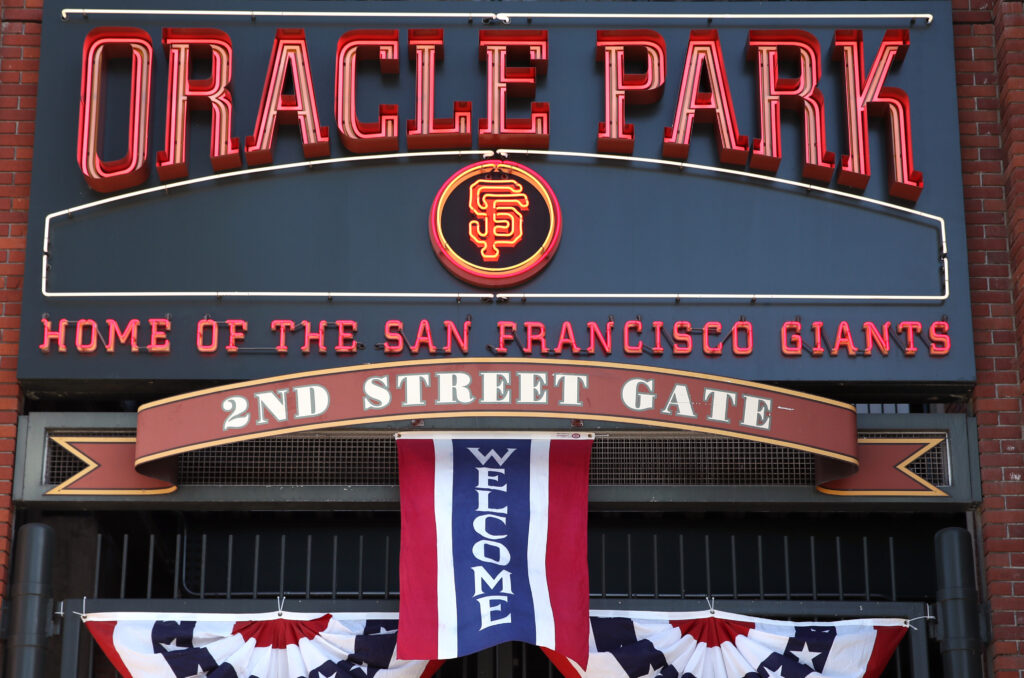
Major League Baseball has decided that the 2028 All-Star Game will belong to the San Francisco Giants, and the choice feels at once ceremonial and strategic. Oracle Park is not merely a ballpark in the postcard sense; it is one of the few places in the sport where the setting still carries the weight of the experience. McCovey Cove, the cold bite of the bay, the skyline leaning over left field like a stage set that forgot it was supposed to be temporary — all of it gives the midsummer exhibition a certain grace. Baseball does not often get to look elegant without trying. In San Francisco, it usually does.
The Giants will host the Midsummer Classic for the fourth time, and that matters because the league does not hand out these events casually. A city earns them by proving it can stage the rituals, sell the tickets, carry the television lights, and, just as important, make the whole thing feel like more than a corporate roadshow with better uniforms. San Francisco has done that before. It will do it again. Still, the decision is about more than nostalgia or venue quality. The 2028 calendar is already crowded with the kind of global spectacle that can bend domestic sports around it, and baseball is plainly trying to secure its place before the summer gets claimed by bigger, louder machine.
Oracle Park gets the midsummer turn again
Oracle Park has always been one of baseball’s better arguments for itself. The park has a shape, a mood, a personality; it does not feel poured from the same mold as every other modern stadium with its stainless-steel concourses and flavorless luxury suites. That gives the Giants a real advantage whenever the league begins looking for a host city that can photograph well and function even better.
There is also a practical truth behind the pageantry. The All-Star Game is no small logistical beast. It asks a city to absorb celebrities, corporate partners, sponsors, security, media, and fans all at once, while still pretending the main event is a baseball game and not a weeklong civic performance. San Francisco has the infrastructure and the international profile. It also has a downtown that can be marketed as a destination, which still matters to a league that sells summers as much as innings.
The Bay Area knows how to present baseball as culture instead of habit. That distinction counts.
The Olympics are the shadow over everything
The most interesting part of this announcement is not the location but the calendar politics around it. By 2028, the Summer Olympics in Los Angeles will be the great gravitational force of the season, pulling attention, broadcast space, and national conversation in its direction. Baseball, which has spent decades trying to secure its international relevance, understands what it means to be elbowed aside in a crowded summer.
So the All-Star Game in San Francisco reads like a sensible claim staking of territory. Put the sport’s showcase in a major West Coast market. Keep the event close to the Olympic bustle without trying to compete with it head-on. Let baseball have its own week, its own stage, its own skyline, then hand the rest of the summer to the fire-breathing circus that the Olympics always become.
This is not surrender. It is scheduling intelligence.
Baseball is not just choosing a ballpark here; it is choosing where, in a noisy summer, it still believes it can be heard.
Why this still matters for the Giants and the league
For the Giants, hosting the All-Star Game is both an honor and an economic instrument. Big events create ripple effects that go far beyond the gate: hotels fill, restaurants swell, sponsors spend, the city gets marketed across every screen that matters. Yet the deeper significance is emotional. A franchise’s relevance is sometimes measured not by how often it wins, but by how often the league trusts it to represent the sport in public.
That trust has value. It tells fans that the club is still part of baseball’s central conversation, not merely a well-managed relic from past glories. It also gives the Bay Area another chance to remember itself as a baseball city — one with history, yes, but also one with current ambition. For a generation that has watched franchises move, parks age, and civic loyalties get thinned by television and streaming, these ceremonial assignments still carry a little civic theology.
And for the league, the choice is a quiet admission that the All-Star Game still needs a backdrop with some soul. Not every market can supply that.
What 2028 says about baseball’s self-image
I have always believed baseball is at its best when it treats its showcase events like public art rather than product activation. The league gets into trouble when it behaves as though grandeur can be manufactured by a camera drone and a celebrity roster. It cannot. Grand settings do not guarantee meaning, but they can create the conditions for it. San Francisco has that advantage in abundance.
There is a historical parallel here worth keeping in mind. Baseball’s great summer rituals have always depended on place: Wrigley Field, Fenway Park, the old civic ballparks that made the game feel woven into a city rather than parked beside it. Oracle Park belongs to that lineage more than most modern venues do. It has kept some weather in the bones, some texture in the air. That does not make it quaint. It makes it honest.
And honesty, in sports marketing, is rarer than it should be.
I also think this choice signals something slightly larger about baseball’s self-confidence. The sport knows it cannot dominate the American summer in the way it once did, not with football looming in every season’s imagination and not with the Olympics likely to command a different kind of spectacle in 2028. So it is leaning into the one thing it still owns better than most: rhythm, place, and memory. That is not a small asset. In fact, it may be the only asset that age has made stronger.
The Bay Area gets its turn, and baseball gets a test
The Giants will host a celebration, but the real test will come in whether the event feels lived-in rather than airlifted in. If the league leans into the waterfront, the city, the dusk, and the peculiar beauty of a ballpark that looks as though it was built to stare at the water, then this All-Star Game can still feel like a baseball event rather than a content package.
That is the assignment.
The Bay Area will be ready. Baseball has one more chance to prove it still knows how to make a summer evening matter.
More from Straight From The Bench
Comments
Join the conversation — sign in to leave a comment.
Sign in to commentRelated Stories
Field of Dreams Game: Hall of Fame Night Puts Cooperstown on the Corn
MLB turned the Field of Dreams into a rolling shrine, with 26 Hall of Famers walking out of the corn before Phillies-Twins. The night had more history than hype, and that’s saying something.
MLB Field of Dreams Game: Elle Duncan Backlash Overshadows Netflix
The Field of Dreams game had Hall of Famers, nostalgia and a big-league spotlight. But once Elle Duncan got on the mic, the internet did what it always does.
Chicago Cubs Lineup: Ramirez and Conforto Start, Sweep in Sight
The Cubs have already banked the series in Washington, but the lineup still tells a story. Ramirez and Conforto starting speaks to timing, trust, and a club trying to turn a good trip into a clean one