
Giants Harrison Bader Injury Update: Payment Suspension Explained
A scooter spill, a swollen foot, and the cold arithmetic of roster life.
 Beatrice Kensington6 min read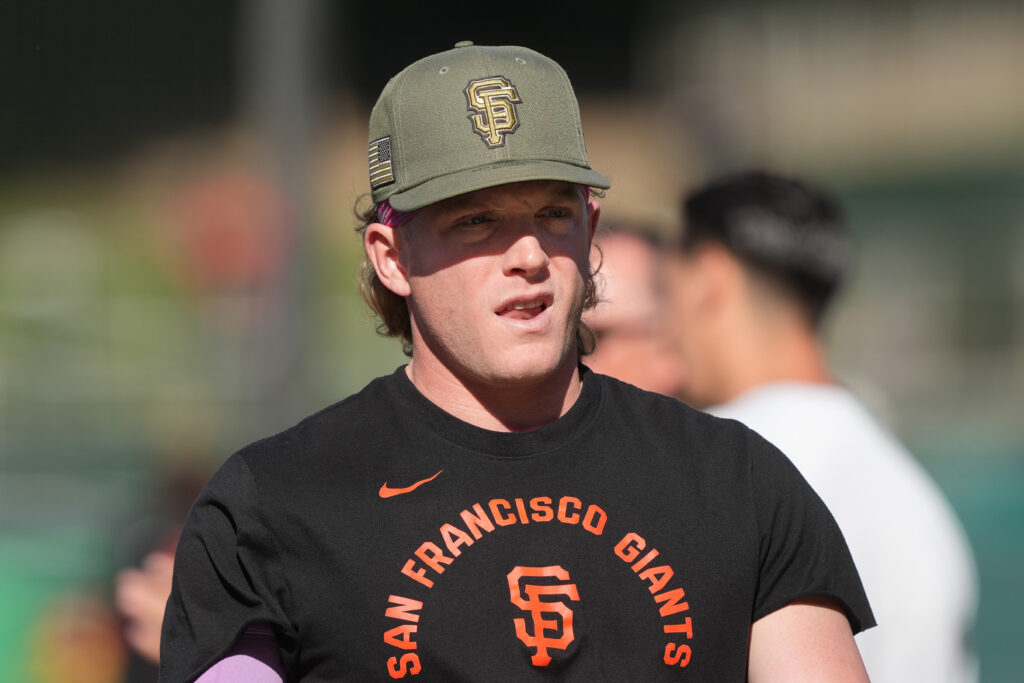
Harrison Bader’s weekend turned into one of those ugly little baseball stories that travels fast because it feels both absurd and painfully familiar: a player already battling a left foot issue suffers a setback in a scooter accident, and suddenly the Giants are talking not about lineup construction or center-field range, but about suspending payment on his contract. The sport likes its injuries to arrive with clean edges. This one came with the scrape and wobble of real life.
The decision is not sentimental, and it is not especially mysterious. Clubs guard the edge of the contract as fiercely as they guard the edge of the strike zone. When a player is hurt in an accident away from the park, the language of the labor agreement can shift quickly from compassion to accounting. For a player like Harrison Bader, whose game depends so much on burst, routes, and the violent little mechanics of a major league outfield, a foot problem is not a footnote. It is the foundation cracking under the whole operation.
A foot injury turns into a front-office problem
Bader has never been a luxury piece. He is the sort of player managers trust because he can steal a catch from the alley, take away a hit with a hard first step, and make the ugly innings look cleaner than they are. That kind of player is easier to appreciate than to replace. When the left foot is compromised, the value evaporates in plain sight.
The scooter accident makes this more than a standard injury update. It places the Giants in the familiar position clubs dread and fans rarely see clearly: sorting medical reality from contractual obligation. A team can miss a player and still protect itself. In modern baseball, those two feelings often coexist uneasily. The clubhouse may feel for Bader. The front office, inevitably, is reading clauses.
That is the narrow corridor professional sports offers when an off-field mishap intersects with a guaranteed deal or a negotiable payment structure. The human instinct is to ask whether the punishment fits the mistake. The collective bargaining instinct asks a colder question: who bears the cost when the injury did not come from play?
This is baseball’s least romantic truth: the game may be played on grass, but the deepest cuts are often financial.
Why the Giants would draw this line
The Giants have no incentive to make this easier than it is. San Francisco is not merely managing a roster spot; it is managing precedent, leverage, and the message sent to every player in the room. If the club absorbs the full expense without protest, it invites a future expectation that accidents far from the field will be handled softly. If it draws the line too sharply, it risks looking punitive in a sport that already asks players to live under a microscope.
That tension is part of the business architecture of baseball in the era of the MLB. Teams are not charities, and players are not assets in the abstract. They are workers with bodies that age, break, and sometimes get injured in the sort of stupid, sudden ways that make a season feel cruel. A scooter accident is not a double play gone wrong. It is a reminder that athletes do not live in a sealed environment just because the contract pretends they do.
The Giants, in practical terms, are protecting themselves from paying full freight for a player unavailable because of circumstances outside the normal hazards of the sport. Whether that looks harsh may depend on where you stand. From the club’s side, it is risk management. From the player’s side, it can feel like being judged twice: once by the injury, and again by the ledger.
Bader’s value, and the fragility behind it
There is a particular cruelty in injuries to players whose value is built on explosiveness. A power hitter can sometimes return looking nearly the same once the pain recedes. A center fielder whose game is tied to timing, acceleration, and confidence must recover not only the foot but the instinct. The body heals on one schedule. The trust in it comes back on another.
That matters for the Giants because Bader’s role is not ornamental. He is there to steady the outfield, to take pressure off a pitching staff that can ill afford extra bases and lazy routes, and to contribute enough offense to keep himself in the lineup. San Francisco has spent enough seasons in the long twilight between contention and transition to know how quickly depth becomes necessity. Lose a glove-first outfielder for any length of time, and the ripple moves immediately through the entire construction of the roster.
For Bader, the timing is especially unforgiving. Every injury has a personal cost, but some also carry a career tax. Outfielders survive on recency; teams remember the player they last saw. A foot setback after an accident that never should have been part of the baseball story at all can leave a player fighting not only for health but for narrative control.
The labor side of a small, strange story
This is where the business of baseball stops being dry and starts being revealing. A payment suspension is not just a contract note. It is a signal about how much power still sits on the club side of the table, even in a sport built on the mythology of guaranteed money and star treatment. It reminds everyone that the modern player’s freedom is real, but not unlimited; the personal life of an athlete is never quite personal once a clause can be triggered.
I’ve always thought these incidents expose the tender underbelly of the sport’s self-image. Baseball likes to present itself as old stone, all tradition and continuity, yet its labor structure remains alive with contingency. One bad break, one off-road accident, one oddly ordinary piece of bad luck, and the machine reveals the gears.
That is why this story lingers longer than the average injury update. Not because a scooter crash is dramatic, but because it is banal. The danger is banal. The consequence is banal. The consequences are also expensive, public, and immediate. Baseball can be a cathedral of repetition, and still a player can lose part of his season on a weekend errand.
I suspect the Giants will want this handled quietly, without theater, and Bader will want the same. Nobody benefits from turning a foot injury into a morality play. Yet the cold fact remains: when a player’s body is the business, the line between unfortunate and expensive is frighteningly thin. The clubs know it. The players know it. The fans mostly feel it only when the lineup card changes.
The next update will be about health, rehab, and whether Bader can get back to the field without this foot lingering like a bad memory. Until then, the Giants are doing what clubs do, and Bader is doing what injured players do: waiting for the body to cooperate with the calendar.
More from Straight From The Bench
Comments
Join the conversation — sign in to leave a comment.
Sign in to commentRelated Stories
Mariners Trade Deadline: Three Questions Facing Seattle
Seattle’s front office has a familiar deadline mess on its hands: buy, sell, or pretend the room isn’t half-empty. The Mariners need a real answer.
Tarik Skubal Trade Rumors: Brewers Ready To Pay Full Freight
The Brewers are being linked to a full-salary pursuit of Tarik Skubal, and that changes the trade math fast. Milwaukee is acting like a contender with a real window.
MLB Trade Deadline: Red Sox, Giants and George Springer Buzz
The market is moving slowly, but the pressure is real. Boston’s split identity and San Francisco’s seller’s remorse could define this deadline.