
Isack Hadjar Dutch GP Injury Update: Lawson Steps In
A wrist knock becomes a paddock test of depth, patience and Red Bull’s appetite for pressure.
 Beatrice Kensington6 min read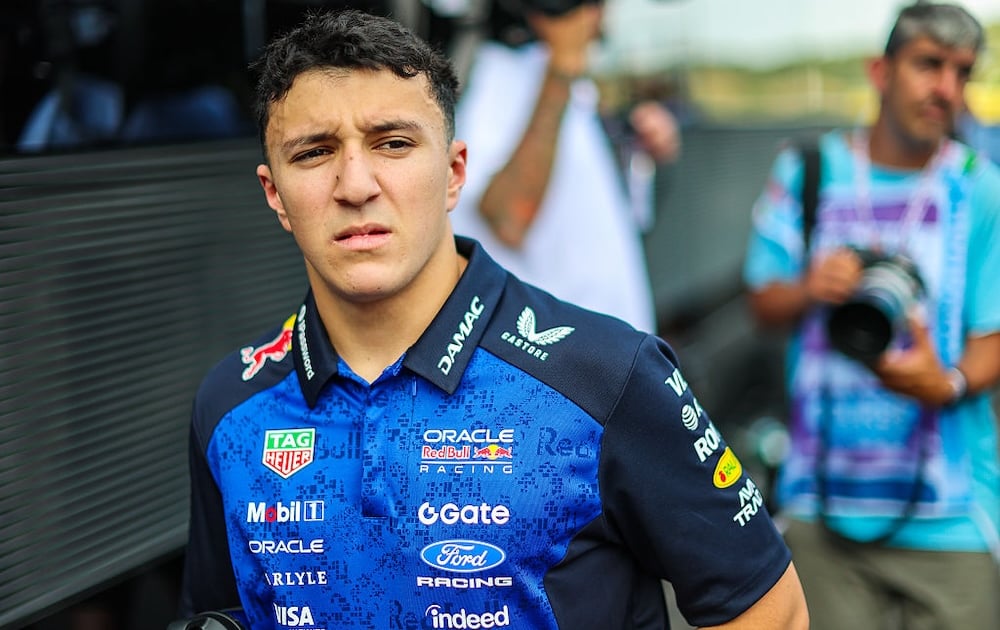
A sudden handoff before Zandvoort
A summer shutdown is supposed to be the one soft patch in a Formula 1 season, the brief and fragile interval when battered bodies and overstimulated minds can go quiet for a while. For Isack Hadjar, it turned into something else entirely: a wrist injury severe enough to keep him out of the Dutch Grand Prix, and a reminder that the modern paddock never really stops asking for payment.
Red Bull has confirmed Liam Lawson will step in. That is the headline, but the real story sits underneath it. In a sport built on milliseconds and muscle memory, a missing wrist is not a small inconvenience. It is a locked door. The car may be ready, the team may be ready, the television cameras absolutely are, but the driver is the one thing that cannot be faked.
Hadjar’s rise meets the cruel geometry of F1
Hadjar has spent much of this year doing what young drivers are told is nearly impossible: making the transition look ordinary. He has shown the kind of poise that earns notice inside the Red Bull ecosystem, where talent is abundant but security is scarce. That makes this absence sting in a particularly modern way. He is not being judged only on pace; he is being judged on availability, on durability, on whether the body can keep up with the ambition.
That is the unseen brutality of Formula 1. Fans see the glossy helmets and the champagne and the tidy race-day graphics. Teams see calendar compression, travel strain, and the way even a minor injury can turn into a strategic fork in the road. Hadjar’s setback is unfortunate on its face. It is also a test of how quickly a promising career can be interrupted by the simple fact that drivers are human beings first and gladiators only by design.
For context, the Formula 1 season leaves very little room for recovery once the green lights come back on. A missed weekend can become a missed rhythm, and rhythm in this sport is not decoration. It is survival.
Lawson gets another Red Bull-stage audition
Lawson’s name still carries the faint afterglow of every Red Bull opportunity: the sense that one sharp weekend can alter the trajectory of a career. He has already lived enough of this storyline to know the stakes. When a seat opens in this family, it rarely stays a temporary arrangement for long. Even substitute drives are measured like auditions under bright white lights.
In Red Bull’s world, a replacement drive is never just a replacement drive.
That line may sound severe, but it is only honest. Red Bull has long operated like a finishing school with a trapdoor. The organization is ruthless in the way elite programs often are: patient in public, exacting in private, and rarely sentimental when a decision must be made. Lawson gets another crack at proving he belongs in the conversation, and perhaps more importantly, proving he belongs in the pressure cooker that comes with the badge.
There is no need to romanticize it. There is also no need to pretend it is meaningless. For a driver like Lawson, a weekend in a competitive car can restore momentum, sharpen his market value, and remind the paddock that talent does not evaporate when the headlines move on.
What this says about Red Bull’s driver machine
I have always thought the Red Bull driver pipeline is one of the sport’s great marvels and one of its less flattering mirrors. It produces opportunity, yes, but it also exposes how thin the line is between development and disposability. Young drivers are invited to dream in the team’s colors, then reminded that the door swings both ways.
That tension has defined the organization for years, from the rise of Max Verstappen to the revolving traffic around its junior ranks. The brilliance of the system is obvious: it keeps a deep bench, creates internal competition, and ensures nobody gets too comfortable. The cost is less often discussed. Drivers learn early that they are not being asked merely to perform. They are being asked to justify their own existence, weekend after weekend, in a sport where a fraction of a second can decide whose phone rings on Monday.
Hadjar’s injury does not alter that structure, but it does illuminate it. Lawson’s call-up is not just a personnel move. It is evidence of how Red Bull treats adversity as a window, never a pause.
The human cost behind a tidy substitution
There is a way of writing about injuries in motorsport that makes them sound administrative, almost clerical. Driver out. Driver in. Same logo on the car. Same broadcast graphics. But bodies do not live in bullet points. A wrist injury can sound modest to people who have never had to hold a car at high speed through fast bends and heavy loads. In a Formula 1 cockpit, the strain is constant, unforgiving, and deeply physical.
Hadjar’s absence should be treated with the seriousness it deserves, not because it changes the championship picture, but because it reminds us that the sport’s machinery rests on people who absorb extraordinary force in pursuit of ordinary-looking laps. That is the part viewers do not always see. The taped hands. The ice baths. The private calculations over whether pain can be managed or must be heeded.
And for Lawson, there is another kind of pressure: the pressure of being called in not to protect a lead, but to preserve an opportunity. Those are different weights. The second can be heavier.
What to watch next in the Netherlands and beyond
The immediate question is simple enough: how does Lawson settle in, and can he turn a late-summer chance into something more durable? The longer question is for Hadjar and Red Bull alike. How long is the recovery, and how does the team handle a driver whose momentum had been building?
The Dutch Grand Prix itself is already a peculiar beast, a seaside venue with its own weather moods and its own sense of occasion. It punishes hesitation. It rewards conviction. If Lawson can find rhythm quickly, he will not merely be filling a seat; he will be reminding everyone that in this sport, opportunities are often temporary only in name.
For Hadjar, the task is quieter and harder. Heal properly. Return cleanly. Protect the arc that has been forming around him. In a paddock this hungry, absence is never just absence. It is a question mark waiting for an answer.
More from Straight From The Bench
Comments
Join the conversation — sign in to leave a comment.
Sign in to commentRelated Stories

NASCAR driver home break-in case: Cobb County accusations deepen
A metro Atlanta man now faces accusations tied to two separate home break-ins, including one involving a NASCAR driver who died in a plane crash.
Najee Harris Giants signing: Achilles comeback, big opportunity
Najee Harris is betting on a cleaner path and a bigger role in New York. The Giants are betting his recovery and experience still travel well.

Rodri Transfer News: Mourinho says Madrid made big offer
Jose Mourinho says Real Madrid came in hard for Rodri before the midfielder chose Barcelona instead. That’s the kind of miss that leaves fingerprints on a season.