J.J. Watt CBS analyst role: why he is the network's top NFL voice
CBS has picked a familiar giant to carry the next era of football Sundays.
 Beatrice Kensington6 min read
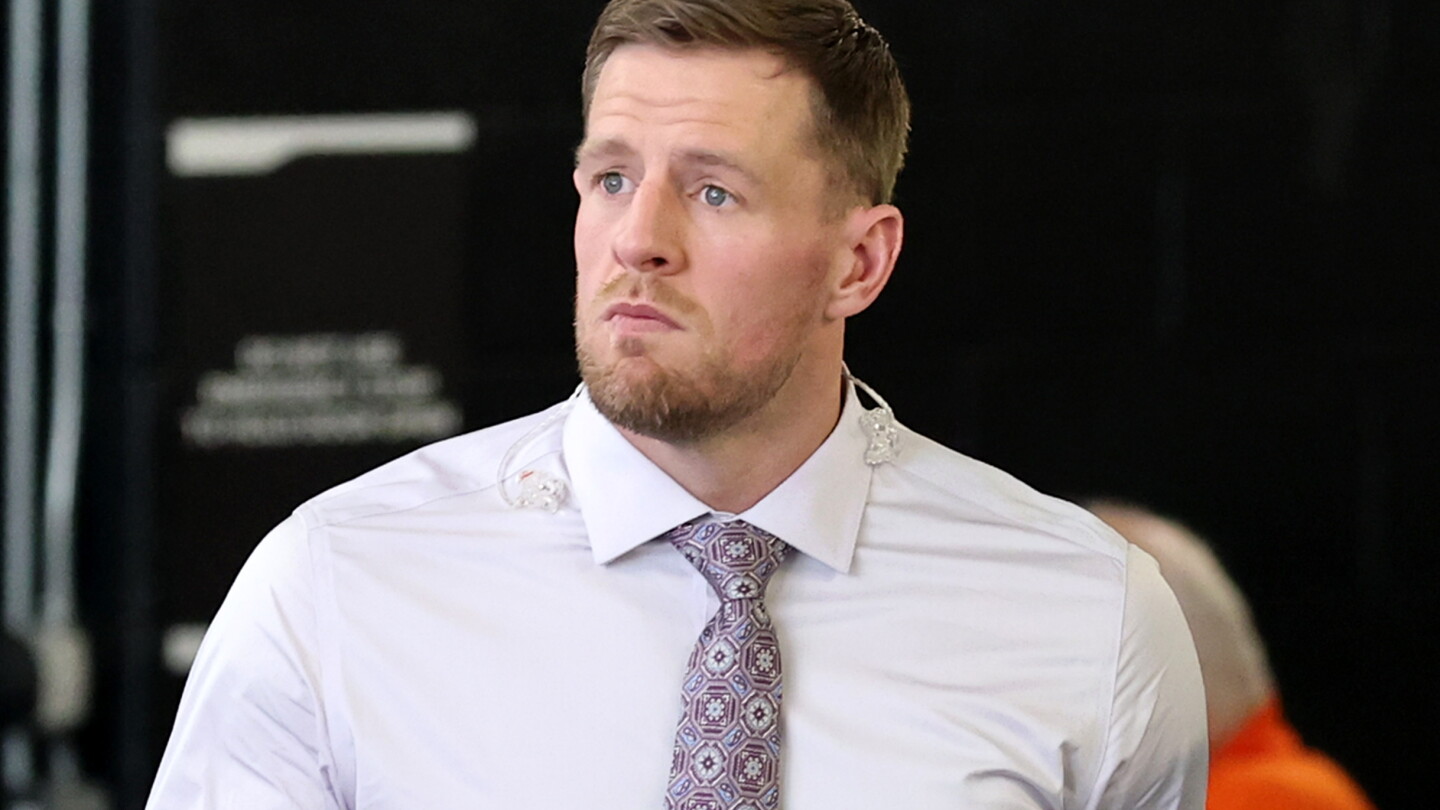
CBS did not merely hire a former player. It chose a presence, a kind of broadcast weather system, to stand at the center of its NFL Sundays beyond 2026. J.J. Watt, with the square-shouldered force of a man who spent a decade rearranging offensive game plans, now becomes the network’s No. 1 analyst, and the move lands with the gravity of something more than a personnel announcement. It is a declaration about voice, about trust, about what viewers still want when the league’s cameras are humming and the country is settling in for another autumn of shoulder pads and consequence.
This is how the broadcaster’s chair gets filled in the modern NFL: not simply by who knows the game, but by who can still make it feel consequential after the whistle. CBS has decided Watt belongs in that category. The network’s calculus is plain enough. In a marketplace where every pregame panel is fighting to seem indispensable, Watt brings immediate credibility without the stale, overrehearsed rhythm that can flatten too many former players into background noise. He has name recognition, yes. He also has the sort of résumé that makes coaches sit up a little straighter.
CBS is betting on gravitas, not just celebrity
Watt’s football life already carries the kind of weight networks like to borrow. He was not a rotational piece, not a sentimental ex-pro kept around because he sounded pleasant beside a desk. He was a Houston Texans wrecking ball, a three-time Defensive Player of the Year, a man who turned chaos into a profession. That matters on television. Viewers can hear the difference between a former player explaining a stunt look because he once lived it and one merely repeating what has been said to him in a production meeting.
CBS is essentially saying that the next generation of lead analysts needs more than polish. It needs authority that arrives already earned. That is the same instinct that has pushed other networks to chase personalities with a hard edge of authenticity, the sort of figures who can survive both the microscope of a national broadcast and the social-media crossfire that trails every controversial call. The NFL has become a league where every inch of presentation is market-tested. The booth is no exception.
CBS is not just filling a seat. It is trying to future-proof the sound of its Sundays.
Why Watt fits the modern broadcast booth
There is a reason former stars are increasingly recruited not merely for fame but for their ability to translate violence into language. Football broadcasts today are at their best when they explain the game without sanding off its edges. Watt, for all his public polish, still feels connected to the raw, bruising machinery underneath the spectacle. That is useful. Viewers know when they are being sold a script.
He also arrives at a time when the league’s audience is more educated than ever. Fans track alignments, pressure rates, personnel groupings, and fourth-down calculus with a seriousness once reserved for coaches and front offices. A top analyst has to meet that literacy. He has to read the game at the speed of the game. Watt’s appeal is that he can likely do both: simplify without patronizing, dissect without disappearing into jargon.
That is not trivial. The difference between a good booth and a forgettable one can shape how a game is remembered. A sharp analyst can turn a mundane Sunday into a seminar on leverage, timing, and risk. A dull one makes even a thriller feel like elevator music.
The broader broadcaster carousel has already started
The timing matters because broadcaster movement has become its own offseason, an industry within the industry. Announcers now get sorted, promoted, replaced, and rebranded with the same breathless attention once reserved for quarterbacks. Networks want continuity, but they also want freshness. They want a voice that feels current without sounding desperate to be liked.
That is why this appointment carries more than routine significance. By locking Watt in beyond 2026, CBS is signaling that it wants stability at a premium position before the full musical chairs scramble tightens. The network is not waiting to react; it is trying to set the market. In the age of streaming competition, NFL broadcasts are not merely live events. They are identity statements.
If you want a window into how much the booth now matters, look at how much fan conversation can revolve around it. The right analyst can soften the blow of a blown call, sharpen the tension in a tight fourth quarter, or become a trusted guide through the technical thicket. The wrong one can make the whole presentation feel like it was built by committee.
My read: CBS wants a voice that can outlast nostalgia
I think CBS is making a smarter, more modern bet than a lot of networks are willing to admit they need to make. It is easy to confuse familiarity with strength in sports television. A beloved name can still be the wrong name if the voice beneath it does not carry the room. Watt, at least on paper, offers something rarer: the possibility of a new era that does not feel manufactured.
I have written long enough about sports media to know that networks often chase the safe choice right up until the audience gets bored of safety. Then they pivot late, as if shocked that viewers wanted substance all along. This move suggests CBS understands that the public still responds to expertise that feels lived-in. Not polished into paste. Lived-in. That distinction matters.
And Watt brings a kind of cross-generational appeal that broadcasters covet but rarely bottle cleanly. Older viewers know the player. Younger viewers know the personality, the social-media presence, the human being who has already learned how to carry attention without drowning in it. The challenge now is turning that into an on-air rhythm that can last.
What to watch next as the booth takes shape
The next question is not whether Watt can speak the language of the NFL. He has already shown enough of that world to make the answer obvious. The real question is how CBS will build around him, who will complement him, and how much the network allows his voice to define the broadcast tone. Lead analysts are not just evaluators; they become part of the emotional architecture of a telecast.
If CBS gets this right, it will have secured more than a commentator. It will have found a standard-bearer for the next phase of its football coverage, one who can anchor big games with credibility and a little edge. That is a difficult combination. It is also the one viewers remember.
The booth has a new heavyweight. Now we find out how he fights with a microphone.
More from Straight From The Bench
Comments
Join the conversation — sign in to leave a comment.
Sign in to commentRelated Stories
NFL Week 7 Picks: Patriots at Bears, Cowboys at Eagles and More
Week 7 arrives with a little less innocence and a lot more evidence. The Bears have momentum, the Cowboys are walking into a Philadelphia storm, and the Texans look like a real thing again.
Jalen Hurts Blood Clot Update: Eagles Handling Draws Fire
The Eagles’ handling of Jalen Hurts’ blood clot has stirred a larger argument about transparency, trust, and who really gets protected in pro football.
NFL Week 7 injury report: Lamar Jackson, Breece Hall updates
Lamar Jackson is limited, Breece Hall is sitting out, and the Week 7 ripple effects are real. This is where Sunday availability starts turning into roster leverage.