
Jacob Misiorowski Strikeouts: Brewers Ace Sets Franchise Record
Seven straight Rockies went down swinging, and Milwaukee’s new firebrand keeps rewriting the script.
 Beatrice Kensington6 min read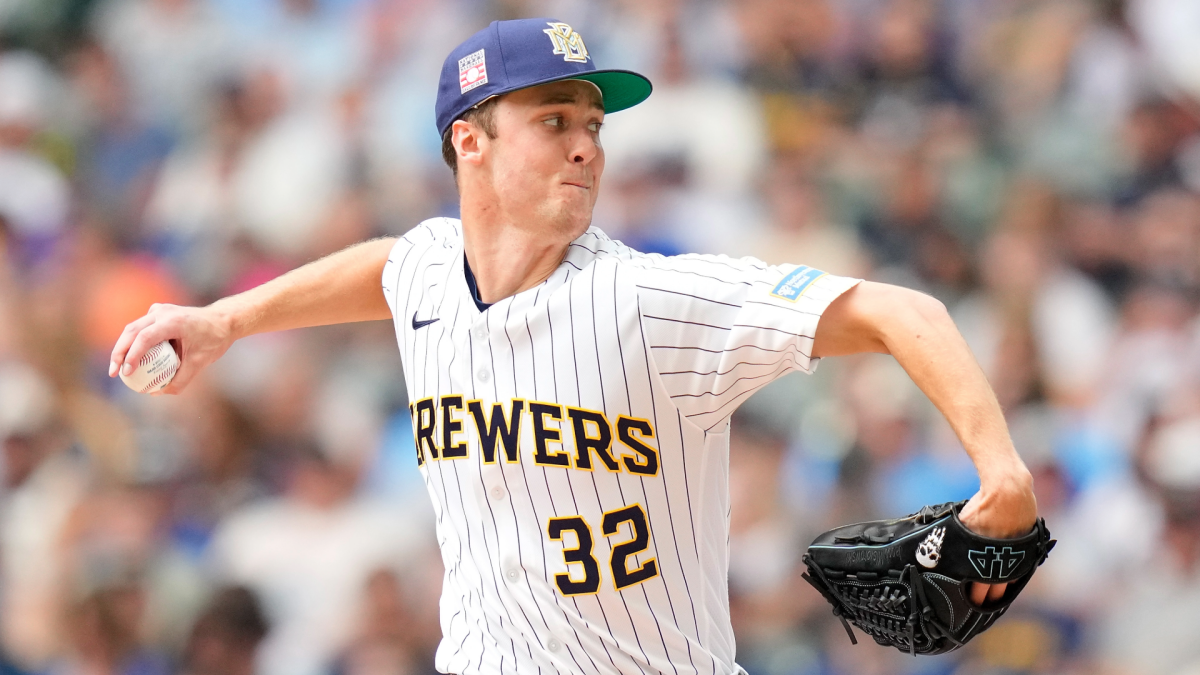
Jacob Misiorowski did not merely pitch on Sunday afternoon at American Family Field; he arrived like weather. Seven Colorado Rockies stepped in, and seven straight left the box with the same stunned expression, as if they had been asked to solve a problem written in a language they did not speak. By the time Milwaukee’s young ace had struck out 12 of the first 13 hitters, the game had already slipped out of ordinary baseball and into the older, rarer territory where velocity, command and nerve meet and history takes a seat in the front row.
The Milwaukee Brewers have spent years building a reputation on pitching depth, defensive precision and just enough offense to keep the roof on. Misiorowski is something else entirely. He is the sort of pitcher who changes the temperature in the park. A fastball at that altitude of power does not simply beat hitters; it alters their decisions before the pitch even leaves his hand. The record he set Sunday was not just a franchise line in the ledger. It was a reminder that Milwaukee may have stumbled into one of the most disruptive arms in the sport, a pitcher whose stuff can make a competent lineup look briefly, helplessly mortal.
Seven straight strikeouts, and the game tilted immediately
What made this start so arresting was not only the number, but the sequence. Seven straight strikeouts to open a game is the sort of thing that sounds invented in a tavern conversation until it is done for real. It requires more than raw power. It requires the mechanical poise to repeat a violent motion, the restraint to avoid overthrowing, and the kind of confidence that does not buckle when the crowd begins to understand it is watching something unusual.
Misiorowski also struck out 12 of the first 13 Rockies batters, which is the kind of start that turns an afternoon into a laboratory. Every inning after that became a study in whether Colorado could solve him before the final pages were written. More often than not, they could not. The Colorado Rockies were not just missing pitches; they were being made to chase a shape they could not locate until it had already vanished.
There is a reason strikeout records still matter in an age that can quantify almost every corner of the game. They expose the edge where a pitcher is not merely effective but dominant in a way that erodes the opposition’s will. Milwaukee has had excellent starters before, but this was a different kind of imprint. It felt less like a nice afternoon and more like a statement of ownership.
Misiorowski is not just overpowering hitters; he is forcing a conversation about how much of baseball can still be solved by sheer stuff.
A franchise mark with echoes of baseball’s older life
The detail that lingers, and will linger, is the comparison to 1920. That was a different baseball universe, a pre-modern game still learning how to account for power pitching, before the sport was remodeled by science, specialization and the long arithmetic of analytics. To stand in the same breath as a standard that has not been seen since then is to cross from achievement into anomaly.
That does not mean every hot start turns into a career monument. Baseball has a long memory and a cruel appetite for regression. The league adjusts. Hitters gather data. Coaches find patterns. Arms, especially loud ones, get tested by the calendar as much as by the opponent. But the difference between a flash and a force is often the ability to do this in more than one way, and Misiorowski keeps offering the Brewers reasons to believe he is not just a novelty with a radar-gun number attached.
He matters for Milwaukee in a larger, institutional sense too. Teams with limited margin cannot afford to miss on pitchers who can change series, change matchups and, on certain nights, change expectations. The Brewers have long lived in the hard business of squeezing value from a roster that is never allowed to be comfortable for long. A pitcher like this can lift the ceiling on an entire season. He can also create the sort of appointment viewing that smaller-market clubs rarely get to own. If you want to understand why pitching still sells, even in an age obsessed with launch angle and exit velocity, start here.
For another example of how quickly a player’s body or role can alter a season’s shape, the recent Shea Langeliers injury update serves as a useful counterpoint. One arm can lift a club; one absence can flatten another. That is the cold symmetry of baseball roster life.
What Milwaukee has, and what the rest of the league should fear
I have spent enough years watching this sport to know when a pitcher is merely in a groove and when he is asking hitters to confront the limits of their own certainty. Misiorowski belongs in the second category. He carries the look of someone who understands the advantage of fear, not in a theatrical sense, but in the practical one. When a hitter begins an at-bat already late, the margin disappears. When the margin disappears, at-bats shrink. Then innings do.
The Brewers should be careful with the romance of it all, because romance is where organizations get sloppy. They do not need a mythology; they need a durable ace. They need his delivery to survive, his pitch mix to evolve, and the league’s inevitable counterpunch to be met with adaptation rather than stubbornness. Still, there is no denying the simple thing here: Milwaukee has a pitcher opposing clubs will spend the next week, month and perhaps much longer planning around.
I think that is the real significance of Sunday. Not the franchise record by itself, though that matters. Not even the rarity of the strikeout streak, though that will travel well through baseball’s memory. It is the feeling that a team on the edge of contention may have found an arm that changes the terms of engagement. In an era when so many organizations chase sameness, Misiorowski gives Milwaukee a weapon with a pulse.
And the league notices those things. It always does. The first few innings may have belonged to Colorado’s strikeout total, but the larger story belonged to the pitcher who made them look like passengers in his afternoon.
The next start will bring a different lineup, a different plan, a different test. The appetite, though, has already been fed. Brewers fans know what they saw. The rest of baseball will soon find out whether this was a headline or a beginning.
More from Straight From The Bench
Comments
Join the conversation — sign in to leave a comment.
Sign in to commentRelated Stories
Red Sox trade targets: Durbin fit and Suarez on the board
Boston’s Curtis Mead pickup changed the infield board, but the work isn’t done. Caleb Durbin’s fit, Eugenio Suárez, and the next move all tell the same story.

Shea Langeliers Injury Update: Athletics catcher may miss 2026
Shea Langeliers' torn meniscus is a brutal blow for the Athletics, and perhaps for the shape of their entire 2026 season. Catchers rarely get the luxury of painless knees.
Brewers DFA Lance McCullers Jr.: trade gamble turns sour fast
The Brewers moved on from Lance McCullers Jr. barely after the ink dried on the trade. That’s not a footnote — that’s a warning label.