Jalen Hurts Blood Clot Inquiry: NFLPA Forces a Turnaround
The league blinked, and in that blink lives the real story.
 Beatrice Kensington6 min read

A sudden reversal, and the unease beneath it
The NFL moved quickly enough to change its language, which is to say it moved just quickly enough to make clear how uneasy this story has become. One day the league was telling the public that no investigation into Jalen Hurts’ medical care was necessary; the next, after pressure from the NFLPA, Roger Goodell was signaling that an inquiry would be welcomed. That kind of pivot does not happen in a vacuum. It happens when a matter that should have stayed private — a player’s health, the judgment of doctors, the chain of decisions around treatment — turns into a test of whether the league can be trusted to police the line between performance and protection.
Hurts, the Philadelphia Eagles quarterback, is dealing with blood clots, a diagnosis that carries the sort of gravity football often likes to pretend it can outrun. It cannot. Not with brute force, not with slogans, not with the usual next-man-up bravado. The human body is not a depth chart.
The league may call it an inquiry. The players will hear a question about whether football values them only while they are taking snaps.
Why the NFLPA pushed, and why that matters
The NFL Players Association rarely raises its voice without a reason, and when it does, the subtext is usually more revealing than the statement itself. This is not merely about one quarterback’s diagnosis; it is about the culture of medical decision-making in a sport that has spent decades trying to convince the public that it has learned to care for the men inside the pads. The union’s demand for an investigation suggests concern that something in the process — the communication, the timeline, the standard of care, the oversight — warrants a closer look.
That matters because health disputes in professional football have a long memory. The sport has too often handled medical issues with a kind of institutional fog, where certainty is abundant only after the damage is done. Concussions taught the league that public skepticism has a long fuse. Orthopedic injuries taught it that the body can be managed right up until it cannot. A blood clot diagnosis adds another layer, because the stakes are not about pain tolerance or toughness. They are about life and serious medical risk.
The NFL’s first instinct was to say an investigation was unnecessary. That answer now looks brittle. A league that wants to be believed on player safety cannot afford brittle.
Jalen Hurts and the meaning of vulnerability at quarterback
There is a reason this story hits harder with Hurts than it might with a lesser-known player. He is not just a starter. He is the face of a franchise, a quarterback whose calm carries weight in Philadelphia and whose presence shapes the entire emotional weather around the Eagles. When a player of that stature is suddenly tethered to a medical issue with uncertain consequences, the story spills beyond one locker room. It becomes a reminder that the most visible athletes in the league are also the most exposed, and sometimes the least protected by the mythology built around them.
The public will naturally want a timeline, and perhaps it deserves one. But the deeper issue is not only what happened to Hurts; it is what the league does when a player’s health forces an uncomfortable reckoning. The NFL loves to market control — over pace, over violence, over the narrative itself. Blood clots do not negotiate with branding. They expose the limits of that control in a way few ailments do.
If the league’s systems were sound, an inquiry should not be threatening. It should be routine. The fact that it was first treated as avoidable suggests either overconfidence or fatigue, and neither is a flattering look.
A league that still struggles to look past the helmet
This is where the NFL’s grand health and safety project collides with the old reality that the league remains, at its core, a collision business. Every time football promises modernization — better protocols, better monitoring, better transparency — it is judged not by the language in its manuals but by what happens when the issue is messy, rare, or politically inconvenient. A blood clot case sits precisely in that uncomfortable middle.
The league also has to reckon with the optics of changing course after the union applies pressure. That does not mean the inquiry itself is a bad thing. It means the league’s initial posture was, at minimum, poorly judged. In a post- 0f? Actually in a league haunted by old medical failures, confidence without humility reads as carelessness.
I have long believed football’s most consequential reforms arrive only when the sport is embarrassed into them. Not because the people inside the league lack intelligence, but because the institution so often confuses reassurance with responsibility. We saw that with head trauma, when years of hand-waving gave way to reluctant accountability. We may be seeing another version of that pattern here: a powerful employer confronted by the possibility that its internal machinery did not inspire enough trust to stand untouched.
And yes, this is personal in the broadest civic sense. Fans do not merely root for quarterbacks; they invest in them, borrow emotional language from them, build weekends around them. That intimacy carries an obligation. If the NFL wants the public to keep trusting its medical systems, it has to welcome scrutiny before it is cornered by it. Every time.
What to watch next for Philadelphia and the league
The immediate football question is simple: what does Hurts’ timeline look like, and how does Philadelphia adjust if that timeline stretches? The Eagles cannot treat this as a footnote, because a quarterback situation is never a footnote in this league, even when the roster around him is sturdy. If Hurts is unavailable for any meaningful stretch, the ripple effects will reach play-calling, game-planning, and the psychological spine of the team.
But the larger watch item is institutional, not tactical. Will the inquiry be thorough, public-facing enough to build trust, and independent enough to matter? Will the league offer clarity, or will it settle for the bland comfort of process language and hope the public moves on? The players’ union has already signaled that this will not simply be absorbed and forgotten.
The NFL now has a choice. It can treat this as an unfortunate medical episode attached to one player, or as another moment demanding that the league prove it understands the difference between managing a crisis and earning confidence. One of those paths is easier. The other is worth something.
The next statement will matter. So will the next answer. And after that, the silence, if there is any, will speak just as loudly.
More from Straight From The Bench
Comments
Join the conversation — sign in to leave a comment.
Sign in to commentRelated Stories
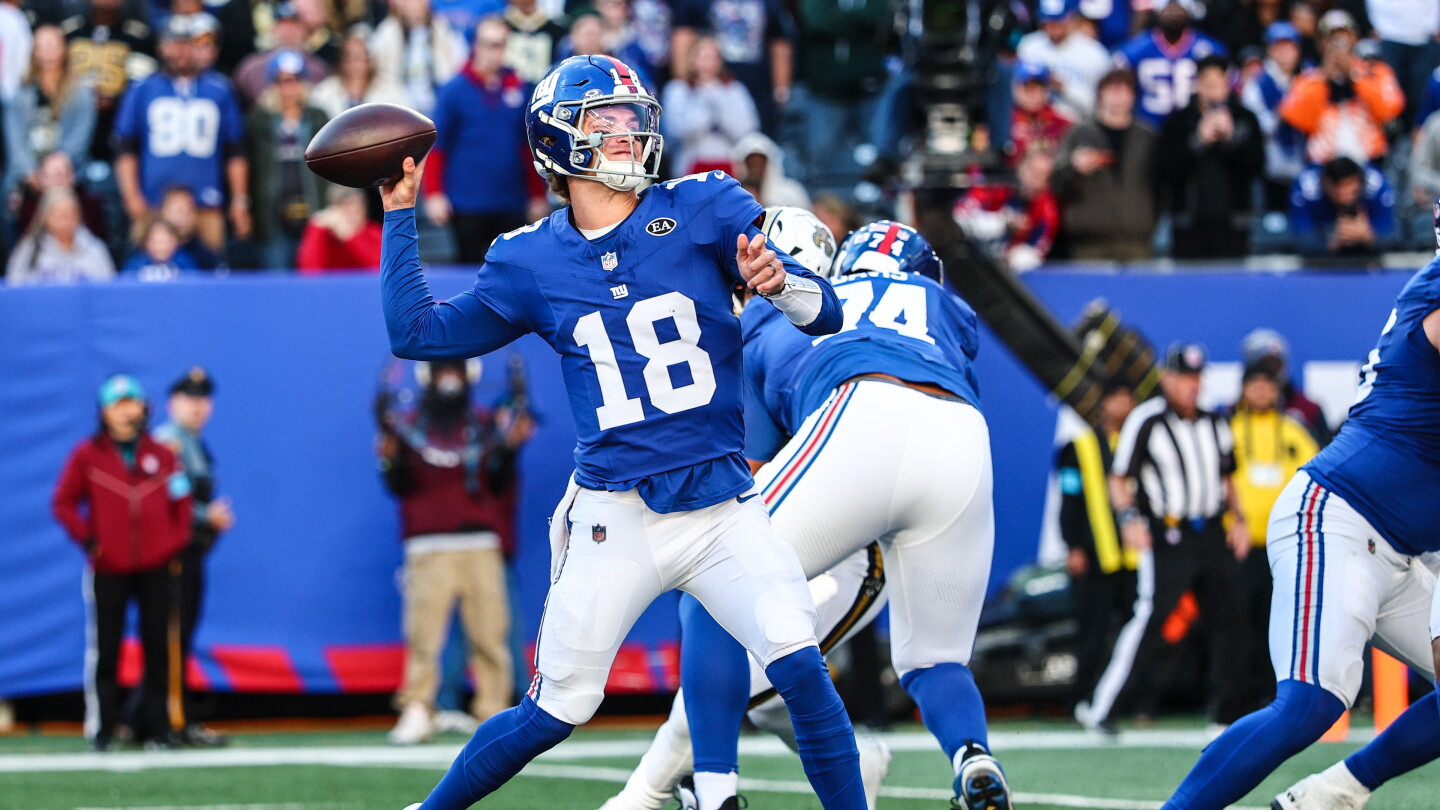
J.J. McCarthy starting QB update: Harbaugh makes the switch
John Harbaugh is turning to J.J. McCarthy against the Texans, ending the Jameis Winston run after four starts. Now the line gets real.
Patriots offensive line injury update: Vera-Tucker, Brown out vs. Bears
New England’s interior protection is taking a hit at the worst possible time. Missing both starting guards puts extra heat on a Patriots offense already trying to survive on timing and toughness.

Chargers offense update: Los Angeles plans to simplify its scheme
Los Angeles is trimming the menu, not rewriting the meal. That choice says plenty about where the Chargers are and what they still are not.