
Justin Jefferson season: fewer catches, same danger for defenses
The numbers are down. The stress on coverage is not.
 Zane Miller6 min read
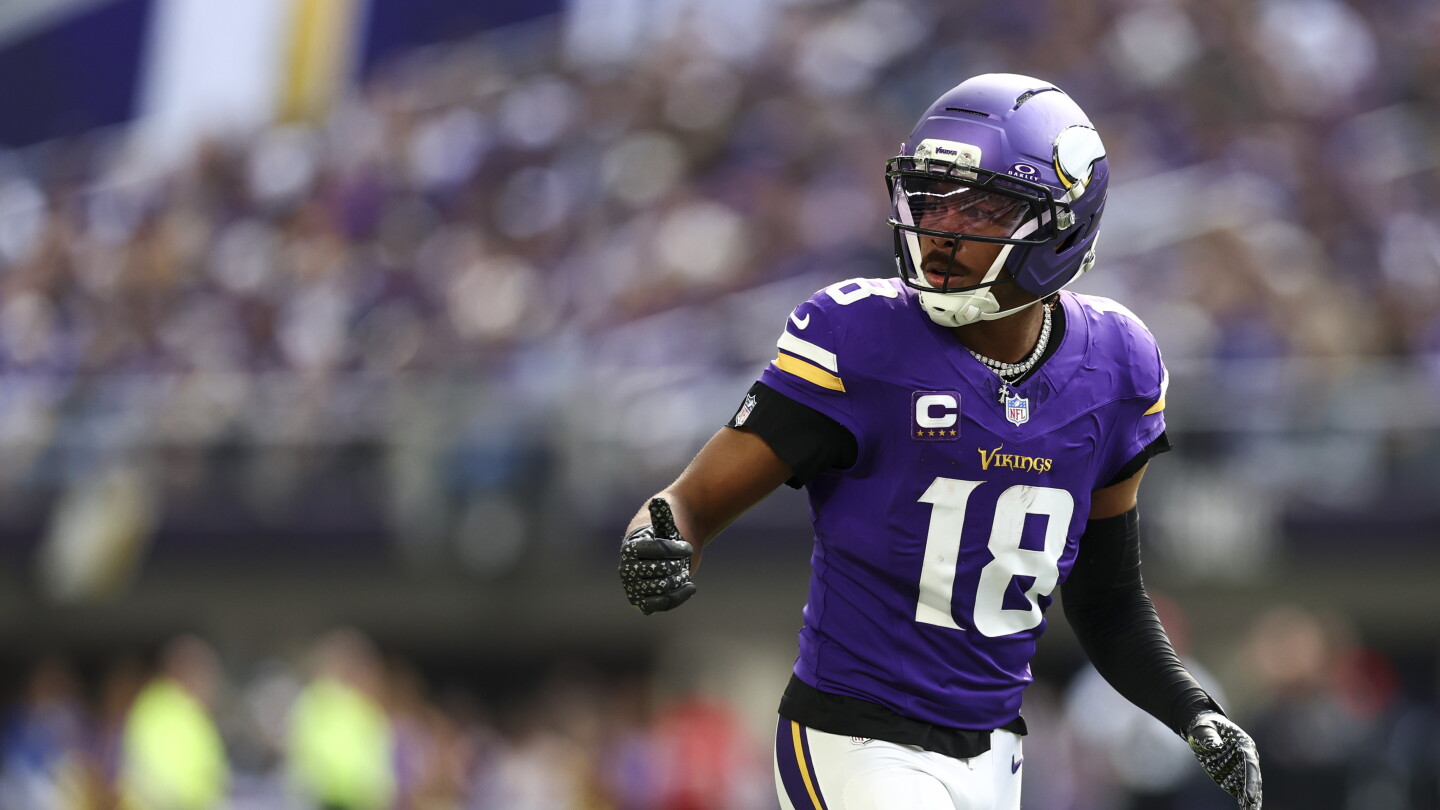
Justin Jefferson doesn’t look like a star trying to talk himself into a reduced role. He looks like a star who knows exactly why the role changed, and why it might be helping Minnesota more than his stat line ever could.
That’s the part worth paying attention to here. Jefferson is catching fewer passes and piling up fewer yards per game than at any point in his career, and in the old NFL conversation that would trigger panic, rumors, and a week of breathless chatter about targets. Not this time. Not with the Vikings choosing a more distributed, more situational offense and not with Jefferson sounding like a player who cares more about the scoreboard than the fantasy spreadsheet.
The message is simple: production is still the currency, but winning is the asset class.
Jefferson’s numbers are down, but the offense is not apologizing
This is where the easy take falls apart. People love to treat wide receiver usage like a morality play. Feed the alpha. Don’t feed the alpha. Someone is being disrespected. In reality, offenses evolve because defenses evolve, and because the league keeps punishing teams that become predictable.
Jefferson’s 2026 season has not been a volume-chasing showcase. He’s being used in a way that makes Minnesota harder to scheme against, not easier. Fewer routine touches can mean more selective, more devastating touches. A defense can survive a five-yard hitch. It can’t survive a back-breaking third-down separation or a red-zone isolation rep that tilts the entire game plan.
That’s the hidden value here. Minnesota is apparently comfortable living with less empty production if it buys efficiency elsewhere. That usually means the quarterback can spread it around, the run game matters more, or the staff has decided that forcing Jefferson’s touches is a good way to lose games instead of winning them.
And Jefferson, for his part, is not making this about himself. That’s not lip service. That’s usually a sign the internal temperature is healthy.
Why this matters for Minnesota’s bigger picture
This is where roster-building comes in. Teams don’t win by stuffing one elite player with targets for the sake of optics. They win when the rest of the offense is good enough that defenses can’t sit on the star every snap.
Jefferson being less central in the stat sheet doesn’t automatically mean he’s less central to the offense. Those are not the same thing. A receiver who forces safety help, changes leverage, and reshapes coverage rules can still be the most important player on the field even if he finishes a game with a modest line.
That’s also why this story has a little long-term juice. If Minnesota can keep Jefferson productive without turning every drive into a “throw it to No. 18 or else” operation, that matters in January. It matters when opponents have time to study tendencies. It matters when you need a second or third answer because the first one got taken away.
The modern NFL rewards versatility. It punishes ego-driven offense. If Jefferson is cool with fewer touches because the Vikings are generating better overall results, that’s not a compromise. That’s maturity and competitive clarity.
The stat line may be smaller. The threat is not.
The fantasy crowd sees decline. Teams see leverage.
Fantasy football brains and front-office brains never quite speak the same language. One is counting targets. The other is counting stress points.
If you’re a fan checking Jefferson’s weekly totals and wondering where the usual eruption went, you’re not crazy. The per-game production is down. That part is real. But it’s also the kind of drop that can happen when an offense becomes less dependent on one player and more intent on winning matchups all over the field. That’s especially true if the team is protecting its top weapon from unnecessary collisions and forcing defenses to defend every inch of grass.
This is also where the Vikings deserve credit, assuming this trend holds. It’s easy to say you want balance. It’s harder to actually build it around a receiver who changes defensive structure before the ball is even snapped. Plenty of teams never figure that out. They either overfeed the star until the offense becomes stale, or they underuse him and spend the season explaining why the best player in the huddle isn’t getting the ball enough.
Minnesota appears to be threading the needle. That’s rare.
Zane Miller’s read: this is how elite offenses age well
I’ll take the uncomfortable version of this conversation over the lazy one every single time. Jefferson having fewer catches in a season where the team is still functioning says something useful about the offense’s architecture. It says the Vikings may be trying to become less fragile.
That’s what good teams do. They stop needing one player to save every bad down and distance situation. They stop making the same read 12 times a game and calling it identity. Jefferson is still the centerpiece, but the center of gravity may be shifting around him in a way that makes Minnesota tougher to trap.
I’ve seen this movie before with elite pass catchers. Early-career volume makes everybody feel rich. Later, the smartest offenses realize the real goal is to keep the star dangerous in December, not just busy in September. The best version of this is a receiver who’s still feared, still decisive, and somehow less worn down when the games matter most. That’s where Minnesota seems headed if this approach sticks.
And if Jefferson is on board? That changes everything. Wide receivers notice touches. They also notice wins. Guess which one tends to calm a locker room faster.
What to watch next
The next checkpoint is whether this usage pattern keeps paying off if defenses start adjusting specifically to remove Jefferson and dare someone else to beat them. That’s the real test. Not whether he can be more productive — we already know that. Whether Minnesota can keep this offensive balance without drifting into predictable territory is the question.
For now, Jefferson’s response is the story. Not bitterness. Not noise. Just a top-tier receiver sounding like a guy who understands the difference between being fed and being effective.
That’s a smart place for a team to be.
If the Vikings keep winning this way, nobody in that building is going to care how many times Jefferson got the ball. And if the coverage starts slipping back toward him, the fireworks are still there.
More from Straight From The Bench
Comments
Join the conversation — sign in to leave a comment.
Sign in to commentRelated Stories
NFL Week 8 Picks: Panthers at Packers, Ravens at Bills and More
Week 8 arrives with the league’s first real sorting hat in place. Green Bay, Buffalo and Baltimore carry the kind of gravity that exposes the thin places in a season.
Steelers vs Browns: Cam Heyward, Jared Verse dirty-play feud
Cam Heyward says Jared Verse’s “dirty” jab will be answered Sunday, and that is exactly the kind of sentence this rivalry has been waiting to hear. The Steelers and Browns don’t need much to turn a ga
Aaron Jones knee injury update: Vikings manage workload this week
Aaron Jones has avoided a serious knee injury, but the Vikings are already treating this as a week of caution. For a team built on timing and balance, that matters.