
Keenan Allen Arrested: Colts WR Faces DUI Charges
A veteran receiver, a public stumble, and a team suddenly forced to stare at the clock.
 Beatrice Kensington6 min read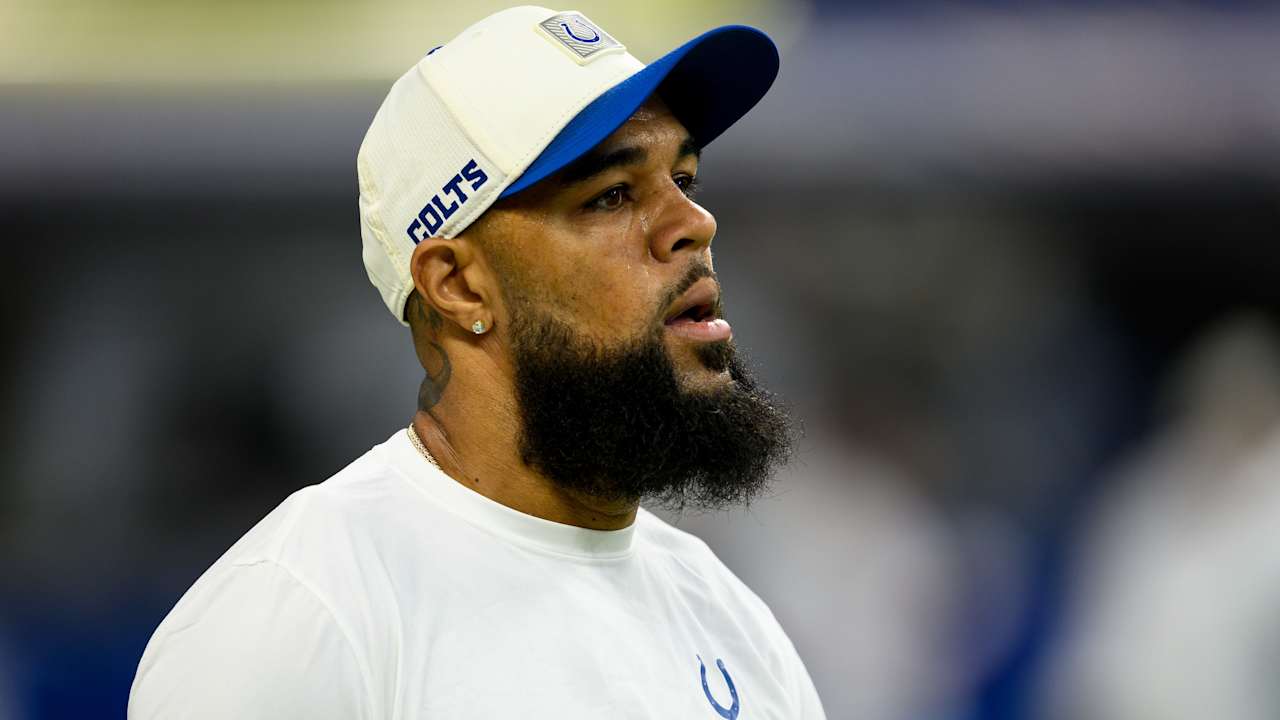
INDIANAPOLIS — The day was supposed to belong to football’s slow-turning machinery, to practice notes and depth charts and the ordinary churn of an NFL season. Instead, Keenan Allen’s name arrived in the harsh light of an arrest, and the Colts were left with a kind of news no team ever wants: the kind that reaches past the locker room and into the moral weather around it.
Allen, 34, was arrested Sunday on drunken driving charges and was being held at the Marion County Arrestee Processing Center. That is the bare fact, and it is enough to darken the frame. A veteran wide receiver with a polished résumé and years of Sundays behind him, Allen now becomes the center of a story that is no longer about route-running, timing, or chemistry with a quarterback. It is about judgment. It is about consequence. And it is about how quickly a franchise’s plans can be interrupted by the kind of off-field mistake that leaves everyone else to absorb the fallout.
The Colts do not get to treat this as background noise
The NFL has long been a league of sharp angles and uneasy contradictions. Teams sell discipline, professionalism, accountability — then spend much of their waking life managing the mess that follows when those ideals collide with human frailty. The Colts cannot wish this into a footnote. A veteran player’s arrest, especially on a charge as serious and familiar as drunken driving, is not the sort of matter that disappears because training camp, roster deadlines, or a busy calendar demand attention.
That is the first test for Indianapolis: say less, mean more. Let the legal process breathe, but do not confuse silence with seriousness. For a club trying to establish an identity, every public response is part of the brand whether teams like that fact or not. Fans notice the posture. Teammates do too.
Allen’s case also arrives in a season when the Colts are already balancing the blunt economics of football: how much a veteran still gives, how much risk he carries, how much patience the front office can afford. A receiver of Allen’s experience is supposed to steady the offense, not destabilize the room.
A veteran with a long trail of production and expectations
Allen has spent years building a reputation as one of the more technically refined receivers of his era, a player whose value has often lived in the details — the break at the top of the route, the little separation against a corner, the reliable hands on third down. That reputation matters because the league is not just judging the charge; it is judging the man who stands behind it. A younger player might be granted the brittle mercy of inexperience. A 34-year-old veteran does not get quite that same courtesy.
This is where the football story and the human story split, then intersect again. The Colts are not only dealing with a roster issue. They are dealing with the optics of leadership, the meaning of reliability, and what it says when one of the older voices in a room lands in police custody on a Sunday. There is a reason teams speak so often about “character.” It is not a slogan. It is a risk-management language all its own.
For readers trying to place the scale of this, the best comparison is not some grand scandal from another era. It is the quieter, more modern truth that professional sports have learned to live with: the smallest fracture in public trust can become the loudest story in the building.
The offense can survive a missing target. It cannot shrug off a crack in the moral foundation.
What this means for Indianapolis now
The immediate football question is obvious: what happens next? The answer depends partly on facts not yet public and partly on the Colts’ internal tolerance for disruption. In the NFL, those two things are rarely separated for long. If Allen is facing legal consequences, the team will have to decide whether to separate the player from the jersey, and whether to do that quickly or cautiously.
That decision matters because Indianapolis is not operating in a vacuum. The Colts have been trying to make sense of their own roster picture, their own expectations, and their own edge in a crowded AFC. One veteran’s off-field misstep can force a practical reshuffling and a philosophical one at the same time. Does the team lean harder on younger receivers? Does it treat Allen as a short-term football asset and a long-term liability? These are not merely personnel questions. They are culture questions with shoulder pads on.
The front office will also know what every team knows on days like this: the story does not end with discipline, because the public has a memory longer than a week and a patience shorter than a season. The Colts can manage the roster. They cannot manage the headline.
The league’s old pattern, still undefeated
I have written long enough about professional sports to know how these episodes tend to age. The initial response is often procedural — “we are aware,” “we are gathering information,” the cautious grammar of damage control. Then comes the quieter second act, when the team is forced to decide what kind of organization it wants to be when one of its own has embarrassed it. Some clubs hide behind football necessity. Some use language so bland it barely qualifies as language. A few, very few, manage to sound human.
My own view is simple: teams do themselves no favors when they act as if a veteran’s presence on a depth chart excuses a lapse in public responsibility. The sport has spent decades asking fans to separate the player from the person. That bargain gets harder to honor when the conduct at issue could have ended far worse than a mugshot and a court appearance. No reception yardage, no veteran savvy, no locker-room standing makes that easier to swallow.
The larger problem for the NFL is not that one player made a bad decision. It is that the league remains so practiced at absorbing bad news that the outrage can sound prepackaged, almost ceremonial. That is the dangerous part. Familiarity breeds numbness, and numbness is how standards soften.
For Indianapolis, the practical questions will come quickly enough. There will be statements, internal conversations, maybe some uncomfortable waiting. But the most important judgment is already underway, and it belongs to the team itself: whether it treats this as a passing embarrassment or as a serious breach that demands a serious response.
The next move will tell us plenty. Not about Allen alone. About the Colts, and how much spine they think this moment requires.
More from Straight From The Bench
Comments
Join the conversation — sign in to leave a comment.
Sign in to commentRelated Stories
Steelers Trade Kaleb Johnson: Packers Land RB Before Cut Day
Kaleb Johnson is headed to Green Bay, while the Steelers keep pruning the roster with cutdown day looming. The moves say plenty about where this team thinks it stands.

Patriots Roster Tracker: Foxboro cutdown day is here
The Patriots have started trimming the roster, and Foxboro’s cutdown grind is officially on. Depth, special teams, and draft capital all matter now.

Chicago Bears Roster Cuts Tracker: Latest Moves, Rumors, 53-Man Deadline
The Bears must get from 90 to 53 by Sunday evening, and the final roster math will reveal as much about their direction as their depth. This is the annual culling where promise meets practicality.