
Kevin Durant Suns Trade: Mat Ishbia’s regret and the bill
Phoenix wanted a shortcut. Instead, it bought a ledger of blame.
 Beatrice Kensington5 min read
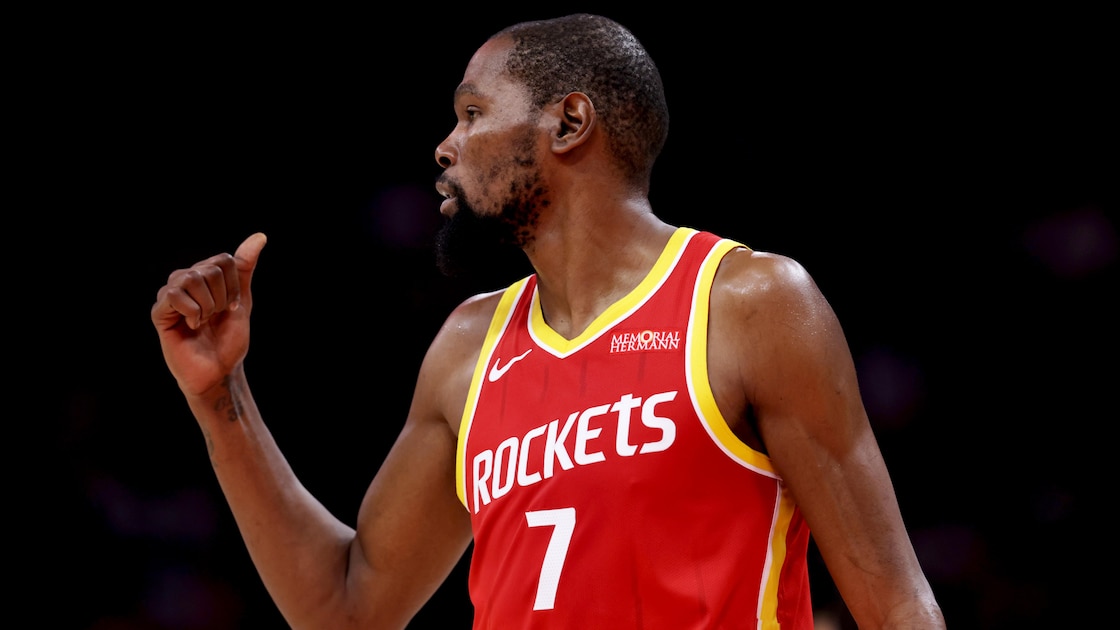
Kevin Durant did not need to say much. The sting was already in the air, carried by Mat Ishbia’s public regret and by the familiar, exhausting habit of turning a franchise’s own choices into somebody else’s burden. Phoenix swung big in 2023, chasing a title with the urgency of a team that believed the proper answer to structural weakness was star power. Now the owner is calling that approach a mistake, and Durant, unsurprisingly, does not sound pleased to be wearing the receipt.
This is the awkward arithmetic of modern contention. The Phoenix Suns traded for Kevin Durant because that is what desperate franchises do when they can smell opportunity and fear the clock at the same time. The move made the roster more glamorous. It also made it thinner, more expensive, and less forgiving. The problem was never simply Durant. It was the larger promise of a team trying to buy certainty in a league that rarely sells it.
Phoenix tried to purchase a shortcut
Ishbia’s phrasing — the idea that Phoenix tried to throw money at the problem — lands with the sour thud of a verdict. It is the sort of line that sounds honest only after the bill has come due. The NBA has always rewarded ambition, but it punishes impatience just as hard. One superstar can elevate a team. He cannot, by himself, patch every structural leak, enforce continuity, or make a roster durable enough to survive the season’s long weather.
The Suns are living inside that lesson now. Durant was never the wrong player to covet. He remains one of the most exquisite scorers the game has ever known, a seven-foot mathematics problem with the touch of a pianist. But trades of this magnitude are not judged by highlight clips. They are judged by what survives after the parade of hype, by whether the foundation beneath the stars can hold weight.
Phoenix reached for a crown and found the price tag taped underneath.
The painful part is not that the Suns took a swing. It’s that the swing exposed how much they still needed structure, not just stardom.
Why Durant bristles at the blame game
Durant has spent much of his career being asked to absorb the consequences of decisions made around him. He has been blamed for leaving, for staying, for pairing with the wrong star, for not being enough of a savior in a sport that resists saviors. The reflex to place the heaviest burden on the most famous player is one of basketball’s oldest habits, and one of its laziest.
What Ishbia’s regret does, intentionally or not, is re-center the narrative on Durant as if he were the strategy rather than a part of it. That is what likely irritates him. The trade was not a solo act. It was a front-office declaration, a wager made by ownership, and a roster decision that rippled far beyond one locker stall. For the Suns to now hint at buyer’s remorse can sound, from Durant’s side, less like honesty than selective memory.
The broader issue is reputation. Stars notice how franchises talk after the deal is done. They remember who took responsibility and who reached for a convenient scapegoat. In a league where player empowerment has reshaped the balance of power, words matter almost as much as contract length. A franchise can survive a failed trade. It has a harder time surviving the public habit of undercutting its own stars after the fact.
The Suns’ real problem was never a single name
Phoenix has spent years trying to build a contender around elite names, and the pattern is familiar across the league: when the core is unstable, ownership reaches for the loudest available fix. Sometimes it works. Often it merely changes the skyline while leaving the soil untouched.
That is the real lesson here, and it reaches beyond the Suns. A team can acquire Durant, or any other transcendent talent, and still remain vulnerable if the rest of the roster lacks flexibility, depth, and clear identity. The great mistake of splashy team-building is assuming the addition of brilliance automatically produces balance. It does not. It only gives the imbalance a more elegant face.
Phoenix’s challenge now is not just basketball. It is credibility. Every major organization eventually has to answer the same question: do you know what you are, or only what you wish you were? The Suns made a bet on the latter. That is why this dispute has such a bitter aftertaste.
What this says about the modern superstar economy
There is a reason this kind of story keeps surfacing in the league’s upper reaches. Stars are both assets and symbols, and franchises sometimes forget the difference. Once the trade is made, the player becomes the visible proof of ambition. When the plan goes wrong, he becomes the easiest place to deposit regret.
That is unfair, but it is also revealing. The NBA economy has become so centered on elite talent that teams now live and die by a handful of names, then act surprised when the burden of those names becomes too heavy to carry. The Phoenix Suns are not the first organization to discover that star accumulation is not the same thing as roster construction, and they will not be the last.
Bea’s view is simple: the league keeps rewarding those who are bold, but it punishes those who confuse boldness with coherence. Durant did not invent Phoenix’s pressure. He merely became its most visible surface.
The next chapter will tell us whether this becomes a brief, embarrassing bruise or the start of a deeper separation between the Suns and the logic that brought them here. Either way, the language around this trade already says enough. Somebody wanted a shortcut. Somebody else is now holding the bill.
Phoenix can still choose how it wears the mistake. Quietly, with accountability. Or loudly, with more blame. The season will reveal which instinct wins.
More from Straight From The Bench
Comments
Join the conversation — sign in to leave a comment.
Sign in to commentRelated Stories

Michael Beasley vs Delonte West: Brand Risk 16 Knockout Fallout
Michael Beasley’s knockout of Delonte West at Brand Risk 16 was less novelty than warning flare. The ringside noise was loud; the human stakes were louder.

NBA Expansion to Seattle: Why the Sonics Return Is No Longer a Lock
Seattle’s long march back to the NBA has hit another fog bank. The real question now is whether this is caution, leverage, or something colder.

Daniel Dubois vs Fabio Wardley 2: London rematch ends early
Daniel Dubois defended his WBO title with a brutal second-round stoppage of Fabio Wardley at a packed O2 Arena. The message was loud: Britain’s heavyweight pecking order is getting clearer.