
Kyle Teel Injury Update: White Sox Catcher Out 6-12 Weeks
Chicago loses the one man who steadied the game’s rough edges.
 Beatrice Kensington6 min read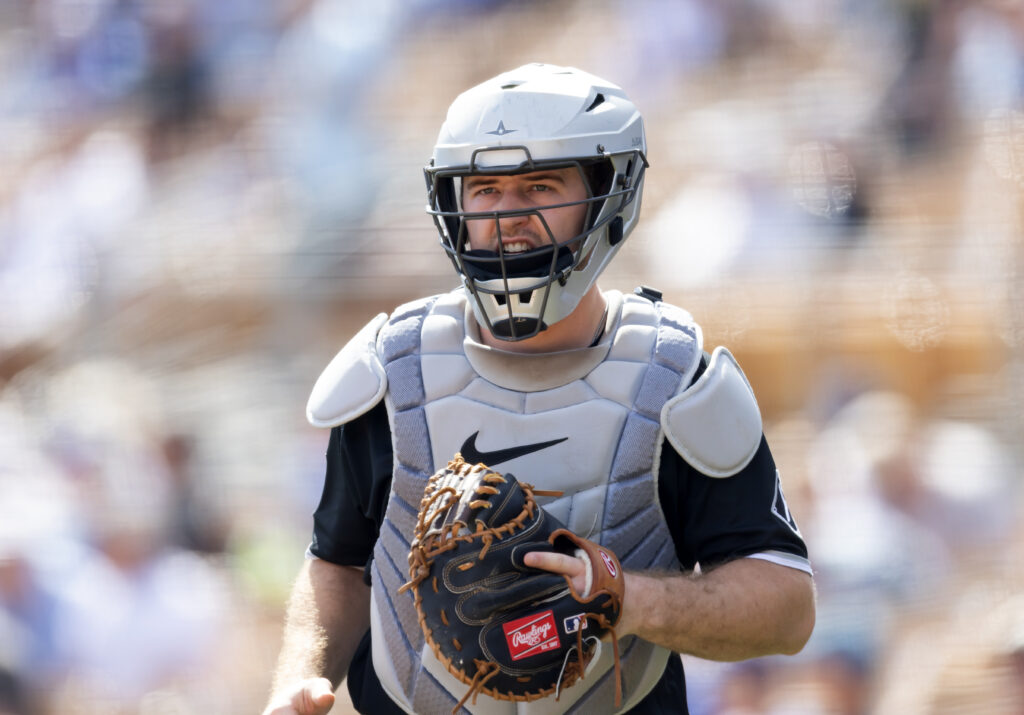
A catcher the White Sox can least afford to lose
Kyle Teel’s left high ankle sprain arrives like a bad seam in a winter coat: small to the eye, ruinous in the cold. The White Sox now expect their starting catcher to miss somewhere between six and 12 weeks, a span that can swallow the rest of a season whole if the calendar turns unkind. For a club already measuring progress in inches, not miles, that is not merely a lineup note. It is a structural problem.
The game asks a catcher to do more than receive a pitch and throw to second. He is the manager’s field marshal, the pitcher’s translator, the quiet caretaker of a staff that often looks most vulnerable when the lights are brightest. Losing Teel strips Chicago of one of the few positions where stability can be felt in every inning, even if it rarely appears in a box score.
Why this injury lands differently in Chicago
The White Sox do not have the luxury of treating this as a temporary inconvenience. A contender can patch over a catcher injury with a veteran reserve and a little organizational shrug. Chicago, in its present state, has to solve for competence before it can even dream of depth.
That is why Teel’s absence matters beyond the obvious defensive burden. A young catcher’s rhythm with a pitching staff is built through repetition — the same pregame conversations, the same handshake of signs, the same instinct for when a pitcher needs a breath and when he needs a hard nudge. Take that away for two months, maybe more, and you are not simply replacing a player. You are asking the entire battery to relearn itself in real time.
The White Sox have spent too many recent seasons trying to paper over instability with hope. Hope is cheap. Catching is not.
Chicago’s internal choices now become the story. The next man up must handle the staff without turning every at-bat into a defensive tax. If the backup hits a little, fine. If he simply catches cleanly and frames a game with some authority, that will count as a win in a season where the ledger has been stingy. There is no glamorous workaround here.
The human cost of a six-to-12-week timeline
In baseball, the language of injury reports can sound almost pastoral. Six weeks. Twelve weeks. A tidy range, as if the body were a spreadsheet row waiting to be sorted. But a high ankle sprain for a catcher is a cruel sort of damage because the position is built on crouching, exploding, and repeating the same punishing posture until the legs feel borrowed.
Teel’s setback is also a reminder of how fragile catcher development can be. Young backstops are often celebrated for what they promise in the abstract — the arm, the patience, the leadership, the supposedly rare feel for the game. Yet promise at catcher is always tethered to durability, and durability is the skill nobody markets until it disappears.
The cruelest injuries in baseball are the ones that steal a player’s rhythm before they steal his talent.
Chicago will now spend the next stretch testing whether Teel’s value has been understated by his absence. That is the odd arithmetic of the sport. A catcher can go unnoticed for weeks while he is healthy, then become impossible to replace the moment the injury cart rolls out.
What this means for the White Sox’s long view
There is also a larger organizational lesson here, and it has nothing to do with sympathy. Teams that are rebuilding, retooling, or whatever gentle verb they prefer usually talk about accumulating talent. Fine. But catching depth is part of talent accumulation, too, and one injury can reveal whether a front office has built a sustainable structure or merely a promising headline.
I have long believed that the most revealing injuries in baseball are not always to the star. They are to the player who makes everyone else function. Lose a shortstop in the middle of a pennant race, and the drama is obvious. Lose the catcher who has become the spine of a young staff, and the damage spreads more quietly, like water under a door.
This is where Chicago’s season takes on a harder edge. If Teel was meant to be one of the few controllable pieces around which the next phase could be arranged, then his absence forces the White Sox to answer a question they would have preferred to postpone: what does the foundation look like when one of the first stones is removed?
I do not think this has to become a season-defining wound in the dramatic sense. The White Sox are already too far along to have one injury rewrite the entire plot. But it can alter the tone of a month, and tone matters on a club like this. Lose enough games while trying to improvise behind the plate, and the young pitchers start pressing. Pressing breeds errors. Errors breed the sort of losses that linger.
If you want the broader baseball parallel, consider how often clubs discover the truth about themselves not in a marquee trade or a flashy call-up, but in the weeks after a catcher goes down and the innings begin to fray. The position is a mirror. It tells on everybody.
What Chicago watches next
The immediate question is not just who catches, but how the White Sox keep the rest of the operation from slipping. Will the staff simplify? Will the club lean more heavily on certain pitchers who work well with the replacement? Will the front office stay patient if the defensive shape changes too much?
There is a practical limit to how much one team can absorb at this time of year, especially one with thinner margins than it would like to admit. Chicago can survive the absence. It cannot afford the accumulated cost of pretending it is irrelevant.
For readers tracking the broader roster picture, this sits in the same family of trouble as other clubs forced to absorb injuries at key positions, the sort of ripple that can change a month before anyone admits it has changed the season. The White Sox may look for stopgaps, but stopgaps are only helpful if they stop the gap. Otherwise they are just bandages on a torn seam, and the wind gets in anyway.
The White Sox will move on, because teams always do. But Teel’s absence leaves a mark, and not just on the depth chart. It is a reminder that in baseball, the least replaceable players are often the ones doing the quietest work.
Chicago has just lost one of those men. The next six to 12 weeks will show whether the club has a real answer, or only a temporary one.
More from Straight From The Bench
Comments
Join the conversation — sign in to leave a comment.
Sign in to commentRelated Stories

Athletics Injury Update: Joshua Kuroda-Grauer lands on IL
The A's lost rookie infielder Joshua Kuroda-Grauer after surgery for a ruptured testicle. It's a painful reminder of how thin depth gets when a young player is forced off the board.

Dodgers vs Phillies: game-ending baserunning gaffe sinks Philadelphia
The Dodgers won a tight one in Philadelphia, but the ending was pure baseball grime: a baserunning blunder that turned a one-run game into a bruise.

Max Fried Injury Update: Yankees Activate Ace for Doubleheader
Max Fried is set to return after a two-month absence, giving the Yankees a badly needed front-line arm. In a season that keeps asking New York for more, this one matters.