
Lake Travis High School Football Death: a season turned sacred
In Austin, a Friday-night game cannot begin to explain this kind of loss.
 Beatrice Kensington6 min read
A practice field that became a place of grief
Lake Travis High School is supposed to be a place of Friday-night certainty, where the lights come on, the stands fill, and the hard arithmetic of football sorts out winners and losers. This week, that familiar script was torn clean through. A senior died after complications from a medical emergency he suffered during football practice on Monday, and the news landed not as sports news so much as a sudden rearrangement of what matters.
There are some stories the game cannot absorb. This is one of them. A practice field, a whistle, a routine drill, then the dreadful pause that changes the air in every room that follows. A school district can issue a statement, a team can gather, a community can pray — and all of that has its place — but there is no tidy sports language for a teenager gone too soon.
In moments like this, athletics reveal their truest scale. Football can be a furnace of identity in Texas, a civic ritual as much as a sport, but the pageantry shrinks to near nothing beside the fragility of a young life. The scoreboard may still glow somewhere, but it does not speak here.
What this loss does to a football culture built on certainty
At places like Lake Travis, football is braided into the calendar and the local mythology. The Cavaliers have long been part of that Texas high school machine, where expectations arrive early and the rituals are polished: helmets lined up like bright relics, training tables, film rooms, the steady march toward autumn. Kids grow up inside that atmosphere. Parents, too. Winning becomes a language of belonging.
And yet the most important people in that ecosystem are not the stars under the stadium lights. They are the teenagers whose names do not always travel beyond the district, the linemen, the backups, the juniors hoping for a look, the seniors trying to make one last season linger. A death like this reaches all of them. It reaches the strength staff, the coaches, the classmates who shared locker-room jokes and classroom notes and the ordinary, unremarkable hours that suddenly feel holy.
If you want a broader frame for the kind of public grief a school can feel, there are other sports stories that have forced communities to confront the human cost behind competition, from the debate around Jayden Daniels and LSU jersey disputes to the ongoing questions about what institutions owe the young people who carry their brands. Different subject. Same uneasy truth: athletics run on bodies, and bodies are not abstractions.
The cruelest thing about youth sports is how easily we mistake invulnerability for tradition.
The burden on teammates, coaches and families
The people left behind do not get to process this in public theory. They live it in fragments. A teammate may remember a block, a joke, a ride home. A coach may replay the minute-by-minute details with the awful discipline of somebody searching for a different ending. A family member will hold the timeline of Monday not as an event but as a before and after.
That is why the language around these tragedies matters. Schools often speak in terms of support, counseling, privacy, and respect, and those words should not be treated as boilerplate when the grief is this raw. Students need room to mourn without feeling observed. Coaches need room to lead without pretending to be made of iron. Parents need assurance that their children are safe enough to keep showing up.
There is also the quieter question that hangs over every program after a medical emergency: what does preparedness look like in practice, not on paper? In high school sports, where facilities and staffing can vary widely, the best intentions still depend on training, timing and immediate response. The public may never know every detail of Monday’s emergency, and they should be careful about pretending they do. But any serious athletic community has to treat this kind of loss as a hard reminder that readiness is not a ceremonial word. It is the difference between chaos and a fighting chance.
My view: football communities have to learn how to value life before legacy
I have written long enough about sports to know how quickly we build monuments around outcomes. A championship season, a rivalry win, a local dynasty — these things can make a town feel larger than itself. They can also seduce adults into believing the machine is the point.
It is not. Never was.
What this death exposes, again, is the emotional imbalance at the heart of American athletics. We celebrate toughness with almost religious fervor, then discover how little our praise means when a young athlete collapses into crisis. We romanticize perseverance and then, in the same breath, ask schools to absorb unspeakable loss with grace. The hypocrisy is not malicious. It is simply human. But it should trouble us.
When I think about stories like this, I think less about the schedule ahead than about the quiet contracts that bind a school community together. Coaches are trusted with more than play calls. Administrators are entrusted with safety. Teammates carry one another through adolescence’s rough weather. And families, always families, place their children into a system that promises growth as much as glory. That promise must mean something beyond the final whistle.
There is a reason some of the most enduring figures in sports are remembered not only for what they won but for the dignity with which they carried the vulnerable edges of the game. The measure of a program is not whether it can celebrate on Saturday morning. It is whether it can grieve honestly on Thursday night.
What Lake Travis will have to carry next
For Lake Travis, the days ahead will be about ritual in the best sense: gathering, remembering, making space, and refusing to rush past the pain. The team will eventually return to practice. The season will eventually bend forward. That is how sports work, even when hearts are not ready to move with them.
But nothing about this should be quickly folded into the routine. Not for the school, not for the family, not for the town that knows this name and this field and this terrible absence now attached to both.
The next snap will come. It always does. Just not without this loss standing nearby.
More from Straight From The Bench
Comments
Join the conversation — sign in to leave a comment.
Sign in to commentRelated Stories

Jayden Daniels LSU No. 5 dispute: name, image, and legacy
LSU and Jayden Daniels are locked in a familiar college football mess: legacy, branding, and a number that means more than cloth. The school may want tradition; Daniels wants control.
College Football SP+ Rankings: Final Preseason Takeaways for 2026
Preseason rankings are part mathematics, part mood ring. But SP+ still offers the cleanest glimpse of where college football’s talent, depth, and volatility are headed.
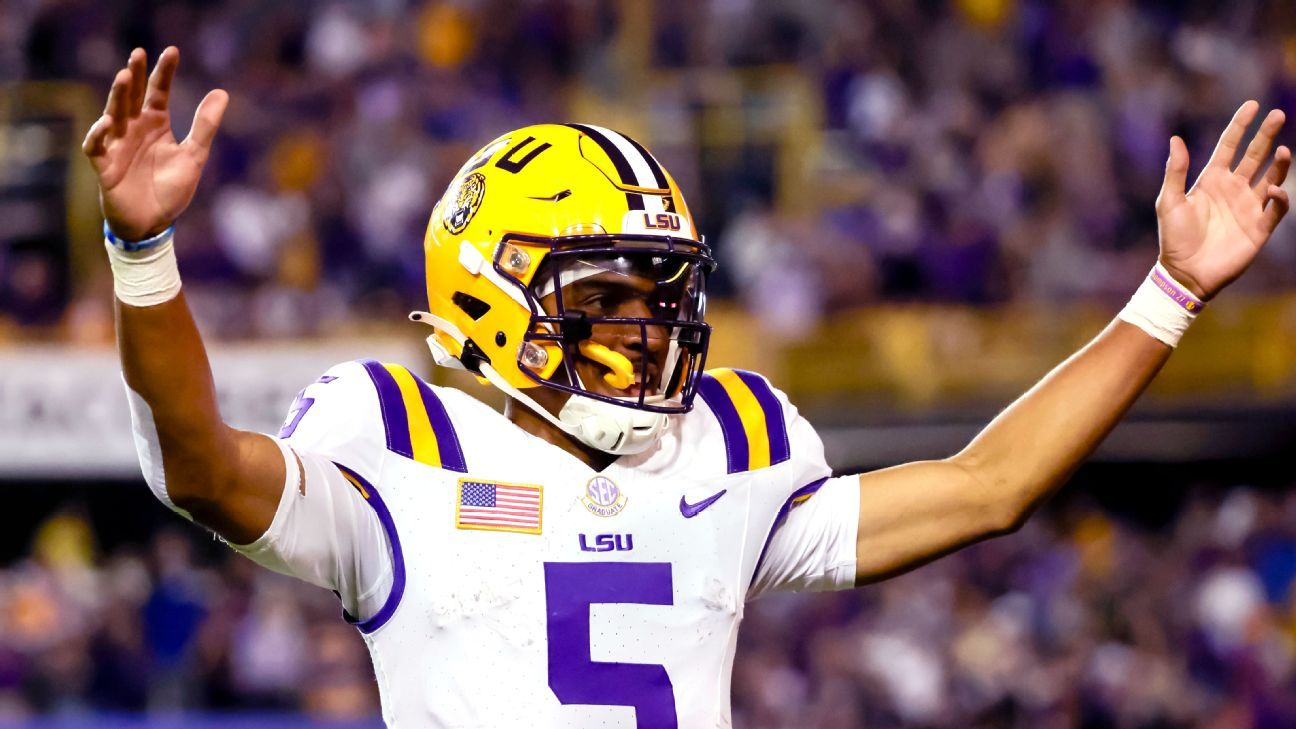
Jayden Daniels LSU cease and desist: No. 5 jersey dispute
Jayden Daniels isn’t letting LSU turn his No. 5 into a marketing prop. The Commanders QB drew a hard line, and it says plenty about NIL, branding, and power.