
Lane Kiffin LSU Clemson Win: Halftime Quip, Big Message
The joke landed. The statement behind it mattered more.
 Beatrice Kensington6 min read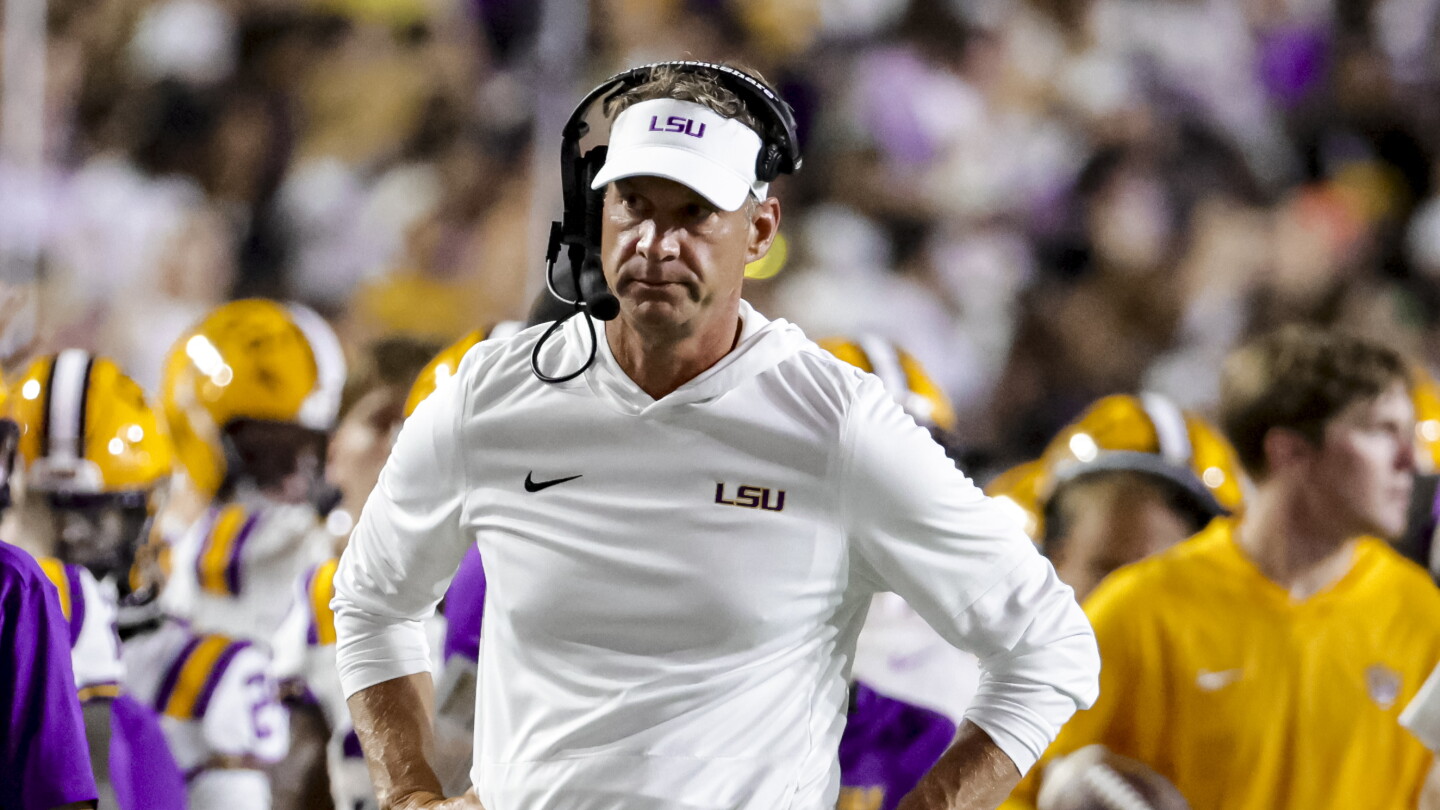
A halftime line that said everything
The score was already tilting toward something ugly, and Lane Kiffin — all grin, nerve, and sharpened edges — leaned into it with the kind of line that travels fast because it sounds like the truth dressed up as mischief. After LSU’s 31-3 halftime command and eventual 51-10 thumping of Clemson, his on-field crack about “pro players” landed like a flare in the night. It was funny, yes. It was also a declaration.
This is what Kiffin does at his most dangerous and his most effective: he turns a football game into a conversation about status, talent, and whether the room has already accepted the hierarchy or still plans to kick down the door. Saturday night in Baton Rouge, he did not merely win. He performed confidence so complete it became its own argument.
The broader context matters. LSU has spent recent seasons living under a microscope so hot it can bleach the color from even a good season. Clemson, by contrast, arrived carrying the old burden of a once-dominant brand trying to prove its relevance in a more crowded sport. When those kinds of programs meet in a spotlight game, the final score is never just the final score. It is a referendum on who looks ready for the next rung of the ladder.
LSU did not just beat Clemson. It looked like a team already accustomed to being misunderstood.
Kiffin’s edge is part theater, part warning
The joke about “pro players” was vintage Kiffin: a little taunt, a little self-congratulation, and a whole lot of subtext. He knows the camera is always within reach, and he knows a clean, confident one-liner can do more damage than a 14-play drive. Coaches spend years pretending they do not hear the noise. Kiffin has built a career on showing he hears it all — and often likes it that way.
There is a reason his words travel. He understands the social physics of modern college football, where branding, recruiting, transfer movement, and image management now sit beside play-calling like co-workers forced into the same cubicle. A line like that is not just trash talk. It is an advertisement for the program’s self-image: elite talent, sharper adults, and a standard that dares outsiders to call the bluff.
That is where the line becomes interesting. For Clemson, the night was not simply a bad result; it was a reminder that reputation is a depreciating asset if it is not renewed with violence and precision on the field. For LSU, the win invited a different kind of scrutiny. Now the question is not whether the Tigers belong in the conversation. It is whether they can stay there when the schedule stops flattering them.
What this says about LSU’s present tense
Blowouts are seductive. They can make a team seem larger, cleaner, and more inevitable than it really is. But they also reveal something useful: how a roster behaves when it has the other side cornered. LSU’s offense had the look of a unit with enough talent to punish hesitation, and the defense — so often the part of the story that gets read last — did not allow the night to drift into casualness.
That matters because LSU’s brand has always been bound to appetites larger than one good Saturday. The SEC does not reward charm. It rewards depth, nerve, and the ability to keep leaning on teams after they have already begun to crack. If Kiffin is right about anything, it is that college football has become less about uniforms than inventories. Who has the deeper room? Who can survive injuries? Who can hold up when the game becomes a test of bodies rather than slogans?
LSU looked, for one night, like a team with answers. Not all of them. But enough.
Clemson’s problem is bigger than one ugly half
The danger in a result like this is that it tempts observers to reduce Clemson to one bad evening, one bad stretch, one lopsided scoreline. That would be too easy. Programs with championship DNA do not disappear overnight. But they can lose the sharpness that made them feared, and once that edge dulls, the margins become merciless.
What was troubling here was not merely the scoreboard but the feeling of mismatch. There are losses, and then there are nights when a team seems to be chasing the game while the game is already gone. That is the kind of night that tests more than coaching adjustments. It tests recruiting momentum, internal belief, and the public’s willingness to keep treating past glory as a present tense credential.
This is why the matchup mattered beyond the two programs. College football lives on its mythology, and mythology is expensive to maintain. If one of the sport’s traditional powers can be handled this decisively, then every other school in the top tier is quietly reminded that the old pecking order is only as sturdy as the next full Saturday.
My read: Kiffin knows exactly what he is doing
I have covered enough of this sport to recognize a coach who uses humor as a blade. Kiffin’s line was not accidental, and it was not merely playful. It was strategic, because the modern college game is built on perception almost as much as performance. He was telling recruits, fans, and rival staffs the same thing at once: LSU believes its roster is already operating at a professional standard, and it is not embarrassed to say so out loud.
That sort of confidence can curdle into arrogance if the results do not keep pace. We have seen that movie before. But there is a reason it keeps getting made: swagger sells when the wins come with it. A coach who can pair wit with a 41-point victory is buying trust from a crowd that knows the difference between theater and substance. Saturday night suggested LSU has both, at least for now.
And I suspect that is the real message Kiffin wanted hanging in the air after the lights came up. Not the joke itself. The assumption behind it. He wants opponents to feel that LSU has more in the tank, more speed, more bodies, more conviction. That is not just a taunt. It is a recruiting pitch disguised as a punchline.
There will be harder nights ahead, and the sport has a habit of humbling anyone who starts admiring the mirror. But for one loud, lopsided, very public evening, LSU looked like a program that knows exactly what it wants to be — and enjoys saying so.
The next test will not care about the wisecrack. It will ask whether the swagger was deserved.
More from Straight From The Bench
Comments
Join the conversation — sign in to leave a comment.
Sign in to commentRelated Stories
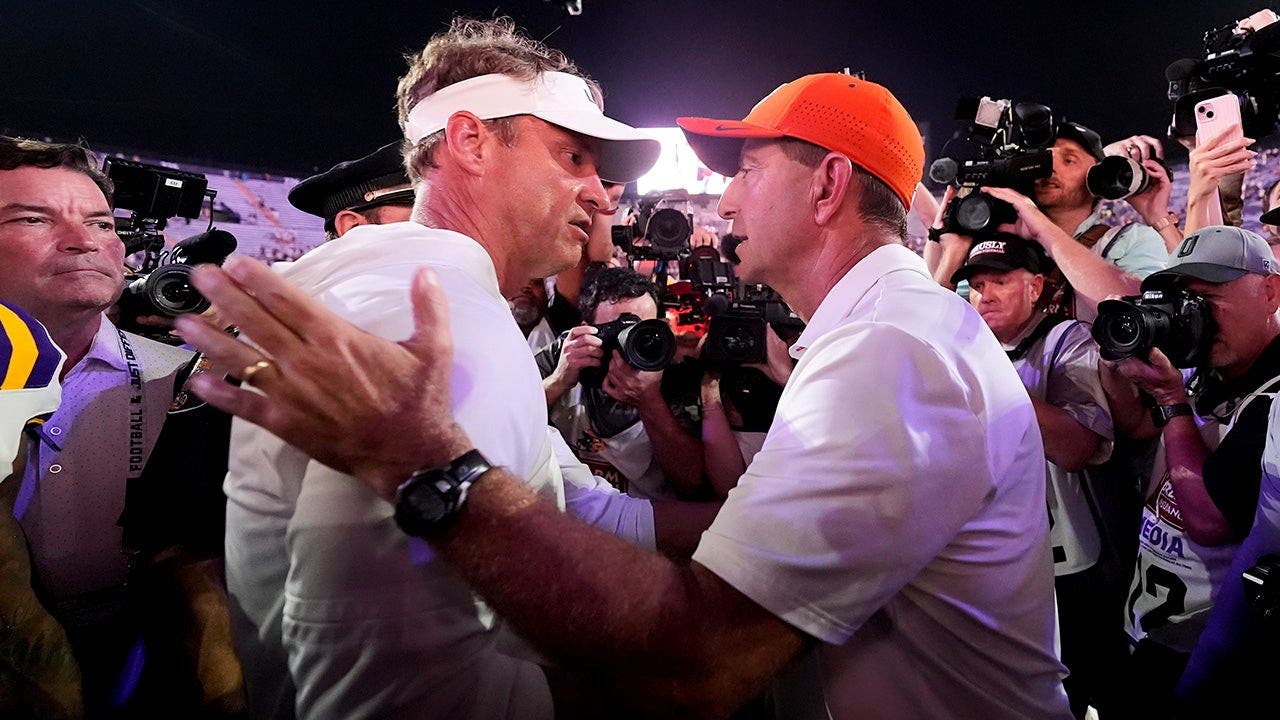
LSU vs Clemson: Lane Kiffin’s debut sends a warning
Lane Kiffin’s LSU debut came with noise, star power and a first-half hammer drop over Clemson. That was a statement, not a warm-up.
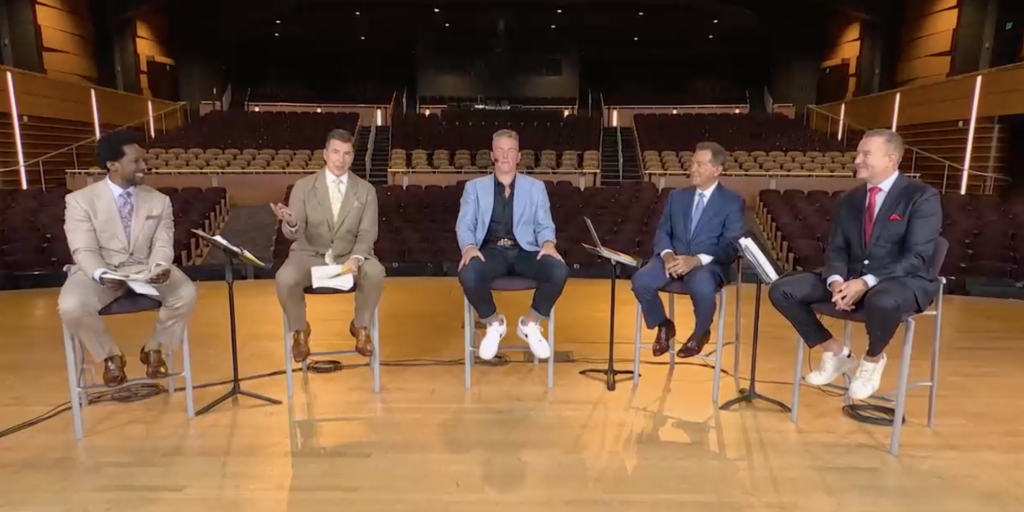
College GameDay Indoor Move: Lightning Shuts Down Baton Rouge
ESPN’s milestone GameDay stop turned into a storm delay story fast. Baton Rouge kept its football theater, just not on the schedule anyone drew up.

College Football Week 1: Indiana, Boise State, Auburn Lead Early
Week 1 arrived with a familiar promise and a harsher truth: reputations travel, but they still have to survive the field. Indiana, Boise State and Auburn are setting the tone early.