
LeBron James 76ers debut: early spark, bigger questions
The points were tidy. The symbolism was louder.
 Beatrice Kensington5 min read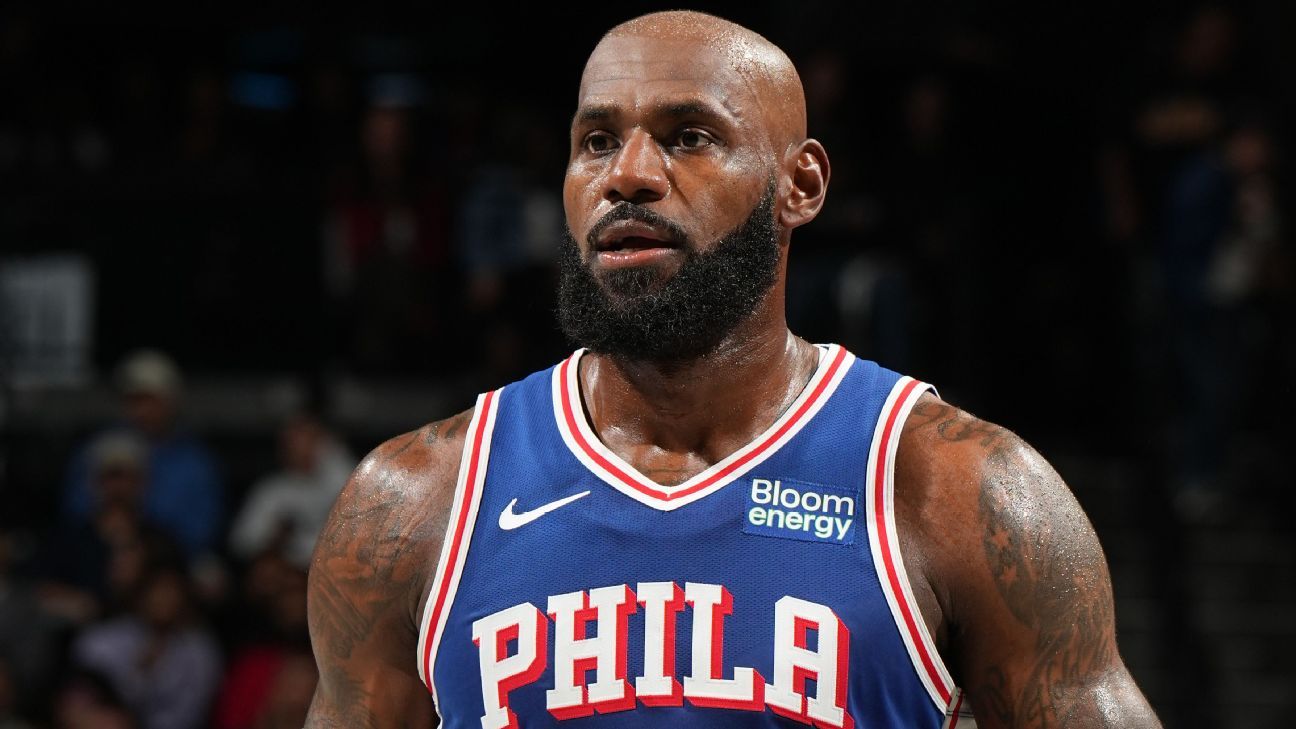
LeBron James did not arrive in Philadelphia as a novelty act, and he did not need to. Even in a first half measured in the soft, fluorescent language of summer basketball, the old machinery was there: the patient dribble, the glance that bends a defense before the pass leaves his hand, the calm accumulation of points, assists, and rebounds that makes him look less like a newcomer than a man reclaiming a room he has long understood.
At 39, with a fresh 76ers jersey and the No. 23 still carrying all its old gravity, he posted 10 points, five assists, and four rebounds in 18 minutes of his debut. The numbers are modest only if you mistake them for a box-score curiosity. They were, instead, the first public sketch of a partnership that will be judged not by the romance of the move but by the hard geometry of postseason basketball.
A debut built on control, not spectacle
James has never been a player who needs to spray fireworks on command. His greatness has always lived in the control room. That was on display again in Barclays Center, where he settled in as if a decade of road games had taught him every angle of every parquet floor. The debut offered a reminder that, even now, his value is not merely in scoring bursts. It is in how quickly he organizes the chaos around him.
Ten points in 18 minutes is the kind of line that can be mistaken for routine. It was not routine. It was a signal. Philadelphia did not bring in LeBron James to be a decorative elder statesman or a ceremonial closer of stories already written. They brought him because a player like him can make the floor wider for everyone else, can punish the smallest defensive hesitation, can turn an ordinary possession into a lever.
That matters most in October and beyond. Summer games can flatter almost anyone. The real examination comes when the pace slows, when the scouting report thickens, and when every possession feels like a locked door. James still has the kind of mind that picks locks.
What Philadelphia gains, and what it must survive
The 76ers have spent too many years living in the narrow corridor between promise and regret. Adding James is an act of ambition, but also an admission: star power alone does not solve a franchise. It only changes the terms of the argument.
Philadelphia now has to fit a player whose instincts are expansive around teammates who may need structure, touches, and definition. That is the elegant trap of adding a legend late in his career. He can make the game easier, and he can also force everyone else to become more precise. Some players flourish in that light. Others shrink.
The early arithmetic, then, is less about points than about equilibrium. Who touches the ball when the game tightens? Who defends the point of attack when legs go heavy in April? Who gets the last, best shot? Those are not glamorous questions, but they decide banners.
The league has seen this movie before, of course, though never with exactly this cast. The NBA has built entire eras on the tension between old mastery and new appetite. James has spent so long as the axis around which teams rotate that his latest stop feels less like a transfer than a cultural event. And like all cultural events, it will be measured not only by wins but by the emotions it stirs in the city that adopted it.
The age of LeBron is still an argument
There is a temptation, whenever James does something useful in his late 30s, to treat it as a farewell tour with better footwork. I do not buy that. Age has not made him sentimental; it has made him economical. He no longer spends energy proving the obvious. He spends it deciding which obvious things still matter.
LeBron James is no longer trying to dominate every minute; he is trying to dominate the moments that decide everything.
That distinction is the whole story now. He does not need to chase 30-point nights to validate the move or his own legacy. He needs to arrive in the fourth quarter with his body intact, his reads sharp, and his teammates convinced that the next possession belongs to him in the deepest sense of the word. The scoring will come and go. The authority is the point.
I have watched enough of James’s career to know that the public often sees his longevity as a parlor trick, a refusal to behave like physics intends. It is better understood as discipline with a crown on it. He has redesigned himself repeatedly without surrendering the central fact of his game: he can still make a team feel more intelligent just by touching the ball.
That is why this Philadelphia chapter is so compelling. It is not simply about whether LeBron can still produce. It is about whether the Philadelphia 76ers can harness a star whose instincts have been honed by twenty years of pressure, scrutiny, and expectation. A smaller player might fit cleanly. A lesser player might be easier. Neither would matter as much.
The first night was a reminder, not a verdict
A debut can lie. It can flatter a roster, obscure its flaws, and make the coming months seem smoother than they will be. Still, a debut can also reveal a team’s intention, and Philadelphia’s was plain: no small thinking, no cautious rebuild disguised as optimism, no pretending the moment is too big.
James’s first half suggested he can still steady a lineup, still create seams, still make defenders pick their poison. What happens next will depend on health, chemistry, and the old demands that never retire. But the larger truth is already visible.
Philadelphia did not just add a scorer. It added a hierarchy.
And now comes the work of living inside it.
More from Straight From The Bench
Comments
Join the conversation — sign in to leave a comment.
Sign in to commentRelated Stories

LeBron James 76ers offense: first look at star-studded lineup
Philadelphia’s first look with LeBron James and Jaylen Brown was loud in the best way. The bigger question now is whether the 76ers can turn that talent pile into a real hierarchy.
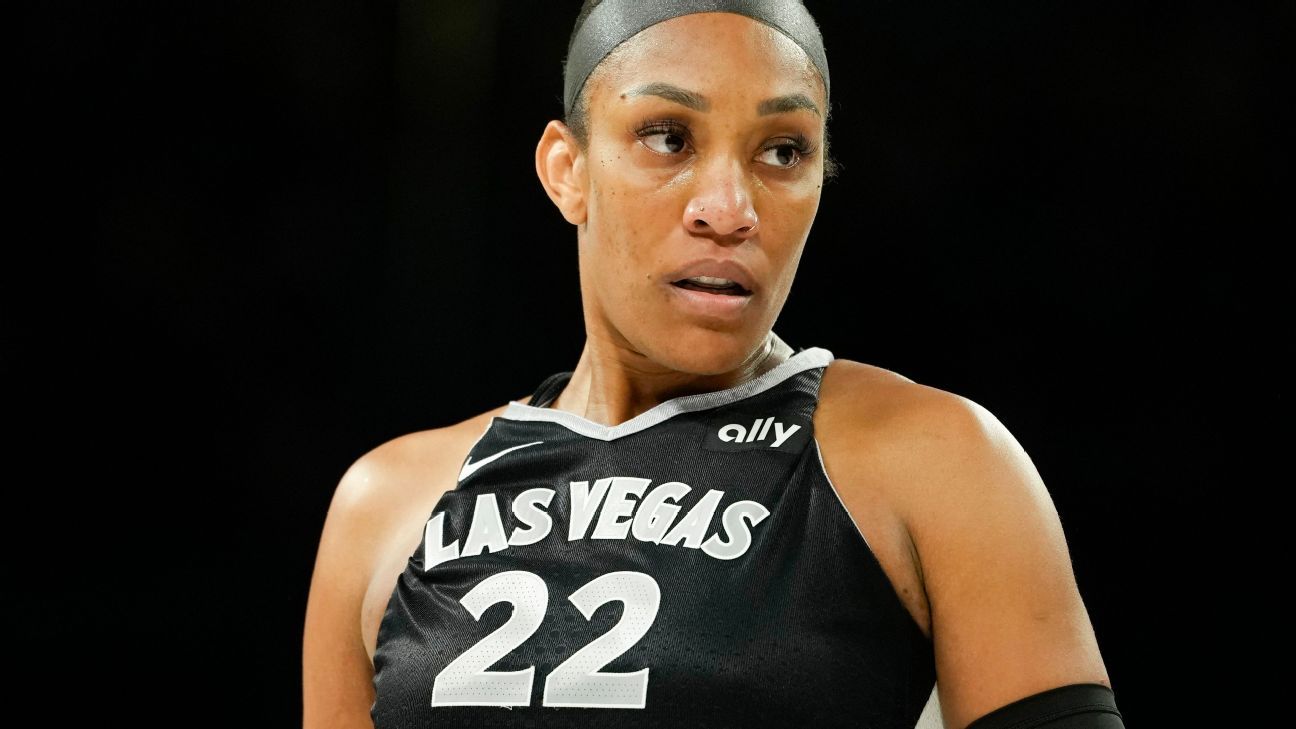
A'ja Wilson WNBA MVP: Record 5th Award Lifts Aces
A'ja Wilson just grabbed a record fifth WNBA MVP, becoming the first player to win three straight. The Aces have their standard-bearer, and the rest of the league has the bill.
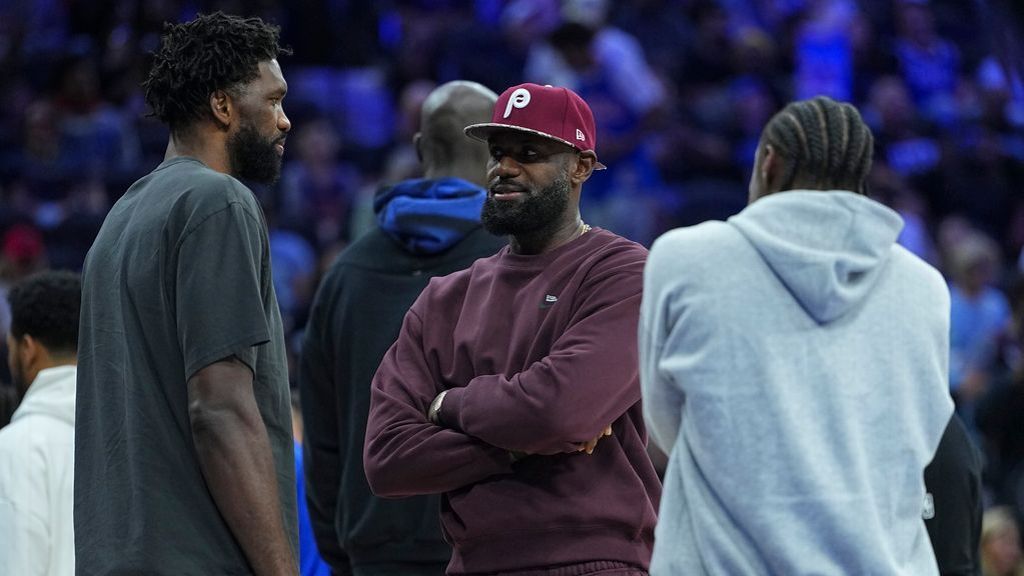
LeBron James Embiid Story: Mike Breen Apologizes After Refutation
Mike Breen walked back a story tied to LeBron James and Joel Embiid after James disputed it. The episode says plenty about how fast preseason chatter can boomerang.