
NFL quarterback injuries: six teams reset their expectations
When the passer goes down, the season gets smaller fast.
 Beatrice Kensington6 min read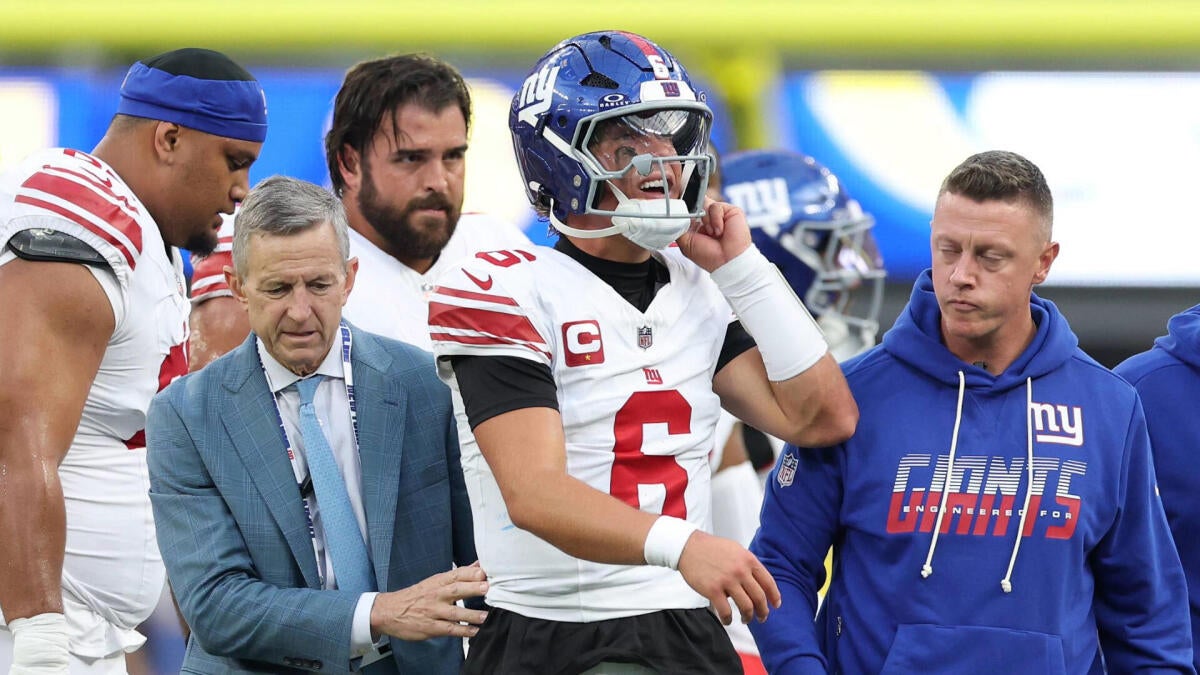
The NFL has a way of turning certainty into weather. One bad landing, one awkward plant, one hit that arrives half a beat too late, and a season that began with playoff dreams starts to smell like triage. That is the uneasy backdrop for six teams now living without their starting quarterbacks, a cluster of injuries that has already altered the early shape of the 2026 campaign and forced front offices to speak in the colder language of contingency.
Not every injury means the same thing. For some clubs, the loss of a starter is a detour; for others, it is the demolition of the road entirely. The New York Giants are the starkest example, a franchise where the conversation has already drifted from September optimism to the old, familiar arithmetic of next spring’s draft. Elsewhere, the stakes are less dramatic but no less corrosive: a contender’s margin for error shrinks, a coaching staff starts sanding down the playbook, and the backup quarterback becomes less a rescue act than a temporary treaty with reality.
The Giants and the cold math of lost seasons
The Giants are where the league’s emotional and competitive damage is easiest to see. In a city that never stops checking the pulse of its teams, quarterback injuries do not merely stall progress; they change the vocabulary around the franchise. The season no longer asks whether this group can climb into the playoff picture. It asks whether the organization can extract value from the wreckage, evaluate the roster honestly, and avoid the kind of stubborn denial that has haunted so many post-collapse years.
That is a brutal place to be in early September, or even earlier. But the NFL has never been sentimental about timing. If a team loses its starter and the offense no longer has a stable center of gravity, the league tends to expose the difference between real depth and the comforting fiction of it.
A quarterback injury does not just remove a player; it often strips the season down to its bones.
The Giants are now in that stripped-down season, where every decision is a question about the future disguised as a call about the present.
Contenders cannot afford to pretend
For the teams with more robust rosters, the task is less existential and more surgical. A quarterback injury does not automatically end a contender’s ambitions, but it changes the margin from generous to knife-thin. The defense has to carry more weight. The run game must become a habit, not a suggestion. The coaching staff has to stop dreaming in full color and start sketching in pencil.
This is where the emotional toll of quarterback injuries gets overlooked. Fans talk about wins and losses, and rightly so, but the people inside the building spend these weeks managing a hundred smaller losses: the protection scheme that no longer fits the backup’s strengths, the timing routes that become risky, the third-down package that has to be rewritten at speed. Teams spend all summer building an identity around a certain arm, a certain cadence, a certain way of making the field feel smaller for the opponent. Lose that, and the rest of the roster has to prove it can still make the room breathe.
The NFL sells parity, but quarterback injuries remind us that the sport is actually built on fragility. The gap between a playoff push and a half-season of scrambling is often one awkward hit wide.
Backup quarterbacks carry more than the huddle
The backup quarterback is one of the strangest jobs in American sports. He is expected to be invisible until the moment he is asked to carry a city’s hopes, protect a coaching staff’s credibility, and keep a locker room from turning on itself. There is grace in the position when it works, but also a peculiar loneliness. You are always one snap from being the story, and if you become the story, it usually means something has gone wrong.
That pressure bleeds outward. Receivers run routes differently when timing becomes uncertain. Linemen hear more criticism. Play callers become defensive in both senses of the word. And in the modern NFL, where every snap is packaged into a thousand verdicts, a backup quarterback is asked to preserve not only the scoreboard but the illusion that nothing essential has changed.
I have always believed quarterback injuries reveal a franchise’s true architecture better than almost any draft-night proclamation. When the starter falls, the decorative language falls away with him. What remains is structure, discipline, and the blunt honesty of roster construction. Some organizations can survive it because they planned for chaos; others merely hoped chaos would be polite enough to arrive later.
That distinction matters. It is the difference between a team that can keep telling itself a season is alive and a team that has to begin bargaining with the calendar.
What the rest of the league should be watching
There is a wider lesson here for every front office that still likes to talk about toughness as if it were a charm you can hang on the locker room wall. Quarterback durability is not a talking point. It is a roster-building principle. Teams that treat the position as if it will remain untouched by the violence of the sport are betting against history, and history is a cruel gambler.
The next few weeks will tell us which of these six teams can adapt and which will simply endure. Some will tighten around the run game and stay afloat. Some will discover that their defense can keep them relevant longer than anyone expected. A few may drift into the kind of season where the only worthwhile victories are developmental ones: a backup proving he belongs, a young receiver growing into a larger role, a coaching staff finding out what survives when the original blueprint is torn up.
And yes, there is already a draft undercurrent surrounding at least one of these clubs, the kind that hovers in the background like a winter cloud even in September. That does not make the season meaningless. It makes it honest.
For a broader look at how injuries can distort a season’s direction, the 49ers’ Brandin Cooks addition shows how teams patch holes when the injury list starts dictating the roster. And if you want a reminder of how quickly a team’s long-view can change once a franchise pillar moves toward the finish line, the Justin Verlander farewell start offers a different but equally human kind of transition.
The league will keep moving, as it always does, but not every team moves with it at the same speed. Some will sprint to keep pace. Some will limp. One or two will already be looking beyond the horizon.
That is the hard season inside the season.
And it has only just begun.
More from Straight From The Bench
Comments
Join the conversation — sign in to leave a comment.
Sign in to commentRelated Stories

Adam Vinatieri Record: Guinness World Mark Sends Kicks Skyward
Adam Vinatieri just added a wild Guinness World Record to a résumé already stuffed with clutch moments. This one isn’t about distance — it’s about height.

49ers sign Brandin Cooks: veteran WR depth for injured offense
San Francisco is bringing in Brandin Cooks to patch a wounded receiver room. It’s not flashy, but it’s the kind of move a contender makes when the calendar turns ugly.

Sean Payton vs Mike Macdonald: 2024 Cheating Suspicion Fallout
Mike Macdonald’s account of his 2024 run-in with Sean Payton adds fresh heat to an already spicy Broncos-Seahawks matchup. The real story is what it says about trust, gamesmanship, and the new NFL par