
Noskova’s Long Night on Centre Court Ends in Wimbledon Glory
 Beatrice Kensington6 min read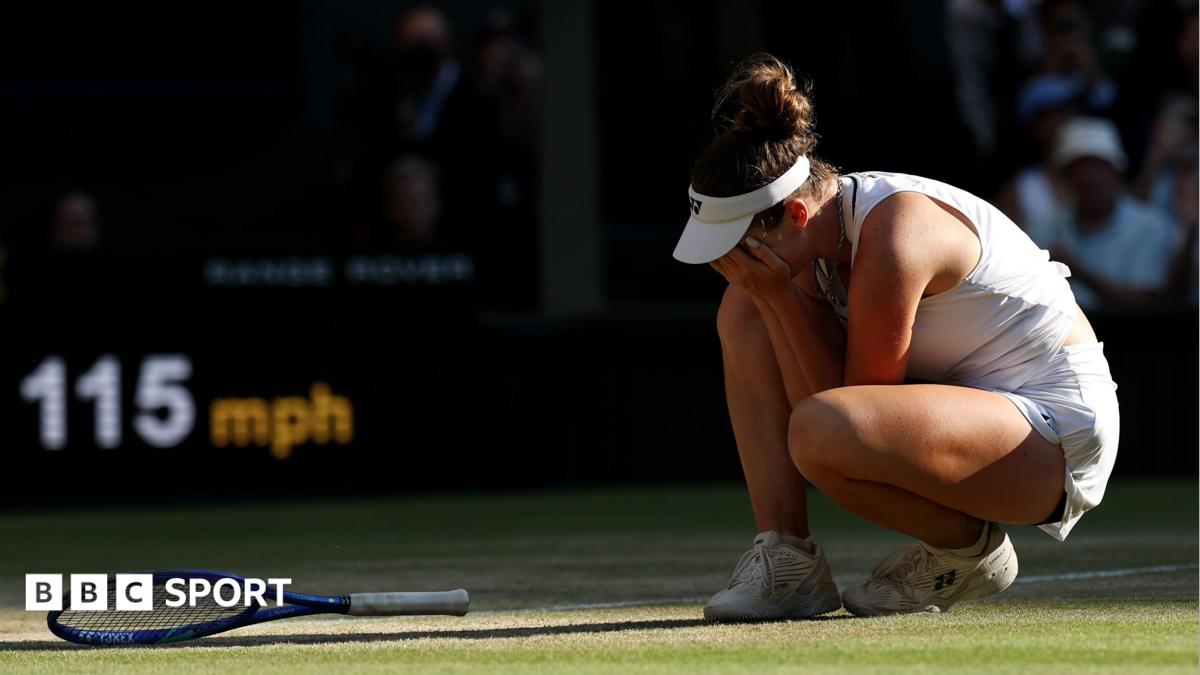
Linda Noskova did not win Wimbledon with a simple flourish. She won it by enduring the kind of afternoon that can crack a young champion clean through the middle, then walking back into the fire as if she had learned something from the burn. On Centre Court, in an all-Czech final against Karolina Muchova, the 20-year-old let five championship points slip away, watched a title that seemed in her hand turn slippery and strange, and still found the nerve to close the door in the decider. That is not just a trophy story. That is a nerve story.
The details matter because tennis is a sport that asks for the whole human being, then exposes what is left when the mind wobbles. Noskova’s second-set collapse was the sort of passage that makes a crowd go hushed in the middle, not because the tennis has become less dramatic, but because everyone in the stadium can feel the temperature drop. The weight of a first major final, the old grass-court ghosts, the knowledge that Wimbledon can turn a player’s wrist into something almost ornamental — all of it pressed down on her. And still, in the third set, she reset. She did not play with amnesia. She played with discipline.
Five championship points, then the hard part
The cruelest thing about a first major final is that the scoreboard can lie about how close you are to salvation. Five championship points is not a footnote. It is a cliff edge. Miss one and you can blame a gust, a string-bed twitch, a bad bounce. Miss five and you begin to hear the larger machinery of doubt grinding behind the baseline.
Noskova had every reason to unravel after that second-set wobble. A young player, in a national final against a fellow Czech, in front of a Centre Court crowd of about 15,000 people that could almost be felt leaning forward in unison — that is a chamber built for memory, and usually for pain. Yet the remarkable thing was not that she suffered. It was that she recovered in public, where recovery is hardest. That tells you something about her ceiling, and perhaps something even more useful about her future: she can survive being the story for the wrong reasons and return as the author.
Muchova, for her part, deserves no reduced reading of the result. She dragged the match into the rough, where experience usually has its say, and forced Noskova to find a second life. That is precisely what a seasoned Karolina Muchova does in a final. She makes the opponent work for every inch of emotional real estate.
Five championship points can feel like a coronation. They can also feel like a trapdoor.
An all-Czech final with old-country echoes
There is something especially rich about a final between two Czech women at Wimbledon, because it pulls on a tradition deeper than one tournament and wider than one generation. Czech tennis has long produced players with texture: hands that can vary spin, minds that understand angles, bodies trained to absorb the grind of long matches rather than merely explode through them. Czech tennis has never been a vanity project. It has been a proving ground.
That is why this final felt larger than a single title race. Noskova and Muchova were not just two players from the same nation meeting under the English summer sky. They were representatives of a system that keeps producing complicated, crafty, resilient women who do not need a grand marketing campaign to matter. In an era when the game can sometimes seem organized around horsepower and highlights, this was a reminder that craft still has a pulse.
It also mattered because Wimbledon remains tennis’s sternest stage in the public imagination. Grass is merciless. The margins are tiny. The crowd knows the mythology even if it cannot always name the mechanics. A player does not simply win there; she becomes legible in a new way. Noskova’s title makes her no longer merely a prospect with a dangerous forehand and promising pedigree. She is now a major champion, and the tour will treat her accordingly from here on out.
What Noskova’s reset says about her future
I have watched enough young players get close to know how often the real damage comes not from the lost final, but from the months afterward, when everyone else insists on calling it “experience” and the player has to live inside the bruise. That is where Noskova’s win feels most consequential. She did not merely survive a collapse; she answered it before it could harden into identity.
My own read is that this title may age better than the flashier ones that arrive without resistance. Players who learn to win after they have almost lost something often carry the lesson forward in a way that pure domination cannot teach. The next time Noskova stands in a final, she will remember that five championship points are not the end of a match unless she lets them be. That is a durable form of knowledge.
And for the women’s game, there is a broader signal here too. The tour is healthiest when the majors can still throw up a champion who feels both new and fully earned, not prepackaged. Noskova’s path from near-disaster to triumph gives the sport a useful kind of uncertainty: the sense that the next great player might arrive not as a finished product, but as someone still learning how to stand upright in the wind.
Muchova’s pain, Noskova’s poise, and the measure of a champion
There is no elegant way to lose a final like this. Muchova will carry the sharper sting, because she forced the issue and came close enough to taste the trophy herself. That is the private arithmetic of tennis heartbreak. It can be brutal precisely because the margins are so small and the evidence so visible. One point here, one service pattern there, and history tilts.
Yet the final word belongs to Noskova because she earned the right to make the match about her response. The young Czech did not have the easy champion’s afternoon. She had the educational one. She had to find a way through embarrassment, momentum, and the loud, electric stillness that comes when a stadium realizes it is watching a possible collapse. She did. That matters.
What follows will be its own test. The tour does not pamper first-time major winners; it measures them against the size of the surprise they have created. Noskova will now carry expectations that arrive dressed as praise. That is the price of this kind of breakthrough.
For one afternoon on Centre Court, she paid the older price first. Then she collected the title anyway. The future has a new awkward, dangerous customer.
Comments
Join the conversation — sign in to leave a comment.
Sign in to commentRelated Stories

The Draft Starts Here: MLB’s First 40 Picks Set the Tone for the Next Wave
The 2026 MLB Draft is live, and the first night will tell us which clubs are swinging big, which ones are cutting bonuses carefully, and who’s betting on upside.

England Put Fiji to the Sword, but the Real Story Is What They Built While the Cards Piled Up
England ran riot against 14-man Fiji, but the scoreline only tells half the tale. The sharper question is whether this was conviction or just a team enjoying a very big day.

Corrèze Blinks, the Tour Rewrites: Heat Wins This Round
Stage 9 bends before the heat in Corrèze, a reminder that July in France now races against the weather as much as the clock.