
Notre Dame-BYU Clock Error: Big 12 Admits Replay Mistake
A late-game miscue did more than alter a finish. It cracked open the trust surrounding the whole replay machine.
 Beatrice Kensington6 min read
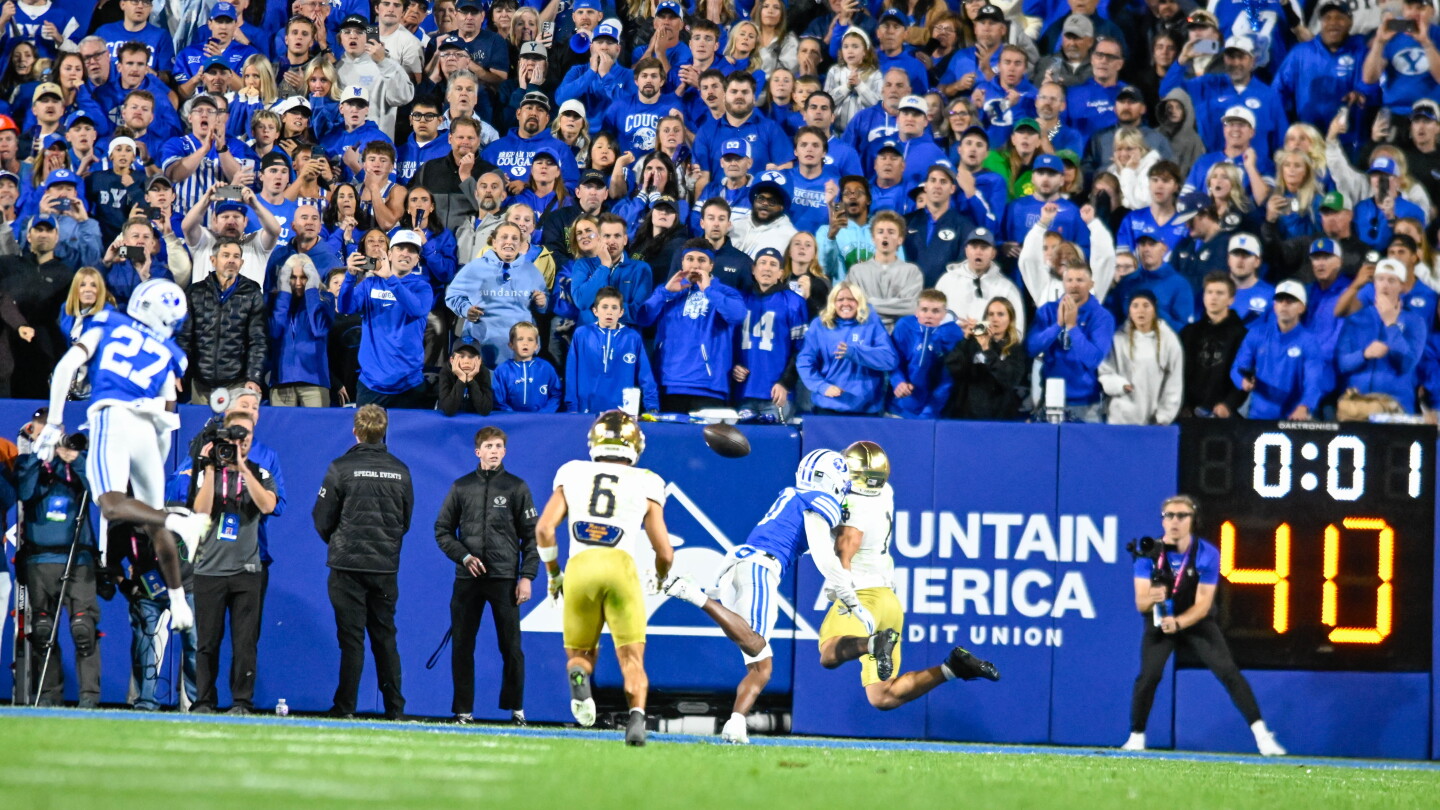
Notre Dame’s loss to BYU will live for a while in the hard, bright glare that follows an upset of a giant. But the larger stain may not be the 28-24 scoreline. It may be the conference’s admission that the clock was wrong at the end, a tiny mechanical failure with outsized consequences, the kind that can make a fan base feel as though the floor beneath the sport has tilted a few degrees.
A clock error is never just a clock error
The Big 12’s acknowledgment that the replay process went awry does more than tidy up a Saturday-night embarrassment. It confirms what everyone watching the final moments of Notre Dame and BYU probably felt in real time: the game had slipped into that ugly gray area where the rules are still there, but confidence in them is gone.
College football has always been a sport built on human judgment, and that humanity can be part of its charm. The missed block, the bad spot, the third-down gamble that looks reckless until it looks brilliant. But clock management is supposed to be different. It is the sport’s metronome, the thing that gives drama its shape. When that fails, the ending stops belonging to the players and starts belonging to the process.
That is why the Big 12’s admission matters. Not because a league office used the word “error.” Those come and go. Because it tells both teams, and every other program watching from the margins of the playoff chase, that a game with national implications was left vulnerable to a failure that should have been caught long before the final snap.
Why the replay process now sits on trial
There is a reason replay systems are supposed to be boring. The best officiating debates are the ones nobody remembers in November. Yet this one refuses to stay quiet because it arrives at the intersection of technology and trust, and those are the two things college football keeps asking fans to believe in without always earning it.
The College Football Playoff committee sells itself as a body of careful discernment, a group capable of weighing style points, schedules, injuries, road wins and the whole aromatic mess of a season. But the committee’s work only matters if the games feeding it are administered with a baseline of fairness. A missed or mishandled clock sequence does not just alter one ending. It bruises the credibility of every subsequent judgment built on that ending.
Notre Dame’s situation is especially thorny because the Irish live in the sport’s peculiar middle kingdom: historically powerful, nationally relevant, and watched with a kind of devotion that is never entirely free of resentment. When they lose, the public rarely reacts with shrugging indifference. Every Irish defeat becomes a referendum, and now this one comes wrapped in officiating doubt, which is gasoline on a fire already plenty hot.
BYU gets the win, but not the clean air around it
For BYU, the victory is real. No one should strip away the fact that the Cougars did enough to beat a No. 2 team on the field. They earned the bruised knuckles and the afterglow. Still, the controversy has a way of lingering around the edges of a great win like smoke after a bonfire.
That is the cruel arithmetic of this kind of moment. BYU gets the signature result, the sort of win that can change the tenor of a season and reshape how the rest of the country talks about the Cougars. The program’s national standing improves. The résumé glows a little brighter. And yet the postgame discussion is no longer about execution alone. It is about an administrative failure that invites the losing side to imagine a different ending and the winning side to defend a result that should have stood on its own.
If this story sounds familiar, it is because college football has spent years accumulating them: the replay booth that missed something obvious, the game that needed a second explanation, the officiating crew whose correction came too late, or not at all. Fans have been told for years that expanded replay would sharpen the edges. Instead, it has often widened the argument.
My take: the sport keeps asking fans to trust a system it won’t fully own
This is where I part ways with the comfortable shrug that often follows officiating controversy. I do not think fans are naïve for wanting clean mechanics at the end of a game. I think they are reasonable. A sport can survive bad calls. It can even survive a lot of them. What it cannot survive, over time, is the sense that its most important moments are being managed by a system that cannot reliably explain itself.
The damage is not only that the clock was wrong. It is that college football keeps teaching fans to doubt the last two minutes more than the first 58.
I have covered enough autumns to know that fans can live with heartbreak. They can live with being outplayed, outcoached, outmuscled. What they struggle to forgive is uncertainty masquerading as authority. This is the deeper issue here. The Big 12 can admit the mistake, and credit should be given for not hiding behind silence. But an admission is not the same thing as restoration.
The sport is entering the season’s cold-eyed stretch, when every ranking argument becomes a civic dispute and every late-game detail can ripple into playoff positioning. That is why this error lands so hard. It is not merely about Notre Dame and BYU. It is about the machinery of judgment itself, about whether the people running the game can keep pace with the stakes they have created.
If you want a useful comparison, think of the old bowl-system era, when subjectivity ruled with an iron hand and outrage had nowhere to go but the page and the radio show. The playoff was supposed to reduce that chaos. Instead, it has made every mistake feel more expensive because there are fewer places to hide. Every possession is a receipt now. Every ruling is archived.
The Big 12 will no doubt revise, review, and promise better. That is the ritual. But the real repair work is harder: making sure the people inside the stadium can believe the final minute belongs to football, not administration.
That trust has to be earned again, one game at a time. And by Saturday night, it had taken another hit.
More from Straight From The Bench
Comments
Join the conversation — sign in to leave a comment.
Sign in to commentRelated Stories

Air Force service member death at Alamodome pregame demo shakes UTSA-Navy
An Air Force service member died after a pregame rappel fall at the Alamodome, turning a routine pageant into a devastating scene. The game went on, but the night was changed for good.

College Football Week 7: Auburn, Florida and BYU stun giants
Auburn, Florida and BYU turned Week 7 into a referendum on rank, reputation and patience. The sport’s middle has teeth, and it spent Saturday showing them.
College Football Playoff top 12: midseason projection and chaos
Midseason means the playoff picture is still elastic, but a few teams are already forcing the committee’s hand. Undefeateds are scarce, and UCLA’s rise is the weird twist nobody had on the bingo card.