
Ole Miss Trinidad Chambliss Heisman Case: Week 3 Surge
The Rebels’ quarterback didn’t just win a game. He jumped into the award conversation.
 Zane Miller5 min read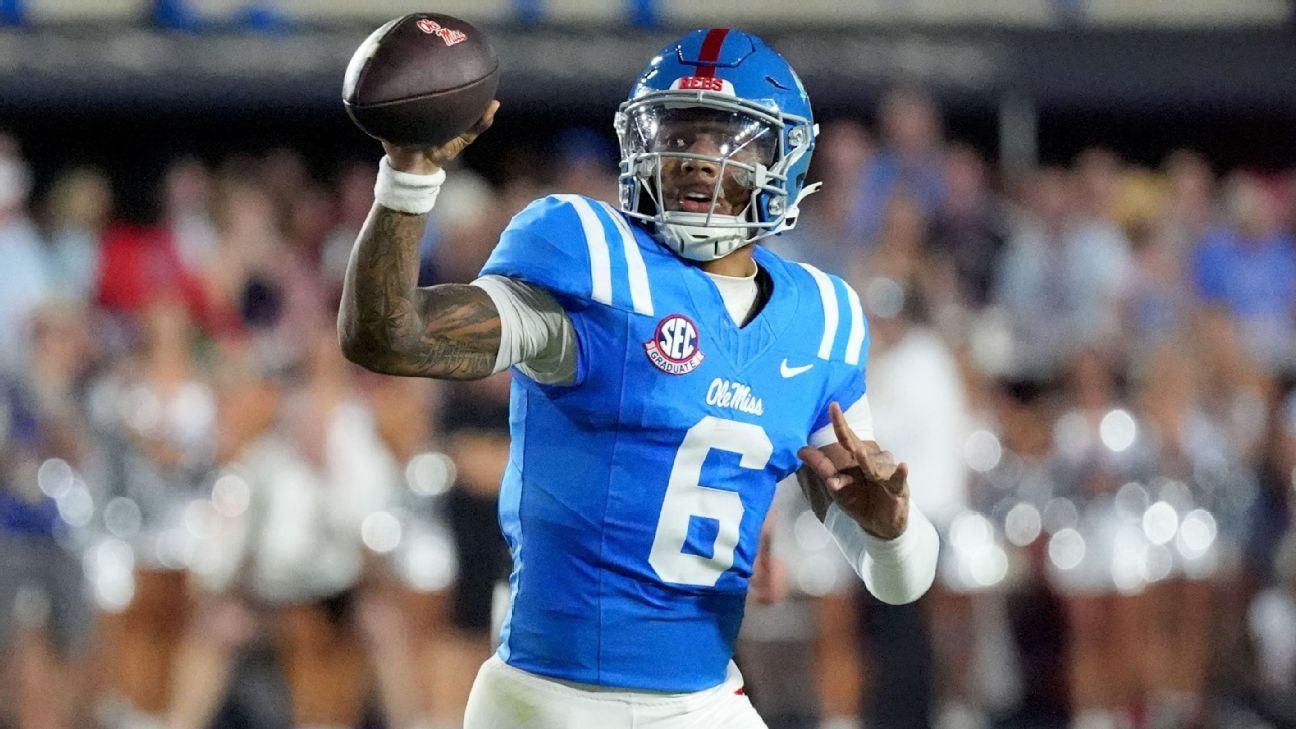
Trinidad Chambliss just forced the room to pay attention
Ole Miss didn’t sneak into the national conversation Saturday night. It kicked the door in, and Trinidad Chambliss was carrying the bar. The Rebels’ quarterback looked like the kind of player who makes defensive coordinators age in real time: quick enough to punish hesitation, composed enough to keep drives alive, and dangerous every time the play breaks structure.
That matters because the Heisman race is built on momentum long before it’s built on perfect statistics. By the time the calendar turns serious, voters have usually already been nudged by one or two signature performances. Chambliss just gave Ole Miss one of those. And he did it in a game that had leverage, tension, and enough late-game weight to make the performance stick.
This is the part of the season when a quarterback stops being “interesting” and starts becoming unavoidable.
Why this kind of game travels in the Heisman race
Heisman voting has always been part résumé, part highlight reel, and part timing. A clean win over a lesser opponent helps. A national-TV knife fight against a real foe travels better. Chambliss delivered the latter.
The eye test is the first filter, and he passed it. The next filter is whether the performance feels repeatable. That’s where Ole Miss gets dangerous. If the offense can keep him in rhythm and keep him from living in third-and-long chaos, his profile gets bigger fast. Quarterbacks don’t need a perfect season to crash the Heisman table. They need a few nights that look like proof.
Chambliss is now on that path, which is a problem for the rest of the field because the award doesn’t wait for late bloomers. It starts rewarding the guy who looks like he owns the stage early.
Lane Kiffin’s offense gives him a real runway
Lane Kiffin has always understood the modern award economy. Put a quarterback in space, keep the throws easy where you can, make the defense declare itself, and let the player’s talent do the rest. That’s the formula. It’s why Ole Miss keeps producing offenses that feel bigger than the individual pieces.
And this is where the conversation gets interesting. Chambliss isn’t just benefiting from a good system. He looks like the kind of quarterback who can elevate the system when the defense starts loading up. That distinction matters. The Heisman rarely goes to a passenger for long. It goes to the guy who can still matter when the script gets messy.
Ole Miss has also put itself in the kind of spot where every week carries ranking weight, and rankings drive visibility, and visibility drives award chatter. You don’t need a trophy case-level stat line in September if the win profile keeps growing. You just need to keep showing up in games that get talked about on Monday morning.
The ripple effect across the SEC and the award board
The SEC has a way of turning good quarterbacks into weekly headline material or exposing them fast. There isn’t much middle ground. That’s why this performance means more than one box score. It plants a flag in a league where every contender eventually has to absorb a punch.
That’s also why Heisman race discussion gets so crowded so early. One quarterback explodes, another stacks clean numbers, a running back starts making noise, and suddenly everyone is trying to build a hierarchy off three Saturdays. Chambliss doesn’t need to win the race this week. He just needed to stop being a footnote. Mission accomplished.
The Heisman race doesn’t always crown the best player. It crowns the player who forces everybody else to react.
Ole Miss fans know what that looks like. So do voters. If this is the version of Chambliss that shows up against league-level competition, the Rebels are no longer just trying to survive the SEC schedule. They’re trying to shape the award conversation before the leaves even change.
What I’m watching next
I’ve seen this movie enough times to know the trap. The first huge quarterback performance can turn into a nice paragraph if the follow-up is ordinary. That’s the danger. Not because Chambliss isn’t real, but because award races punish disappearances faster than they reward one-night explosions.
My read: this was the moment that moved him from “watch list” to “problem.” And that’s a different tier. Once the media ecosystem and the social feeds lock onto a quarterback, the pressure changes. Every drive gets framed. Every mistake gets magnified. Every road game becomes a referendum.
I’m also watching whether Ole Miss keeps leaning into the aggressive version of this offense. If Kiffin lets Chambliss operate with confidence instead of trying to overprotect him, the numbers and the buzz can compound quickly. If they tighten up and ask him to just manage, the Heisman climb gets steeper. The market is loud, but it’s also fickle.
For now, Chambliss has the best kind of inventory: a signature performance, a national stage, and an offense that can keep feeding the story. That’s how September turns into a real race.
The next game won’t decide everything. But it will tell us whether Week 3 was a spark or the start of a full-blown campaign.
More from Straight From The Bench
Comments
Join the conversation — sign in to leave a comment.
Sign in to commentRelated Stories
College Football Playoff 2026 Bubble Watch: Week 3 Pressure
Week 3 didn’t settle the playoff picture. It sharpened the knife. Now the Bubble Watch turns nasty, especially for the SEC.
College Football Playoff projections: Week 3 shakes the bracket
Week 3 brought chaos, near-misses, and a few statement wins that will travel well with the committee. The bracket is already breathing differently.

49ers sign Brandin Cooks: veteran WR depth for injured offense
San Francisco is bringing in Brandin Cooks to patch a wounded receiver room. It’s not flashy, but it’s the kind of move a contender makes when the calendar turns ugly.