
Patriots offensive line injury update: Ben Brown unlikely for Thursday
New England’s week is turning into a protection problem, and the timing is brutal.
 Beatrice Kensington6 min read
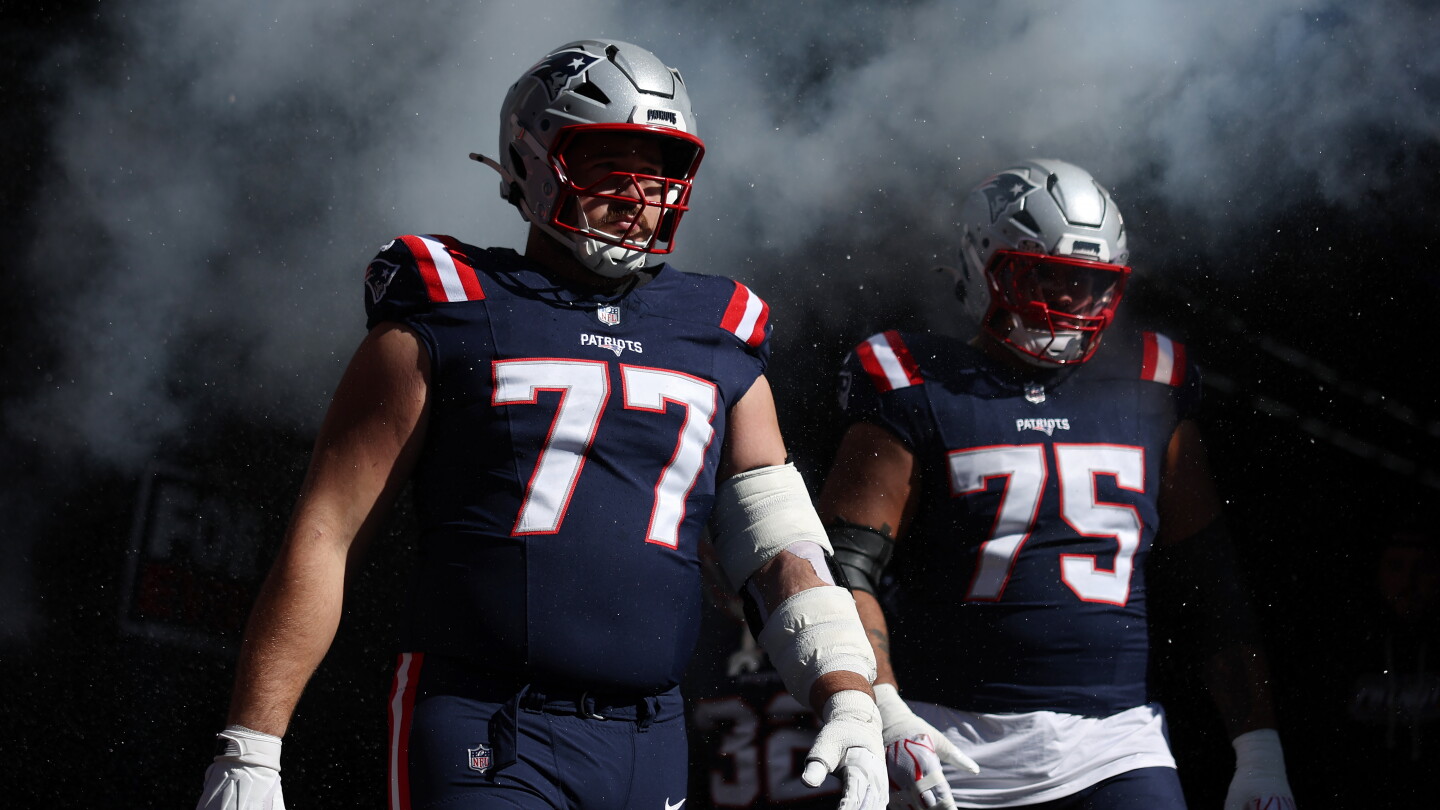
The Patriots walked out of Sunday with a win and came back to the film room with a bill. Three starting offensive linemen went down against the Jets, and the early expectation is that at least Ben Brown and Alijah Vera-Tucker will not be ready to suit up on Thursday. In the NFL, pain travels fast, but the bigger danger is the kind that lingers in the pocket: a line that cannot hold, a rhythm that never settles, a quarterback forced to play in seconds instead of beats.
New England has spent enough years trying to rebuild its identity to know that offensive line health is not housekeeping. It is the house. When the front breaks, every other room gets colder. A team can absorb a bad throw, a dropped pass, even a defensive lapse. It is far harder to absorb structural damage where the ball is supposed to be protected first and foremost.
A win over the Jets that may have cost more than it seemed
Sunday’s victory over the Jets had the look of a hard-earned division scrap, one of those games that leaves bruises you cannot see from the press box. The Patriots got the result they wanted, but the injury report now hangs over that win like damp wool. Brown and Vera-Tucker are the names that matter most in the short term, because Thursday arrives with almost no recovery window and even less patience.
That is the cruelty of a Thursday game. It does not care that a team just played 60 bruising minutes three days earlier. It does not care that linemen are asked to absorb collisions that would flatten most men. It simply arrives, with all the mercy of a winter commute.
The Patriots are staring at the sort of roster math that can distort a game plan before a single snap is taken. If Brown cannot go and Vera-Tucker cannot go, then protection schemes get thinner, run concepts get more predictable, and the quarterback’s comfort level shrinks by the series. It is one thing to survive that for a quarter. It is another to build an entire Thursday night plan around it.
Why the Bears matchup suddenly looks different
The Chicago Bears are not the opponent a team wants when its offensive line is compromised. Chicago will see the injury news and smell opportunity, because pass rushers have a way of becoming more dangerous when they know the offense is reshuffling its front. A wounded line is not merely less effective; it is often slower to communicate, and that is where pressure turns into chaos.
The Patriots have already spent too many seasons learning the hard way that line depth is not a theoretical luxury. It is the difference between staying on schedule and living behind the sticks. Once that happens, the playbook thins, and so does confidence. The crowd notices. The sideline notices. The defense notices most of all.
This is also where a Thursday matchup becomes its own kind of trap. There is no long runway to recover from Sunday’s collisions. There is just the treadmill of preparation, treatment, and hope. Teams that are already rebuilding up front can usually survive one missing starter. Two is where the seams begin to show.
The hidden cost of front-line injuries
Football’s public language loves stars, but its private economy runs on linemen. The glamour sits outside, where the ball is touched. The labor sits inside, where the play survives or dies. That is why injuries on the offensive line tend to ripple farther than the box score reveals. They affect play-calling, quarterback timing, and even how aggressive a coach can afford to be on early downs.
When the offensive line goes thin, the whole team starts paying interest on every snap.
That line may sound stark, but it fits the sport. The cost of losing protection is cumulative. One missed block leads to one hurried throw. One hurried throw leads to one empty drive. Soon the offense is asking its quarterback to do the one thing no quarterback can do forever: create calm where none exists.
For the Patriots, this is especially delicate because offensive identity is still being negotiated. A team in transition can survive ugly football for a while, but only if the foundation holds. Lose too many bodies up front and the transition starts to look less like development and more like damage control.
There is also the matter of morale. Veterans know what it means when the lineup keeps changing. Backup linemen know it too; they prepare all week, but they also know the margins are cruel. The best offenses build trust through repetition. Injuries interrupt that trust and ask everyone to improvise under fire. Sometimes that yields grit. Sometimes it yields a mess.
Beatrice Kensington: the Patriots are learning how fragile “depth” really is
I have long believed that football has a habit of exposing the difference between a plan and a contingency. A plan is what you draw in August, when bodies are fresh and optimism is cheap. A contingency is what you live with in October, when a shoulder tightens, a knee swells, and the roster reveals its true shape. The Patriots are in that second season now, whether the calendar agrees or not.
And this is where the league’s romantic stories tend to meet the hard brick wall of reality. We praise versatility until versatility is asked to block a blitzing edge rusher on a short week. We admire depth until depth is the only thing standing between a quarterback and a blind-side hit. The Patriots, of all franchises, have spent decades understanding the value of preparedness. But preparedness is not immunity.
If Brown and Vera-Tucker are out, Thursday becomes less about scheme innovation than survival. That is not a shameful place to be. It is merely the place many teams end up when the injury cart starts making repeated trips. The question is whether New England can keep the offense from shrinking too far while the line recovers. Because once a team starts protecting its weaknesses instead of its leads, the season takes on a different color entirely.
For more on the way injuries can bend an entire roster’s outlook, the Patriots’ front-line trouble sits in the same uneasy space as the Terry McLaurin injury update in Washington: one absence hurts, but multiple absences can alter the shape of the game itself.
What to watch before kickoff
The next 24 hours will tell the story. Practice participation, pregame movement, and whether the Patriots begin reshuffling protection tells us whether they are patching holes or preparing for a full redesign. If Brown and Vera-Tucker sit, the backup linemen will have to prove they can communicate cleanly under stress, because the Bears will almost certainly try to test that chemistry early and often.
The Patriots do not need a perfect line on Thursday. Few teams do. They need just enough cohesion to keep the game from tilting toward emergency mode. That is a low bar, but in this league, low bars can still be hard to clear.
New England has a short week, a battered front, and no patience for another loss of control. The next snap may not decide the season. It will tell us plenty about where the season is headed.
More from Straight From The Bench
Comments
Join the conversation — sign in to leave a comment.
Sign in to commentRelated Stories

Terry McLaurin Injury Update: Commanders Lose Their Lifeline
Terry McLaurin is done for the season, and the Commanders’ passing game just lost its safety valve, its beacon, and its best grown-up in the room.

AJ Dybantsa ankle update: Wizards opener absence changes the tone
AJ Dybantsa will miss the Wizards’ opener against Milwaukee, a small injury note with a large shadow. For Washington, the first night now starts with absence instead of arrival.
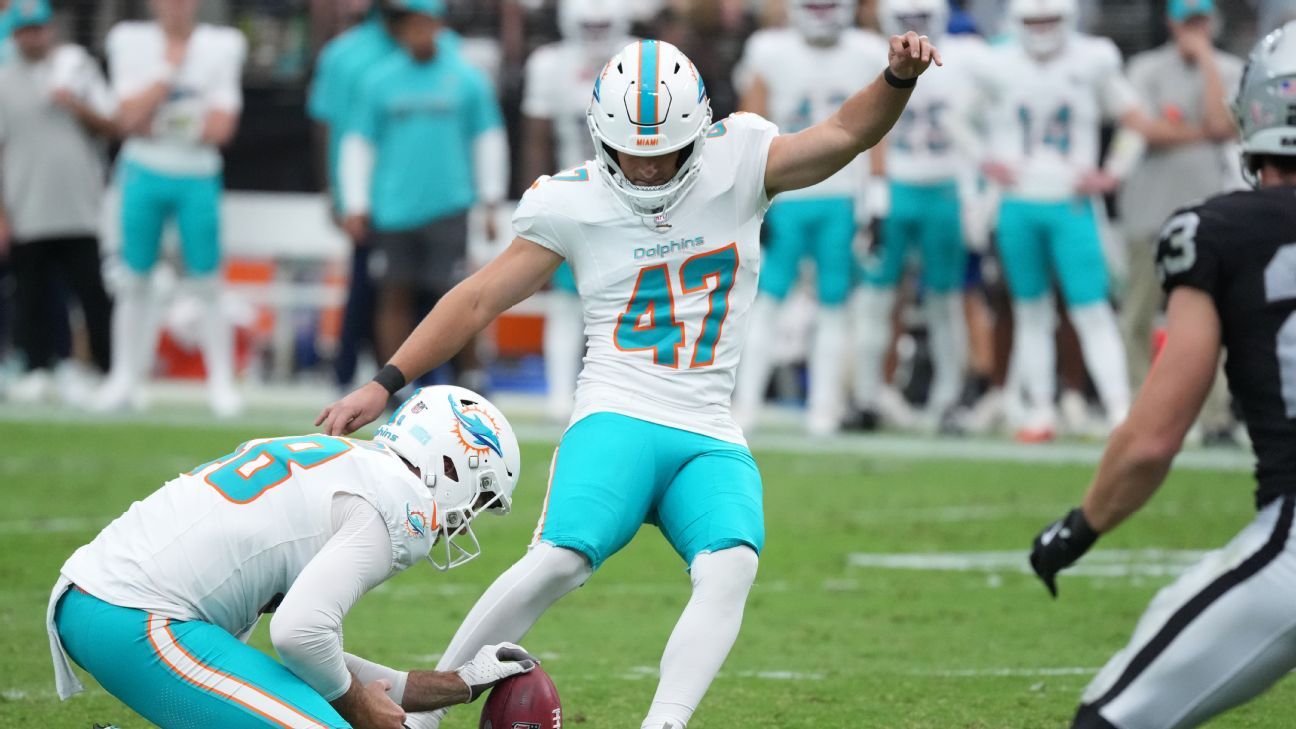
Dolphins release Riley Patterson after Week 5 kick coverage woes
The Dolphins cut Riley Patterson after another ugly stretch on special teams. Miami is trying to stop a hidden problem from turning into a season-long tax.