
Rams Tutu Atwell Trade: Sean McVay Denies Puka Nacua Link
A familiar speed threat returns, and the timing says more than the coach will admit.
 Beatrice Kensington6 min read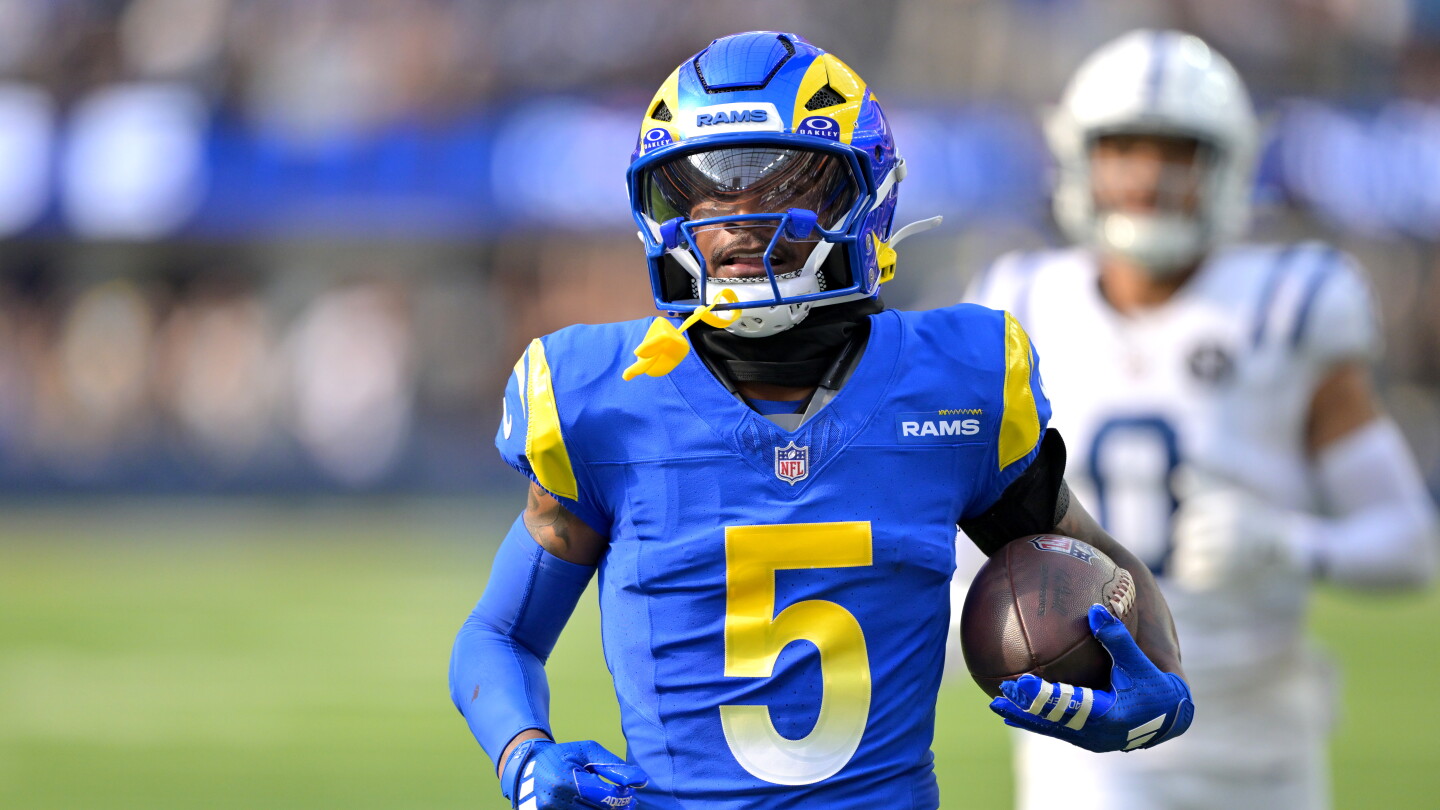
The Rams did not just add a receiver on Thursday. They reopened a familiar file, one marked by speed, frustration, and the constant Los Angeles habit of living one roster move ahead of the story everyone else can see. Tutu Atwell is back in horns, returned from the Miami Dolphins in a trade that instantly nudged the conversation toward Puka Nacua, even as Sean McVay insisted the two subjects were not joined at the hip.
McVay said the deal had “nothing to do” with any possible Nacua suspension. The coach was trying to lower the temperature, and perhaps he did, briefly. But in the NFL, timing is its own kind of language. Front offices do not always speak in declarative sentences; sometimes they speak in depth charts, in contingency plans, in the quiet urgency of a player acquired before the calendar forces the issue.
Atwell returns to the conversation the Rams never quite finished
Atwell’s Rams career has always felt like a question asked in a whisper and answered with a shrug. He has never lacked a trait that can make a coordinator lean forward — that straight-line burst, the kind of speed that can turn a harmless third-and-short into a sideline blaze. But speed alone is a dangerous investment in a league that worships precision. The Rams drafted him in 2021, then spent years trying to decide whether he was a piece, a tool, or a luxury.
Now he is back in the building, and that alone matters. Los Angeles has built its receiver room around a very different kind of certainty in Nacua, a young target whose game is less about glamour than gravity. Defenders feel him. Safeties shade toward him. Coverage tilts like a boat taking on water. If Nacua is the gravitational center, Atwell is the bright knife of possibility on the perimeter.
That is why the trade matters even if McVay’s denial is accepted at face value. The Rams did not simply add another body. They added insurance, a changeup, a player who can stretch a defense horizontally and force corners to honor the edges. In a league where the smallest injury ripple can become a season-shaping undertow, insurance is not a luxury. It is survival.
Why the Puka Nacua questions arrived so quickly
The suspicion was inevitable because the Rams have taught the league to connect dots, sometimes even when the club wishes the dots would stay unconnected. Nacua has become too central, too productive, too essential to ignore. The moment any receiver addition lands on the same day, or anywhere near it, the inference machine starts humming.
McVay’s statement was not only a denial; it was a signal that he wanted the roster move interpreted on its own terms. Fair enough. But the NFL does not often grant that kind of neatness. Clubs dress rehearsal plans for the possibility of bad news all the time, then swear the wardrobe had nothing to do with weather reports. That does not make the move dishonest. It makes it prudent.
And prudence, in the Rams’ case, has a sharper edge because the team has lived through the hard lessons of overexposed skill groups. The Rams have seen what happens when one star is asked to absorb too much of the creative burden. They have also seen what happens when the supporting cast is not wide enough to absorb one unexpected absence. A receiver room can look deep on paper and brittle on Sundays. Ask any team that has watched a single clean hit change the whole geometry of the season.
The Rams may not have traded for Atwell because of Nacua, but they traded for him because the league punishes teams that pretend one receiver can carry the whole sky.
What Atwell actually changes for Los Angeles
The first thing Atwell changes is defensive attention. The Rams do not need him to become a volume machine to matter. They need him to make a cornerback nervous, to make a coordinator leave a safety a half-step deeper, to widen the field for everyone else. That is the old receiver economics of the NFL: sometimes the most useful player is the one who never gets the loudest numbers.
The second thing he changes is flexibility. McVay has always preferred a chessboard with more than one knight. If Nacua is limited, unavailable, or merely in a role the Rams wish to manage more carefully, Atwell offers a different kind of route stress. He can force substitutions. He can alter how the Rams script early downs. He can make a defense defend the width of the field instead of simply bracketing the middle.
There is also the uncomfortable matter of expectation. Atwell was once a first-round pick, and that draft slot can become a lifelong weight if a player’s best use is narrower than the league’s broadest dreams. Los Angeles knows this. Fans know it too. The trade is a fresh chance, but it is not a clean slate. The Rams are not asking Atwell to become something he has never been. They are asking him to be exactly what the roster needs more often.
Beatrice Kensington: the Rams are making a bet on volatility
I have always had a soft spot for the teams that understand the season as a weather system rather than a straight line. The Rams, at their best, are not sentimental. They are adaptive. They understand that a roster is less a monument than a living draft, something revised by injury reports, matchup realities, and the brutal arithmetic of September. This move feels like that kind of thinking.
And yet there is a risk in it, too. Organizations can fall in love with their own contingency plans. They can begin to believe that enough speed, enough novelty, enough schematic imagination will patch over the absence of one truly indispensable player. That is the trap. If Nacua’s status is eventually fine, then Atwell becomes a useful addition to an already interesting receiver mix. If it is not, then the Rams will need him to be more than a specialist. They will need him to justify the oxygen this story is already consuming.
That is the tension here, and it is a very modern NFL tension: the gap between what a team says it is doing and what the timing suggests it fears. McVay is right that the trade can stand on its own. He is also wrong, in the way coaches often are, to think the public will stop reading the weather.
The Rams have bought themselves options. That is no small thing. But options only matter if they can be cashed in when the game starts biting.
The next week will tell us whether Atwell is simply back, or back for something larger. And in Los Angeles, that distinction is rarely accidental.
More from Straight From The Bench
Comments
Join the conversation — sign in to leave a comment.
Sign in to commentRelated Stories

Steelers Preseason: Young Players With 2026 Impact Potential
Pittsburgh’s preseason ended with a familiar truth: the stars set the floor, but the kids are the ones pushing the ceiling. The 2026 conversation is already starting.
Raiders Week 1 Starting Quarterback: Kubiak Won’t Blink
Klint Kubiak wouldn’t hand out the label, but the Raiders’ preseason finale told the story anyway. Fernando Mendoza had a rough night, and the veteran door is already cracked open.
49ers 53-Man Roster Battle: Three Young Players Make Their Case
With most starters in street clothes, three young 49ers turned a modest preseason finish into a persuasive argument for more snaps.