
Saints vs Lions Overtime Decision: Kellen Moore Defends 2-Point Try
A coach chose the knife-edge instead of the safe math — and the season will live with it.
 Beatrice Kensington5 min read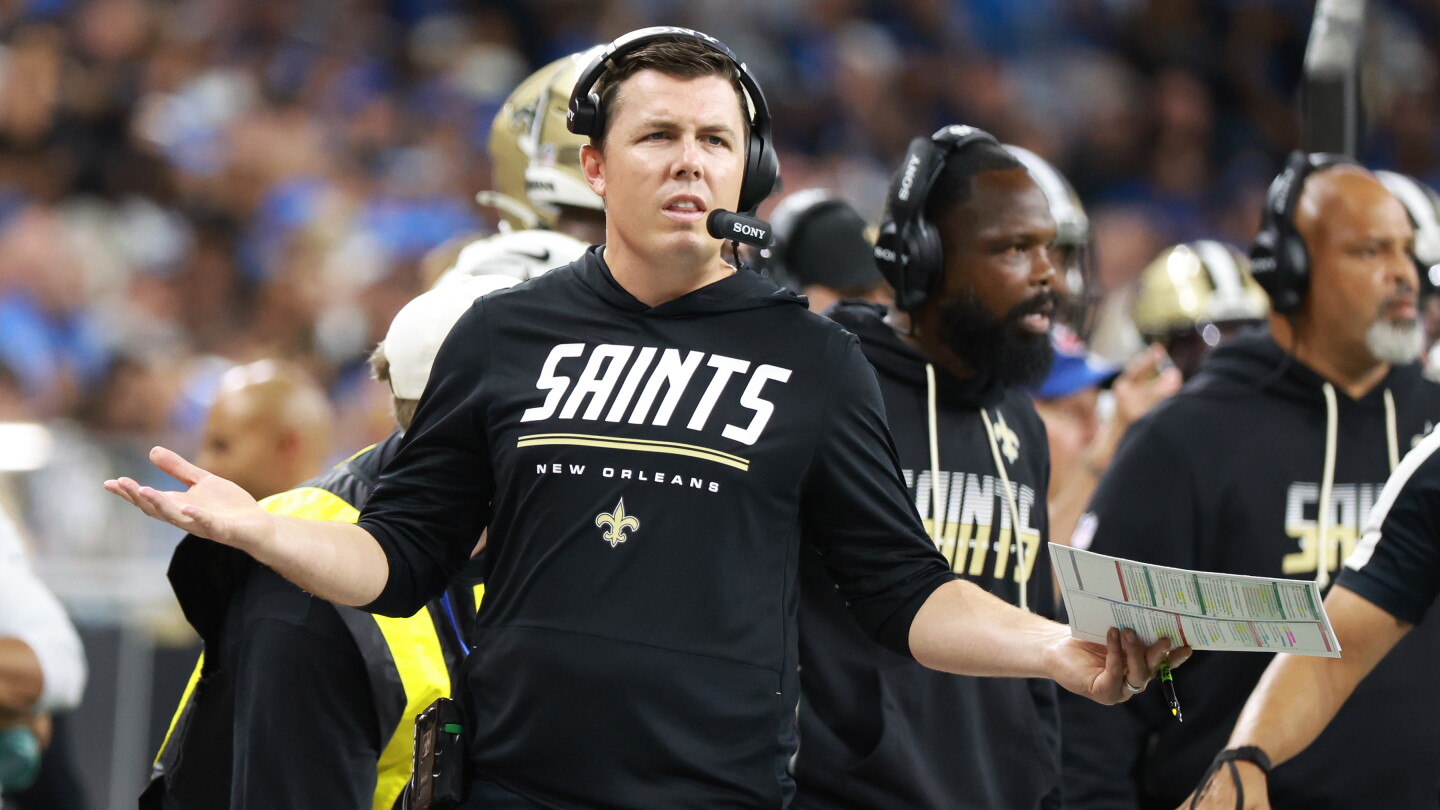
The moment that split the room
When the New Orleans Saints reached the end zone with 1:34 left in overtime against the Detroit Lions, the building did what football buildings always do in that instant: it inhaled. A simple extra point could have sent the game deeper into the fog, tied and unsettled, with one more round of nerves and hidden danger. Instead, the Saints chose the harder road. They went for two.
It was a decision with all the texture of modern coaching—part analytics, part instinct, part refusal to let a game drift into the hands of chance. Kellen Moore stood by it afterward, and he should have expected the scrutiny. In the NFL, aggressive choices are praised most loudly when they work and dissected most ruthlessly when they don’t. The line between courage and cost is always thin. Sometimes it is paper-thin.
That is why this mattered beyond one play. The Saints did not merely decide to chase a win; they decided to define their evening by conviction. In an era where so many coaches flatten themselves into the language of percentages, Moore chose to sign his name on the risk.
What going for two really says about this Saints team
There is a school of thought that says the safest decision is usually the most responsible one. Tie the game. Trust your defense. Live to see the next snap. But football is rarely as tidy as a spreadsheet. The Saints’ choice suggested a staff willing to put the weight of a game on its offense rather than asking tired players to survive another sequence against a Lions team built to punish hesitation.
That is not a small philosophical point. It tells you how the Saints see themselves. It tells you they believe the moment belonged to their quarterback, their play-caller, their personnel package, their ability to win now rather than extend the conversation. Coaches talk constantly about belief; this was belief rendered in one snap.
Going for two was not a gamble on one play. It was a declaration that the Saints wanted authorship, not permission.
Of course, declarations carry a price. If the conversion fails, the coach owns the second-guessing, and the locker room owns the silence that follows. If it succeeds, Moore is praised for having the stomach the job requires. That is the strange arithmetic of NFL leadership. The same act can be called reckless or inspired depending only on the final bounce.
Kellen Moore’s reputation is now part of the story
Moore has spent years around offensive football with the label that follows bright play callers everywhere: smart, inventive, ready for the next chair. But when you become a head coach, your legacy stops being built solely on scheme. It begins to harden around decisions like this one, the ones that carry your temperament onto the field.
He is not the first coach to be dragged into this kind of spotlight. The NFL has always been a league that loves to punish the manager who chose the bolder line after the fact. Yet there is also a reason so many teams keep drifting toward aggressiveness. The margins are too small, the league too unforgiving, the difference between a tidy loss and a season-changing win too often determined by one hard, private choice.
I have long believed that football coaches are judged less by the correctness of a decision than by whether they can live honestly with it. That sounds softer than the profession deserves, but it is the truth. A coach who hides inside caution sends the message that he fears the outcome more than he trusts his players. A coach who goes for two, especially in overtime, is saying something else entirely: I would rather lose with agency than survive on borrowed time.
That instinct can be maddening. It can also be the beginning of a culture that stops waiting to be rescued.
Detroit’s side of the bargain was always lurking
The Saints’ choice cannot be separated from the opponent on the other sideline. The Lions have become one of the league’s more emotionally serious teams, a group that plays like it has learned something about pain and kept the lesson. Against a team like that, the idea of merely tacking on a point and hoping the next sequence breaks your way can feel less like prudence and more like delay.
This is also where overtime football becomes its own small morality play. The extra period is supposed to reward endurance, but too often it rewards whichever side can impose its identity first. Detroit understands that. So do the better teams in the league. They do not wait politely for the game to explain itself.
Moore’s decision may also reflect a broader truth about how the modern NFL is tilting. Coaches are under increasing pressure to be proactive, to trust conversion probabilities, to accept that passivity is not some noble neutral ground. The old comfort of the extra point has eroded. A good coach now has to show not just tactical awareness but backbone.
And backbone is expensive. It invites criticism from the moment it is chosen.
What this means next for New Orleans
The Saints will spend the next stretch living with the conversation, which is often the real consequence of choices like this one. Not the immediate result. The conversation. Players hear it. The fan base hears it. A coach’s confidence can become contagious if the team believes he is steering with purpose; it can curdle if the room starts feeling the panic behind the confidence.
That is why Moore’s defense of the call matters. He cannot apologize for daring and then expect his team to trust him in the next tight fourth quarter. Football has a long memory in that way. The Saints also cannot afford to drift into a version of themselves that plays every late game as if fear were a game plan.
There is a line from Kellen Moore’s decision that should linger: he treated the final snap like the game’s truth, not its decoration. Coaches who last understand that the endgame is where a team reveals whether it believes in its own construction.
The Saints took their swing. Now the rest of the season will tell us whether that was nerve, wisdom, or the beginning of a habit worth keeping.
More from Straight From The Bench
Comments
Join the conversation — sign in to leave a comment.
Sign in to commentRelated Stories

Tony Romo CBS Leave Update: Why the silence matters
CBS has extended its Tony Romo silence for another two weeks, and that tells you everything about how carefully this is being handled.

Will Anderson Defensive Player of the Year Race: Early Favorite Shift
The Defensive Player of the Year race is already tilting, and the market is moving with it. Myles Garrett’s stumble opened the door for Will Anderson to walk through.
Cowboys Week 1 Loss: Brian Schottenheimer calls team 'pretty poor'
Brian Schottenheimer ripped the Cowboys’ Week 1 effort after a 28-20 loss to the Giants. The message was blunt: Dallas wasn’t ready.