
Seahawks Rashid Shaheed Tailback Plan: A Small-Roster Gamble
Seattle found yards by borrowing a wideout’s legs and a little imagination.
 Beatrice Kensington6 min read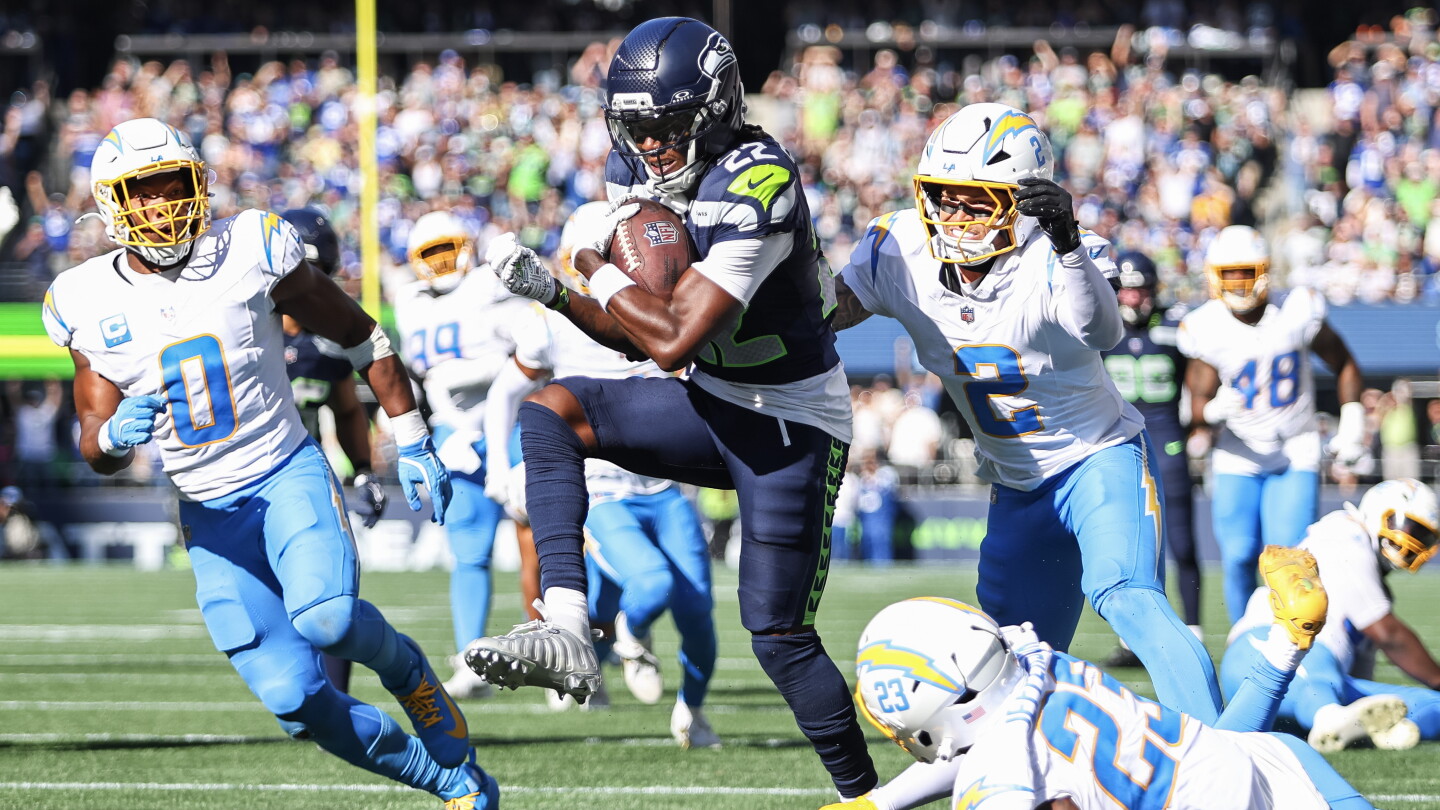
The Seahawks did not invent desperation football on Sunday, but they gave it a tidy, almost elegant little dress rehearsal. With the backfield thinned by circumstance, Seattle turned to Rashid Shaheed and asked him to run like a man who had spent a lifetime doing something else. He answered with 33 yards on two carries, and one 28-yard touchdown that flashed past the defense like a match striking in a dark room.
This was not merely a gimmick, not if you listened carefully to the shape of it. The Seahawks had been preparing for this possibility since training camp, which is the sort of sentence that tells you a coaching staff spends August building emergency exits as much as it does installing the playbook. Sunday simply forced the door open.
A backfield patched together by necessity
The NFL has a special affection for adaptation, though it usually disguises that affection as stubbornness. Teams want identity, repetition, the comforting hum of a system that can be trusted in November. But injuries do not respect that architecture. They arrive like weather. And once the running back room starts to thin, the playbook begins to shed its formal clothes.
Seattle’s choice to move Shaheed into the backfield was the sort of move that looks whimsical from a distance and pragmatic up close. He is a receiver by trade, a speed merchant who forces defensive backs to make awkward decisions. Put him behind the line of scrimmage and you gain uncertainty. Does the defense honor the motion? Does it widen to respect the jet sweep threat? Does it overplay the edges and leave a lane inside? On Sunday, for a few breaths, those questions seemed to arrive a beat too late.
The touchdown run mattered not because it was a grand tactical breakthrough, but because it revealed how little margin remains in modern football. One injury here, one missing body there, and a team is suddenly reaching into the tool shed for a wrench it had hoped never to use. Seattle did not apologize for that reality. It used it.
Rashid Shaheed gave the Seahawks a different kind of speed
Shaheed’s value is obvious when he is operating as a receiver. He changes spacing simply by standing on the field. As a runner, the same principle applies, only more urgently. He is not a battering ram. He is not being mistaken for a classic NFL tailback in a leather helmet from some sepia-toned age. He is a blade.
That matters because defenses are increasingly built to strangle predictability. The league has spent years reducing the space between the hash marks and the sideline, making ordinary runs feel like negotiations with concrete. A player like Shaheed reintroduces ambiguity. He forces pursuit angles to bend. He turns a handoff or a direct carry into a math problem, and sometimes math fails to keep up with speed.
There is also the human side of it, the part that rarely gets the proper shine. Players do not always discover themselves in the role that first made them visible. Some become useful in the margins, then indispensable in the improvisation. Shaheed’s day in the backfield was less a novelty than a reminder that football careers are often built on utility. The stars are celebrated for their signatures; the survivors are valued for their versatility.
In the NFL, the healthiest roster is often the one that can survive being wrong about itself.
What this says about Seattle’s coaching and roster math
Coaches talk about multiplicity the way old navigators talked about stars: as a source of orientation, not decoration. The Seahawks’ willingness to put Shaheed behind the line suggests a staff willing to treat personnel as a living equation rather than a fixed list of positions. That is not always romantic. It is, however, practical.
Seattle has learned what plenty of clubs eventually learn in a long season: the game is won as much by the ability to change shape as by the ability to impose one. That becomes especially true in an offense that may not always have the luxury of a fully stocked backfield. If a receiver can absorb a handful of carries and create a splash play, then the roster gains another door, another angle, another way to survive a bad Sunday.
I have long believed the best teams are not the ones that cling most fiercely to their neat diagrams, but the ones willing to let the drawings smudge a little when the real thing arrives. The Seahawks do not need Shaheed to become an every-down running back. They need him to make the defense lie to itself for four seconds at a time. That is enough to alter a game. Sometimes it is enough to alter a season.
And there is a broader lesson here for an NFL that increasingly prizes personnel flexibility over positional purity. The old categories are still useful, but they are no longer sacred. We see it in gadget touches, motion packages, receiver handoffs, and the endless search for mismatches. We see it in clubs that would rather build a roster with interchangeable parts than a single point of failure. Seattle’s little experiment was not a stunt. It was an argument.
The ripple effect for fantasy and game planning
For fantasy managers, the Shaheed backfield cameo is the sort of thing that induces both curiosity and caution. He is not suddenly a traditional running back stash, and he should not be treated as one. But the usage matters because it widens his weekly path to production. A receiver who can steal touches near the goal line or survive a short-yardage package is a player with a slightly different ceiling than the box score might first suggest. That is the kind of detail that belongs on the radar alongside any Fantasy Football Waiver Wire Advice conversation.
For opposing coordinators, the film will demand respect. One carry can become a motif if it threatens enough leverage. Defenses now have to account for the possibility that Seattle may borrow Shaheed’s legs again, especially if the running back room remains fragile. That does not mean the Seahawks will build an offense around him. It means they have found a lever they can pull without warning.
And warning, in this league, is the enemy of surprise.
The Seahawks will not make a habit of winning with a receiver masquerading as a tailback. They do not need to. They only need the option to make an opponent’s certainty look foolish for one clean moment. On Sunday, they did exactly that. The next time the backfield grows thin, do not be shocked if the same door opens again.
More from Straight From The Bench
Comments
Join the conversation — sign in to leave a comment.
Sign in to commentRelated Stories

Fantasy Football Waiver Wire Advice: Week 5 adds, stashes, drops
Week 5 is a lighter bye week, which means the waiver wire is about managing edges, not panic. The sharp managers are already turning that into points.

Chiefs Power Rankings: Kansas City Is Back, But the Bruises Remain
Kansas City is 4-0 and climbing, but the real story is the wear and tear. The Chiefs look sharp, yet the depth chart is starting to sweat.

Falcons vs Saints: Bijan Robinson sparks Atlanta on Monday Night Football
Bijan Robinson needed one lane and the Falcons needed one clean break. They got both early in New Orleans, and the NFC South mess got messier.