
Seahawks Training Camp: Day 2 Observations and Mike Macdonald’s Message
A new coach reached back to old dynasty muscle. One veteran answered with a little life still left in his legs.
 Beatrice Kensington6 min read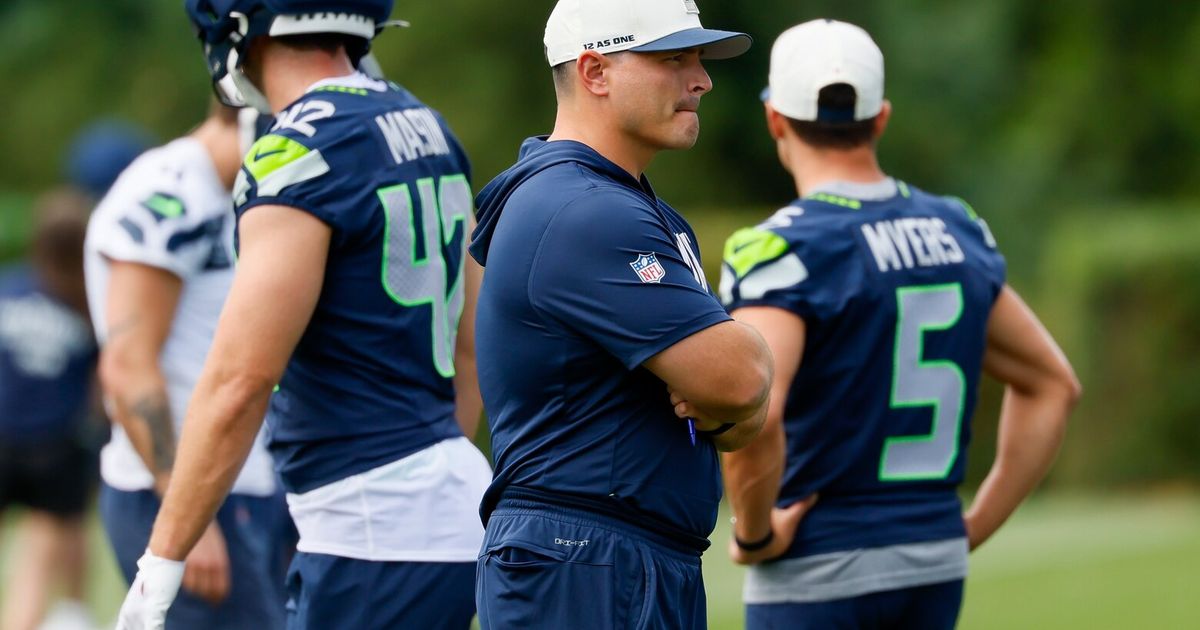
RENTON — The first real tell of a training camp rarely comes from a highlight. It comes from the mood in the room before the whistles start, from the way a coach speaks when the grass is still wet and the pads are still stacked, from the reference he chooses when he wants grown men to understand the level of discipline he expects. On Day 2 of Seahawks training camp, Mike Macdonald reached back to the 1991 Chicago Bulls. Not because the Seahawks are about to become the Bad Boys’ blunt-force foil, and not because Seattle has somehow stumbled into a sentimental remake of basketball history. He did it because dynasties, whether in the NFL or any other arena, are built on habits so exacting they become a language.
That is the real story of this camp so far. Not the choreography of individual drills, though those matter. Not the early box-score fantasies of August, though fans always indulge them. The point is more elemental: Macdonald is trying to install a culture that feels sturdy enough to survive the season’s weather, and he is doing it with a coach’s eye for structure and a historian’s sense of precedent. Seattle has lived through enough football summers to know the difference between optimism and architecture.
Macdonald’s Bulls reference was about standards, not nostalgia
The Bulls of 1991 are not a casual comparison for any modern coach to toss into a speech. That team had Michael Jordan, yes, but it also had a ruthless common thread of accountability, the kind that made talent useful instead of ornamental. Macdonald, by invoking that team, was telling his locker room that greatness is not a mood. It is a maintenance plan.
That matters in Seattle because this franchise is again in the business of proving its identity. Under Mike Macdonald)—a coach with a defensive mind and a measured temperament—there is less appetite for slogan-ball and more for repetition, precision, and collective responsibility. Training camp is where such ideas either harden into routine or evaporate into polite, sweaty talk. On Day 2, the Seahawks were still in the former category, which is to say they were doing the necessary, unglamorous work of becoming a team.
There is a reason coaches favor historical reference points. They need symbols that can carry instruction without sounding like a lecture. The Bulls are shorthand for obsession, for the elimination of slack. Macdonald is not trying to turn Seattle into Chicago in shoulder pads. He is trying to remind a roster that the margin between “pretty good” and “worth fearing” is often built in the smallest habits—alignment, effort, communication, recovery, self-policing. The league is full of teams with talent. The ones that last are full of teams with standards.
Macdonald’s message was simple: the Seahawks do not need a mood swing; they need a method.
One veteran still has some juice, and that matters more than it sounds
Every camp produces a veteran moment that gets filed away by the people who know how to read these things. A player who has already had his payday, his accolades, his bruises, and maybe a few whispered doubts shows up and reminds everyone that age is not the same thing as decline. According to the practice observations, one Seattle veteran looked like he still had some juice left in him, and those are the reps that can settle a locker room more than any speech can.
That veteran presence matters in a camp like this because young teams often confuse energy with readiness. Energy is cheap. Readiness is expensive. It comes from players who understand leverage, timing, and what the game asks in the fourth quarter when nobody is fresh and every missed assignment costs more than it should. A veteran who can still move, still win a rep, still make the younger players lean in—that is a useful piece of roster currency.
Seattle has long been a franchise that values edge, but edge alone can turn brittle if it is not anchored by experienced players who know where the cracks usually appear. A camp rep from an old hand may not thrill social media. It does something more valuable. It keeps the room honest.
The shape of this roster is still being argued in real time
Training camp is where coaches reveal, often unintentionally, how they see the roster hierarchy. Which groups get emphasized. Which mistakes draw fire. Which positions are treated as settled and which are treated like open auditions. Day 2 does not hand out conclusions, but it does offer clues.
The Seahawks are at that delicate point where familiar names and new expectations must coexist. Fans want to know whether the offense will be sharper, whether the defense will be more modern in Macdonald’s image, whether the line play will stop feeling like an annual referendum. Those questions are not answered in one morning session in Renton. Yet the tone of camp can hint at the direction of travel. If the standard is truly being raised, then every drill carries a little more consequence. Every veteran rep means more. Every mistake is less easily dismissed.
For Seattle, the stakes are not abstract. This is a franchise that has tasted the difference between contender and commuter. It knows what a loud autumn feels like. The challenge now is to make the team resilient enough to create that noise again without depending on flash alone. Macdonald’s approach suggests he understands that the path back is built in the mundane corners: the walkthroughs, the corrections, the second and third reps, the way a sideline behaves after a mistake.
What Day 2 really said about the Seahawks’ direction
Here is where I’ll step out from the sideline and speak plainly: I like the sound of a coach invoking the 1991 Bulls before August has properly cooled the field. Not because the comparison is cute. It is not. Because it reveals a coach who understands that elite teams are not conjured by charisma; they are assembled through habits that become almost invisible from the outside. I have covered enough professional sports to know that the most dangerous teams are rarely the loudest in June. They are the ones whose habits look boring until November, when everyone else begins to break.
Seattle does not need theatrics right now. It needs conviction with a pulse. Macdonald’s early camp tone suggests he plans to demand it. That will not flatter every player, and it should not. The NFL is too punishing for a coach to confuse comfort with trust. The veterans who respond will matter, and the younger players who absorb that example may end up shaping the season more than any preseason storyline will.
I also think references like this serve a subtler purpose: they tell a locker room the coach has a map. Not a guarantee. A map. In a league where so much is sold as instant transformation, that alone is grounding.
The Seahawks are still in the opening pages of this story. But the first line already has a shape: discipline first, vanity later. If that holds, Seattle may have something sturdier than a hot camp. It may have a team with a spine.
The next practices will tell us whether Day 2 was a mood or a method. In this league, only one of those lasts.
More from Straight From The Bench
Comments
Join the conversation — sign in to leave a comment.
Sign in to commentRelated Stories

Jacoby Brissett New Deal: Cardinals Rework Contract
The Cardinals aren’t guessing at quarterback depth. Brissett’s reworked deal signals Arizona wants stability, leverage, and a cleaner camp plan.

Jacoby Brissett New Deal: Cardinals QB Says the Stress Was Worth It
Jacoby Brissett negotiated his own deal, landed a $10 million raise, and came out ahead. The part nobody tells you about? The sleep he gave up to get there.

49ers Coaching Update: Chris Foerster Takes Over at Camp
Kyle Shanahan is limited at 49ers camp after a concussion, and Chris Foerster is steering the operation. In Santa Clara, this is now about structure, not slogans.