
Spikes Under the Lights: Nebraska's Win, Prize Money and Top Moments
Volleyball stepped into a football palace and looked right at home.
 Beatrice Kensington5 min read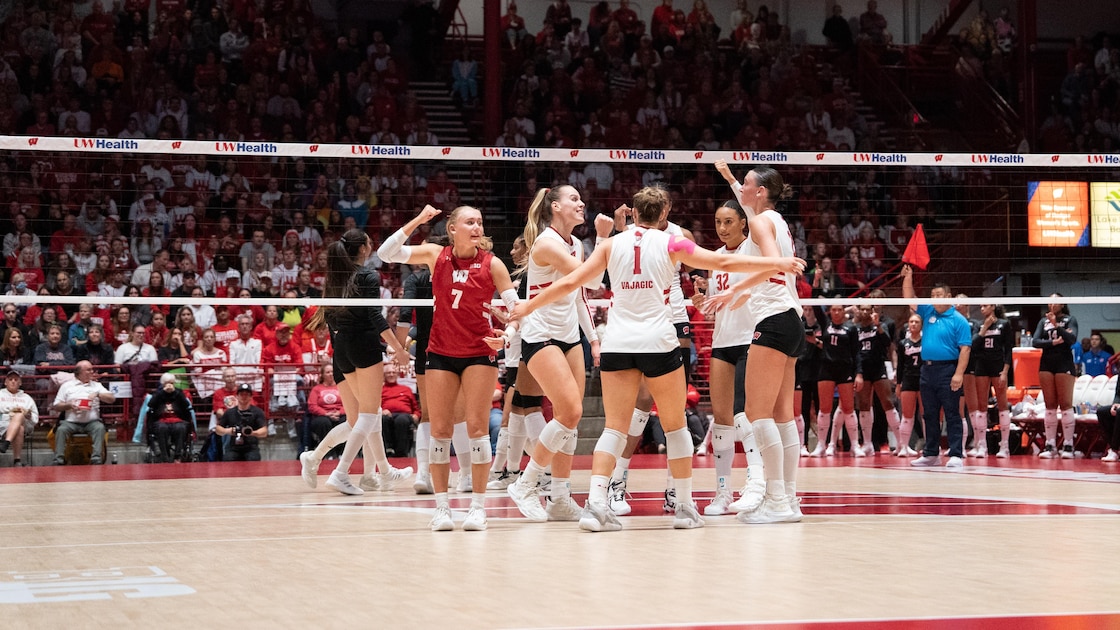
The lights at AT&T Stadium can swallow a sport whole. They make football feel imperial, with every yard line sharpened by the glare and every cheer bouncing around like it has nowhere else to live. On this night, though, college volleyball walked into that cavern and refused to shrink. The first-ever Spikes Under the Lights event did more than hand out a $150,000 prize. It announced, in bright and unmistakable terms, that women’s volleyball has the crowd, the stars and the appetite for a venue this large.
Four of the country’s best teams came to Dallas with real stakes and real attention, and the result was less an exhibition than a proof of concept. Nebraska, that perennial monument to volleyball excellence, was there. So were three other programs with enough pedigree to justify the scale. The event was built to feel ambitious. The sport, in turn, made it feel necessary.
Nebraska and the gravitational pull of a volleyball giant
Nebraska remains one of the few college programs that can bend a room before a ball is even served. The Cornhuskers have long lived at the center of the sport’s American imagination, a school where volleyball is not a side act but a civic ritual. That matters here, because the value of an event like this is not only in the purse, but in the assurance that the correct teams can pull the right people into unfamiliar spaces.
That is the hidden math of modern college sports. Put a heavyweight on the marquee and a novel concept can begin to feel inevitable. Nebraska does that for volleyball the way blue-blood football schools do for neutral-site games. It carries history, expectation and a fan base that travels with both devotion and noise.
The larger significance is not hard to see. College volleyball has been inching toward the kind of national presentation that men’s and women’s basketball have long enjoyed in the tournament era. Dallas, with its cavernous NFL backdrop, offered a test: can the sport command attention outside the intimate gym setting where so much of its magic has traditionally lived? On this night, the answer sounded like yes.
Prize money, prestige and the changing economics of college volleyball
The $150,000 prize is not trivial. It is a statement about value, and value is the language college athletics now speaks with the most confidence. We have spent years watching the business of the game seep outward from football and basketball into every corner of the campus sports economy. Volleyball has not been untouched by that current. It has, in many places, become one of the most visible and most commercially promising women’s sports in America.
That is why an event like Spikes Under the Lights deserves to be taken seriously, even if part of it was built for spectacle. Prize money sharpens competition, sure, but it also makes plain that administrators and promoters are beginning to see volleyball as a product with independent power rather than as a tidy fall companion to football Saturdays.
The comparison to other shifting business models is unavoidable. Fans have watched college sports stare down realignment, name-image-likeness upheaval and the broader scramble for relevance in a crowded media market. Volleyball, quietly and without the breathless theater that often accompanies those fights, has been building something sturdier. It has television appeal. It has recognizable stars. It has atmospheres that can hum even before the national spotlight arrives.
Volleyball does not need to borrow legitimacy from football forever; it only needs enough nights like this to claim its own.
That is the truest thing about the event in Dallas. It was not a one-off party. It was an argument.
What AT&T Stadium changed about the picture
A football cathedral can be a difficult place for another sport to inhabit. The visual scale can feel punishing, even indifferent. Yet there is also a kind of strategic brilliance in placing volleyball inside AT&T Stadium. The building is already wired for big-event thinking. It teaches attendees to expect pageantry, video, production polish and the sense that they are witnessing something not merely scheduled, but staged.
That matters for a sport still expanding its cultural footprint. Volleyball has long thrived on intimacy: the snap of a serve, the thud of a kill, the collective intake of breath before a rally breaks open. Those are small-room pleasures. But there is a different thrill in seeing that same precision stretched across a grand stage. The sport does not lose its texture. It acquires grandeur.
And there is a social undertone here worth sitting with. Women’s sports have spent generations being told, implicitly or directly, to earn smaller stages by proving they can fill them. Volleyball keeps disproving that old hierarchy. The attendance numbers, the noise, the TV-ready cadence of the game — all of it points toward a sport that has outgrown the patronizing assumptions that once limited its ceiling.
The schools, the spotlight and what comes next
The presence of four top programs gave the event credibility beyond a novelty act. It said the sport’s best teams are willing to meet each other where the platform is largest, and that is how momentum begins to compound. A school like Nebraska brings tradition, but the other teams brought competitive purpose, the kind that turns a curated showcase into a real contest with consequences in the minds of players and fans alike.
I would go a step further. If college volleyball’s leaders are serious about broadening the sport’s reach, they should study this night carefully. Not just the attendance. Not just the prize. The framing. The way the event treated volleyball as a headliner instead of a warm-up. That is the part that could endure.
I have written long enough about college athletics to know that growth is often mistaken for noise. It is not. Real growth is when a sport begins to imagine itself differently, and convinces everyone else to do the same. Volleyball is not asking for charity here. It is asking to be seen at full scale.
And on this Dallas night, under those stadium lights, it was.
The next version of this event will tell us whether the first one was a flash of ambition or the start of a new habit. My bet is that the sport has already answered the larger question.
More from Straight From The Bench
Comments
Join the conversation — sign in to leave a comment.
Sign in to commentRelated Stories
SEC Fifth-Year Eligibility TRO: Judge Halts Conference Push
A judge has granted a temporary restraining order against the SEC and Greg Sankey over the fifth-year eligibility fight. The conference’s little detour around the injunction just hit a brick wall.
Tommy Castellanos Texas Tech: NFL minicamp path to college football
Tommy Castellanos is headed to Texas Tech after NFL minicamp, even as the Big 12 tightens the gate on former pros. That’s a loud little loophole with bigger baggage.
College Football Sleepers 2026: Breakout Players to Watch
The stars will sell the tickets, but the sleepers may tilt the season. A deeper look at the 2026 names most likely to turn potential into proof.