
Tadej Pogačar Vuelta a España Crash: Race Leader Abandons Stage 8
A brutal reminder that grand tours can vanish in one sideways heartbeat.
 Beatrice Kensington5 min read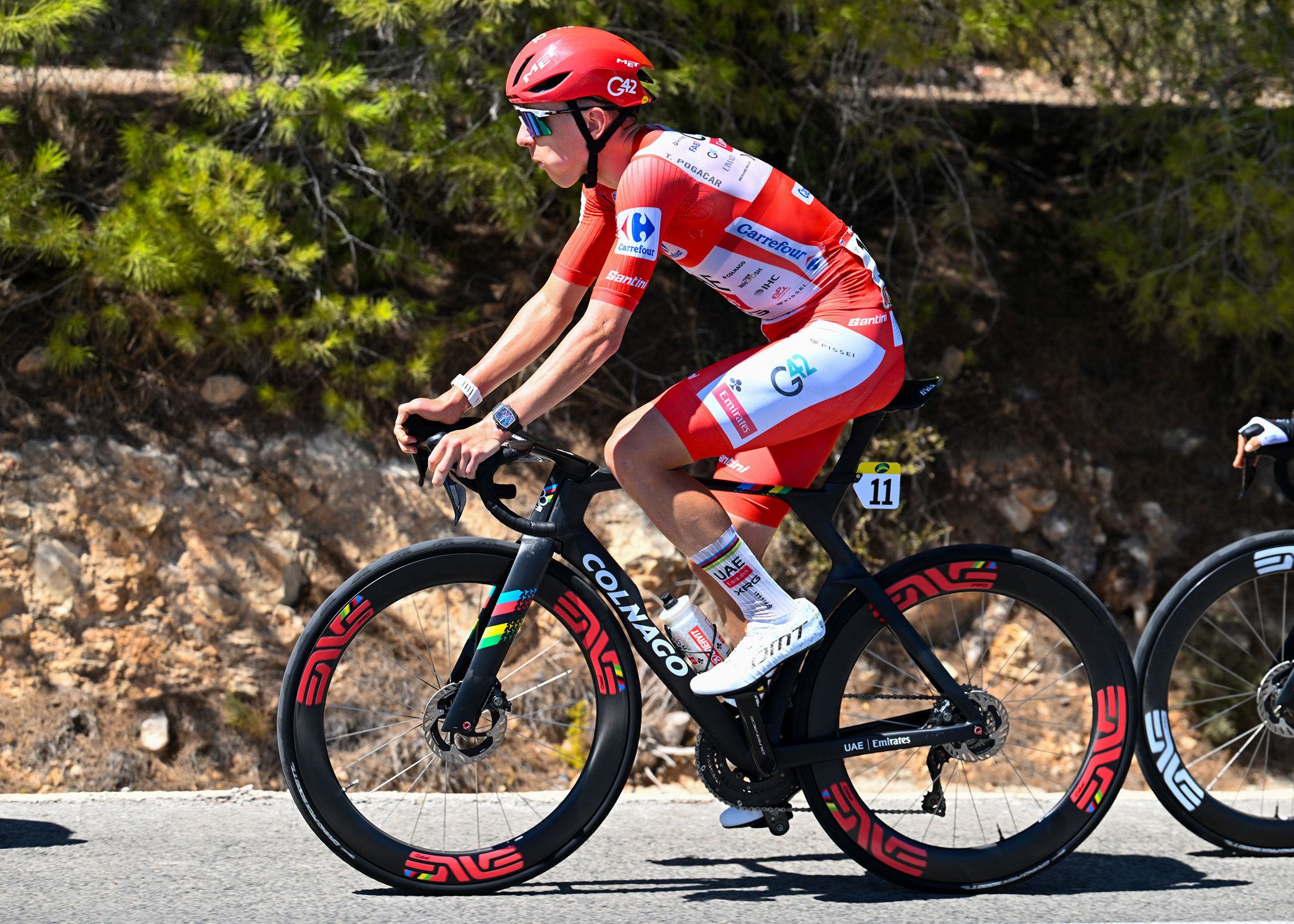
The road turned treacherous in a single instant
Tadej Pogačar’s Vuelta a España did not end with a final mountain duel or a merciless attack under the red banners of Madrid. It ended on the asphalt, 32 kilometers from the stage finish, with the race leader down hard in the peloton and the sport’s most bankable force packed into an ambulance. For all the preparation, for all the watts and data and nutrition plans laid out like scripture, cycling still has a way of reducing ambition to a skid mark.
Stage 8 had the shape of a transitional day, the sort of road people call routine until the road itself reminds them otherwise. The crash came in the run-in to the day’s only climb, the Puerto de Barx, and the consequence was immediate and unforgiving: Pogačar abandoned the race. One moment the Tour de France winner was the man to beat; the next, the entire UAE Team Emirates XRG project had to reckon with a different kind of arithmetic.
Grand tours do not always crown the strongest rider. Sometimes they simply survive the best.
Why this matters far beyond one broken race leader
This is not only a sporting misfortune, though it is that in the most immediate and obvious sense. Pogačar is the kind of rider who changes the atmosphere of a race merely by entering it. He makes rivals ride smaller, more cautiously, more defensively. Remove him and the Vuelta’s entire emotional geometry shifts. The peloton breathes differently. Teams that were marking one wheel now have to redraw their plans on the fly.
That matters for the race itself, because a grand tour without its principal star can become either a collective scramble or a test of restraint, and often the difference between those two outcomes is measured in nerves. It matters for the riders chasing the jersey, too, because victories earned in the absence of a giant are always shadowed by the question that follows them. And it matters for fans, who come to cycling for the drama of human superiority made visible on mountains and highways, then are reminded that the body always has the final veto.
There is also a cultural cost here. Cycling sells suffering with elegance. It romanticizes the long day in the saddle, the grimace, the chain-stained hands, the rider alone against the slope. But crashes strip away the poetry. They expose the sport’s old bargain: beauty purchased on roads that can become cruel with no warning at all.
Pogačar’s absence reshapes the Vuelta’s competitive balance
Without Pogačar, the race loses its most reliable accelerant. Stage races often live on tension, and he is tension made flesh. His presence forces aggression out of others; his absence invites calculation. That can make a grand tour tactically richer in some ways, but it can also make it less alive. The difference is not academic. It changes who attacks, who hides, and who suddenly sees a podium that looked sealed an hour earlier.
The Vuelta, like any Grand Tour), is built on attrition. Riders do not merely try to win it; they try to outlast its moods, its heat, its gradients, its nerves. A leader leaving in an ambulance is the starkest expression of that principle. Not even the jersey is protective armor. Not even the strongest man in the field gets a veto on bad luck.
And yet there is a strange honesty in that. Cycling never pretends to be clean of peril. It stages its contests on public roads, shoulder to shoulder, with speed and mass and proximity doing the work of danger all day long. When the crash comes, it is not an aberration. It is the bill arriving.
What the race now asks of everyone else
The riders remaining in the Vuelta now face a challenge that is part sporting, part psychological. Somebody else will have to carry the weight of expectation, and somebody else will become the reference point for the GC conversation. That is often when opportunists emerge, when the race starts speaking in a lower register and the brave are separated from the merely fit.
The teams, meanwhile, have to do what teams in cycling always do after a shock: pretend they are in control while reorganizing around a void. That can mean protecting a new leader, changing stage ambitions, or simply deciding how much risk is still worth taking. Once a race leader disappears, every remaining kilometer asks a sharper question. Is this a day to attack, or a day to survive?
For fans, the temptation is to turn immediately to the next favorite, the next hierarchy, the next title shape. The sport encourages that reflex. But the better reading is slower and sadder. A race without Pogačar is still a race; it is just one with a hole in the middle where a certain kind of spectacle should have been.
My view from the roadside
I have long believed that the grand tour calendar is at its most revealing not when it crowns greatness, but when it reveals how fragile greatness really is. Pogačar has spent years giving cycling a rare certainty: if he is healthy, if the road is long enough, if the terrain is severe enough, the rest of the field is usually chasing a moving horizon. That is why his departure lands so hard. It removes not only the favorite, but the sport’s clearest line of narrative.
And I do think this will leave a mark beyond the remaining stages of this Vuelta. When the best rider in the race is forced out by a crash, every director sportif in every team car takes the same lesson home, whether they admit it or not: the season is never really owned, only borrowed. The helmets get lighter, the power numbers get bigger, the sport becomes more precise. The vulnerability remains old-fashioned and stubborn as ever.
Cycling has always lived on that contradiction. It asks its stars to look invincible while knowing they never are.
The Vuelta goes on, but the air has changed. Somebody else can wear the pressure now. That will not make the road any kinder.
More from Straight From The Bench
Comments
Join the conversation — sign in to leave a comment.
Sign in to commentRelated Stories

England vs Pakistan: Robinson leads Lord's series win
At Lord’s, England seized the second Test and the series with the kind of force that leaves little doubt about the hierarchy. Ollie Robinson was the sharp edge; Saud Shakeel, the stubborn last stand.
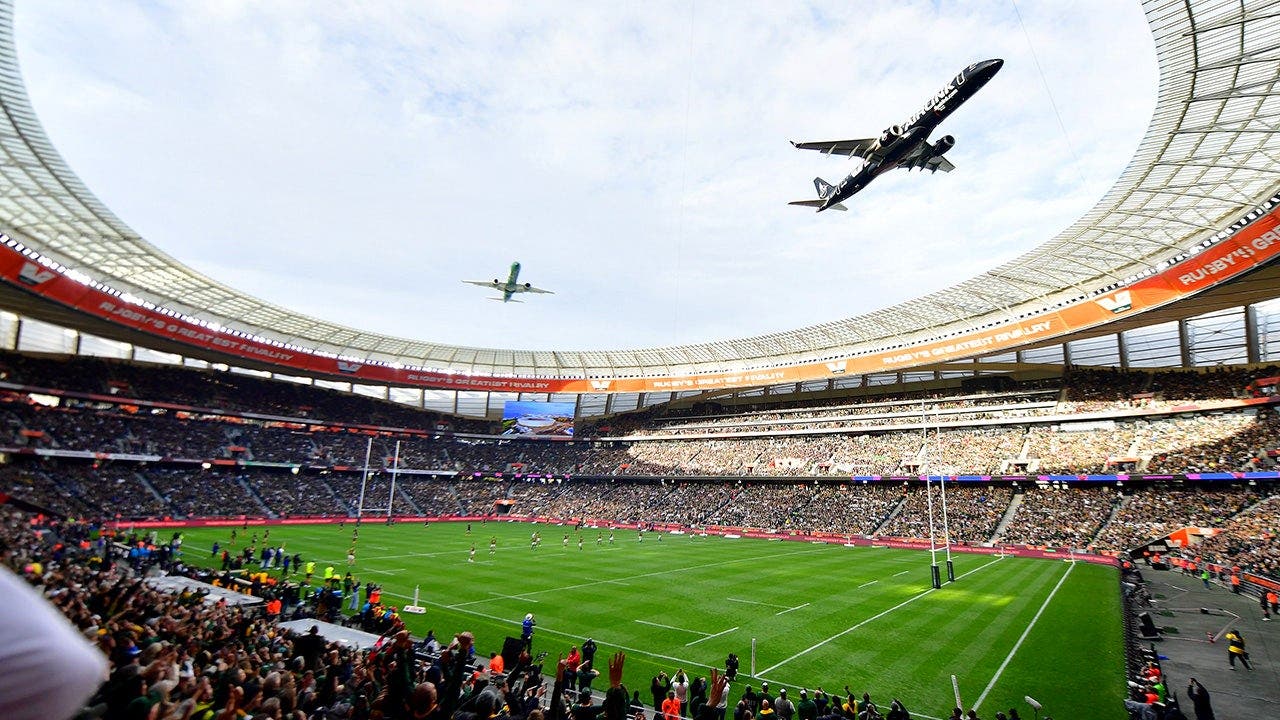
All Blacks vs Springboks Flyover: Airlink Jets Stun Cape Town
Two Airlink Embraer E-Jets ripped over Cape Town Stadium in one of the wildest flyovers you’ll see. The rugby was the main event, but the runway stole a few hearts.

Hamilton West Side Little League World Series loss: U.S. final
Hamilton West Side reached the edge of a Little League World Series crown, then stopped. Nevada’s repeat U.S. title left a bright Ohio story with a sting that will linger.