
Texas Tech’s Brendan Sorsby Mea Culpa Reveals the Price of Misreading a Modern Quarterback
 Beatrice Kensington5 min read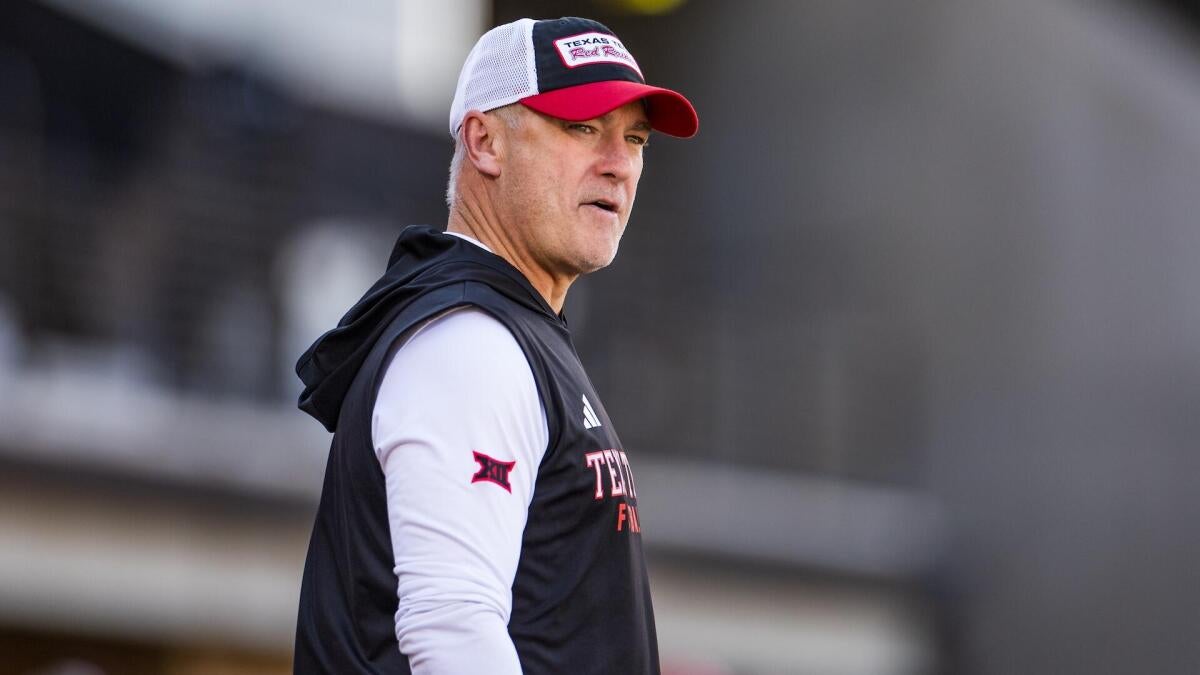
Texas Tech didn’t just miss on a player; it misread the moment
There is a particular kind of regret in college football that arrives not with noise, but with a coach’s steady voice and the faint implication that the tape told a harsher truth than the calendar did. Joey McGuire, the plainspoken face of Texas Tech, said the school would have handled the Brendan Sorsby situation differently in hindsight, and that confession lands with the weight of a program trying to learn in real time. Not every mistake is a recruiting miss. Some are structural. Some are about timing, about leverage, about whether a staff understands what kind of quarterback it is chasing and what that chase costs when it goes sideways.
That is the real story here. Not simply that Texas Tech would have taken another path, but that the path itself is now the point in college football. The sport has become a sprawling negotiation over quarterbacks, and schools are no longer merely evaluating arm talent and footwork. They are evaluating fit, patience, the transfer market, the ripple effect on roster construction, and the long shadow cast by every public courtship.
The Brendan Sorsby episode says as much about process as personnel
Sorsby, now a name attached to a what-if, became useful precisely because his situation exposed the difference between wanting a quarterback and knowing how to land one. Programs can talk themselves into certainty. They can convince themselves that a player will wait, or that the market will bend, or that the next conversation will reset the board. Sometimes that works. More often, it leaves a coach standing in front of the microphones using the only language left to him: hindsight.
McGuire’s admission matters because it acknowledges a hard truth that too many programs still dress up as philosophy. College football recruitment is not a clean hierarchy of evaluations; it is a series of auctions, delays, signals, and misunderstandings. When a quarterback situation gets away from a staff, it can alter everything beneath it. Receivers choose differently. Play callers protect themselves differently. Fans sense the wobble. The locker room senses it faster.
And at a place like Texas Tech, where the margin for error is narrower than the plains look on a map, a miss at quarterback can feel less like a setback than a tax.
Why coaches keep learning the same lesson the hard way
The modern staff lives under a permanent glare. Every decision is audited, every gamble replayed, every near-miss turned into a postmortem. That is part of the job now, especially in a sport reshaped by the transfer portal, NIL, and the accelerated churn of roster building. The old patience model, in which a coach could recruit, redshirt, and develop without the entire ecosystem shifting beneath him, is mostly gone. The quarterback room has become a marketplace, and the ones who survive it best are the staffs that know when to move, when to wait, and when waiting is just another word for surrender.
Texas Tech has shown ambition in the Big 12 Conference, which is now a league that punishes hesitation almost as quickly as it rewards boldness. The conference’s middle class is crowded with teams that can punish a soft spot at quarterback and disappear with your season before October cools the stands. A misread there is not cosmetic. It can change bowl positioning, recruiting perception, and the story a program tells about itself.
In the new college football economy, indecision at quarterback is not a footnote. It is the bill.
McGuire’s willingness to say he would have handled it differently is the right kind of honesty, but honesty does not erase the bruise. It does, however, tell you the staff understands that the quarterback position is no longer a place for wishful thinking. You either know what you’re buying, or you end up explaining why you thought the market would behave like it used to.
What this means for Texas Tech’s identity moving forward
Texas Tech has always lived with a certain football restlessness. The program has been capable of flourish and frustration in equal measure, and that tension tends to sharpen around quarterback decisions. The school’s best teams have usually had a center of gravity under center — a player who made the offense feel inevitable for stretches. Without that, the whole operation can start to feel like a house with one cracked beam.
This is where McGuire’s comment becomes more than a confession. It becomes a public marker that the staff is trying to mature. Coaches often speak as if every setback is a mystery to be solved, but some are simpler. They were too certain. Too slow. Too married to a projection that the market did not respect. Admitting that out loud is uncomfortable, which is why it is useful.
I’ve spent enough seasons around football programs to know that the ones with staying power are not the ones that pretend error is rare. They are the ones that build a culture where error can be named without poisoning the room. That does not mean lowering standards. It means recognizing the shape of the sport as it exists, not as it was once romanticized. Texas Tech is not going to become a different institution overnight because its coach acknowledges a misstep. But it can become a more dangerous one if that acknowledgment leads to cleaner judgment the next time a quarterback starts to drift from the board.
The next test is whether the lesson changes behavior, not just language
This is where the story leaves the realm of reflection and enters accountability. Fans will not remember the wording nearly as much as they will remember whether Texas Tech’s next quarterback pursuit looks sharper, faster, and more aligned with the realities of the current game. The staff does not need a slogan. It needs precision. It needs to recognize that quarterback recruiting now demands not only talent evaluation but contingency planning, because the best-laid plans vanish quickly in this era.
If McGuire and Texas Tech really did misjudge the Brendan Sorsby fallout, then the meaningful response is not guilt. It is adaptation. Better reads. Quicker pivots. Fewer assumptions dressed up as conviction.
That is the whole affair in one sentence. The programs that thrive now are the ones that learn before the season ends, not after the damage is done.
Texas Tech has admitted the lesson. The harder part is proving it learned something worth keeping.
Comments
Join the conversation — sign in to leave a comment.
Sign in to commentRelated Stories

Forty-Five Million Eyes and the New Gravity of World Cup Soccer
England vs. Mexico drew a staggering TV crowd, another sign that soccer has become prime-time America in the making.
White Sox Have Three Very Different Paths at No. 1
Chicago has narrowed the No. 1 pick race to three distinctly different bets. This draft decision says plenty about where the White Sox think the franchise needs to be rebuilt first.

A Roof, a Ray Tank and a Fight for Tampa Bay’s Baseball Future
The Rays’ new ballpark renderings are flashy, air-conditioned, and built for the kind of Florida weather that’s beaten up baseball for years.