
The Open 2026 Round 3: Rory McIlroy’s 69, bigger questions
A quiet card, a louder finish line.
 Beatrice Kensington5 min read
Rory’s 69 left the door slightly ajar
Royal Birkdale can make a player feel as though he is negotiating with the wind itself, and on Saturday Rory McIlroy did enough to stay in the conversation without exactly kicking down the clubhouse door. A 1-under 69 is a competent round, a respectable round, the sort of score that keeps a contender from drifting into irrelevance. It is not the sort of number that sends shivers through a leaderboard, and yet in links golf there are days when survival is its own sort of pressure.
McIlroy’s third round did what so many Open rounds do: it resisted drama while daring it to arrive anyway. The scorecard was tidy enough. The larger story, though, sits just beyond it. The real heat is not only on where he stands, but on what he said after the round — remarks that seem destined to travel farther than a well-struck iron into the sea breeze.
The Open’s oldest truth: the course always gets a vote
The Open Championship has never been a tournament that flatters ego. It trims it. It exposes the vanity of expecting certainty from a course built on uncertainty. At Royal Birkdale Golf Club, the fairways look generous from a distance, then tilt the other way once the wind starts whispering through them. The sand is never far away. Neither is regret.
That is why a round like McIlroy’s matters even when it does not sparkle. In major championship golf, the middle rounds are often where a player learns whether his title bid is living on true fire or on brittle fumes. Saturday at Birkdale looked less like a coronation march and more like an examination. Who can accept the grind? Who can keep the number in view without chasing it like a mirage?
The Open does not reward the loudest contender. It rewards the one still standing when the weather gets bored and turns cruel.
McIlroy’s words may linger longer than the score
The most revealing part of McIlroy’s day may not have been the 69 at all, but the tone that followed it. That is often the case with elite athletes at a major: the score tells one story, the body language and post-round candor tell another. A player who is near the summit but not atop it begins to sound like someone negotiating with history rather than merely chasing birdies.
This is where McIlroy remains such a compelling figure. He is not just another great player in the field; he is one of the sport’s central characters, a man whose presence alters the meaning of every leaderboard he inhabits. Fans do not simply ask whether he can win. They ask what the pursuit has cost him, and whether the burden of expectation has become its own opponent.
I have always thought McIlroy’s career at the majors is best understood as a long conversation between talent and memory. His best stretches are not only about mechanics or confidence. They are about emotional weather — the ability to carry the old disappointments without letting them dictate the next swing. On Saturday, he looked like a player still in the argument. Not serene. Not solved. Still dangerous.
Why the chase matters beyond one weekend
There is a reason the third round is where serious golf becomes moral theater. By then, the field has sorted itself into three categories: the ones who can still dream, the ones who are running out of runway, and the ones whose first-name recognition is now just decoration. McIlroy belongs to the first group, but the difference between “in it” and “winning it” is often one stubborn bounce, one awkward gust, one putt that slips the edge and never apologizes.
That is what makes this Open feel larger than one man’s scorecard. McIlroy’s position, and the way he speaks from it, touches every player who has ever stood one round from a major and felt the whole championship narrowing around him. It also touches the audience, because golf’s great appeal has always been its refusal to supply easy narrative satisfaction. It lets you believe, then tests the belief.
The fans reading the leaderboard are not just tracking strokes. They are tracking temperament. They are asking whether McIlroy has enough patience left for this particular kind of fight, the kind where you must make peace with pars and trust that one hot stretch will be enough. Golf has a way of turning certainty into superstition by Saturday afternoon.
What to watch as Round 4 approaches
The final round will not be decided only by the low numbers. It will be decided by who can tolerate the slow, grinding arithmetic of links golf without becoming reckless. If McIlroy is truly in position, the next test is not shot-making alone. It is emotional restraint. The Open has chewed up more heroes than it has crowned, and it does so most efficiently when a contender starts seeing red flags where there are only crosswinds.
Watch the early holes on Sunday, because they often reveal whether a player is collecting himself or chasing the round. Watch the par saves, too. At Birkdale, the quiet ones matter. A tournament that began with so much expectation could yet end with the familiar Open lesson: the champion is rarely the one who looks most comfortable. More often it is the one who stays patient while everyone else hurries to their own undoing.
The leaderboard will keep shifting. The weather will keep writing its own script. And McIlroy, as ever, will remain at the center of the story — not because the game has made peace with him, but because it never quite does.
More from Straight From The Bench
Comments
Join the conversation — sign in to leave a comment.
Sign in to commentRelated Stories
Ryan Fox British Open Record 62: Royal Birkdale Heats Up
Ryan Fox matched the major championship scoring record with a 62 at Royal Birkdale, and he did it by cashing in on the rare window before the wind woke up.

Rory McIlroy Bryson DeChambeau The Open: swing-path penalty
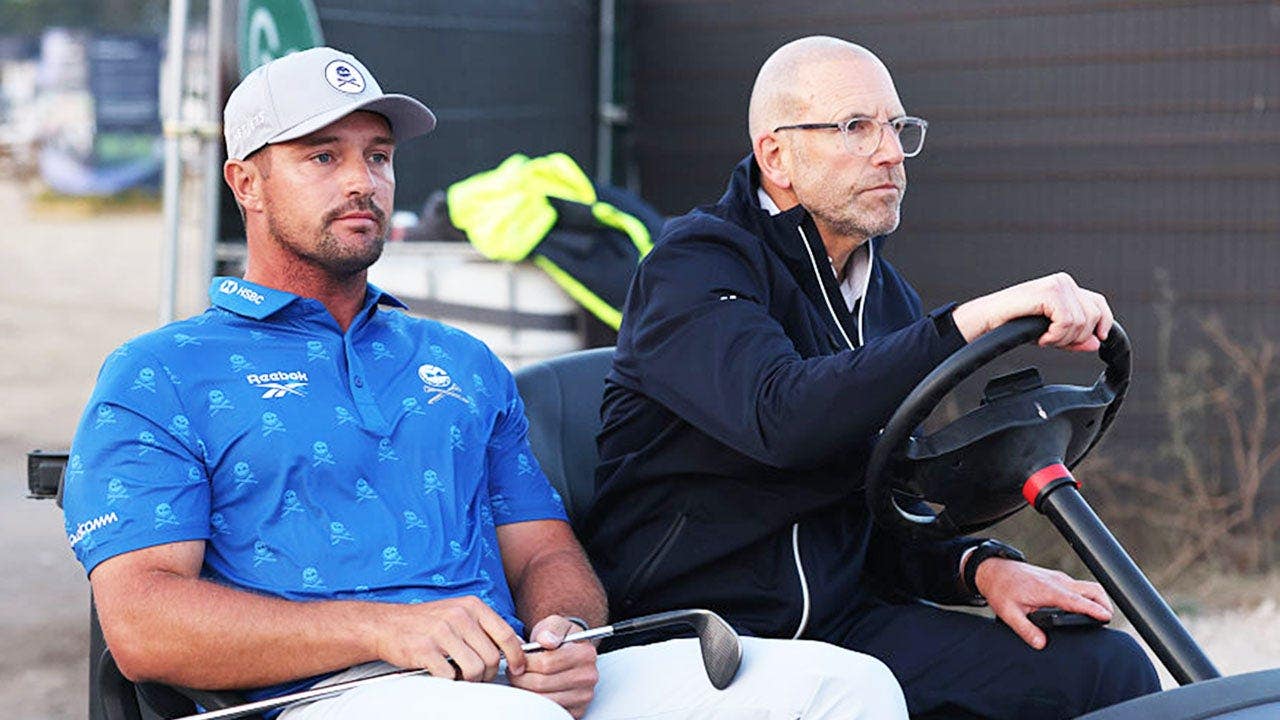
McIlroy gave a blunt read on Bryson DeChambeau’s swing-path issue at Royal Birkdale, and the old pro didn’t waste words. The shot, the ruling, and the message all landed hard.
Bryson DeChambeau British Open Penalty: Chamblee’s Brutal Shot
Brandel Chamblee didn’t just criticize Bryson DeChambeau’s Open penalty. He took a shovel to him and kept digging.