
The Open final round timing: England World Cup clash could shift start
Golf is learning, again, that summer belongs to the people shouting from somewhere else.
 Beatrice Kensington5 min read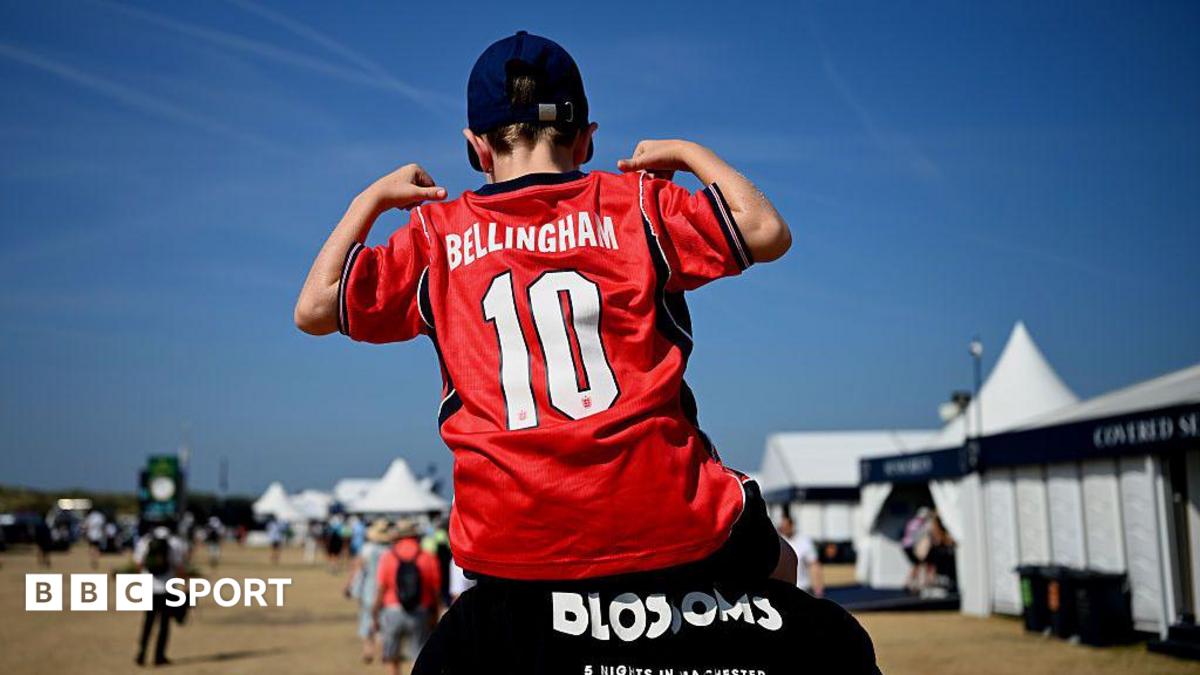
A small adjustment with a very loud reason
Royal Birkdale is built for patience: the hush before a tee shot, the long walk across rumpled linksland, the sense that history settles more softly here than it does in most sporting cathedrals. Yet even a championship as old as the The Open Championship is not immune to the blunt force of modern sport’s calendar. If England reach Sunday’s World Cup final, the R&A will be nudged toward a subtle shift in the final-round start times, a move designed less as a convenience than as a recognition of reality.
Mark Darbon’s message was plain enough: the decision will come within the next 48 hours, and it will not be dramatic. It should not have to be. The point is not to remake golf for television’s appetite or football’s gravity, but to preserve the dignity of both without asking fans to choose between two occasions that command the same summer daylight.
The Open has always been a weather report on culture
Golf likes to pretend it is above all this, insulated by etiquette and the faint crackle of tradition. But championships do not live in museums. They live in households, pubs, and front rooms where the day’s emotional calendar is set by whatever sport makes people lean forward. England in a World Cup final would create a collision of rare force, the sort that turns scheduling into sociology.
Birkdale, and by extension the entire championship, would be competing with something larger than sport. National football finals do not merely draw viewers; they reorganize the afternoon. A subtle tweak in tee times is the practical answer, but the larger truth is simpler: the R&A is acknowledging that the public’s attention is not a possession to be commanded, only borrowed.
That is why this matters. Golf’s prestige is still immense, but its place in the cultural pecking order is conditional, especially in Britain in midsummer. The Open can still own the morning. It may not own the evening.
Birkdale and the limits of golf’s old certainties
There is a particular brittleness to golf’s self-image whenever it brushes against the rougher, louder business of mass fandom. The sport often asks for reverence and receives something closer to tourism. When the galleries behave badly, as Darbon again warned, the issue is not merely etiquette; it is belonging. Who is the championship for, and what kind of behavior can it tolerate before the whole scene tips from civilized to shabby?
The recent scrutiny around fans is not an isolated stain. It is part of a wider tension in modern golf, where the game wants more energy, more younger spectators, more stadium-like atmosphere, yet recoils when that atmosphere arrives wearing the wrong shoes. The Open is among the few golf events that can absorb noise without losing its soul. But there is a line. Cross it, and the championship stops feeling like a celebration and starts feeling like a borrowing from the wrong side of the turnstile.
The Open can share a calendar. It cannot afford to share a temperament with chaos.
The R&A’s warning about ejections is the necessary steel beneath the velvet. If Birkdale is to remain a place where the game can breathe, the galleries have to understand that access is not immunity.
Why this is really about authority, not just timing
There is a temptation to treat the potential schedule change as mere courtesy to football, a nod to the England national football team and the vast, restless crowd it carries with it. That is too small a reading. This is about a governing body deciding, early and publicly, that it would rather adapt than be embarrassed.
I have always thought the smartest sports institutions are the ones willing to concede the obvious before the world forces the point. The clumsy ones wait until the weather, or the broadcast grid, or the fans themselves make the decision for them. The R&A appears to be choosing the cleaner path: adjust lightly, communicate clearly, and avoid the spectacle of two major events grinding against each other while everyone pretends the collision is someone else’s problem.
It also says something about golf’s awareness of its own age. The Open is not fragile, but it is old enough to know that prestige alone does not guarantee primacy. The sport can still demand attention; it just cannot assume it. That is not decline. It is the modern bargain.
I find the elegance of the response telling. Not panic. Not self-importance. A measured correction, the sort of institutional gesture that seems small until you imagine the uglier alternatives. A rigid start time would satisfy nobody. A sensible adjustment lets golf keep its dignity and lets football have its thunder, if England earn the right to it.
The fan problem is part of the story too
Darbon’s warning about behavior at Birkdale should not be treated as a side note tucked beside the scheduling discussion. It belongs in the same frame. The more crowded and emotionally charged the sporting summer becomes, the more every venue is forced to decide what kind of crowd it wants to host and what it is prepared to eject.
Golf has spent years trying to broaden its audience without surrendering its character. That balance is hard enough on a normal Sunday. Add a possible England World Cup final to the mix and the environment becomes combustible in a quiet, expensive way. If the final round begins earlier, that is operational prudence. If the galleries are kept in line, that is moral housekeeping.
The lesson is not simply that football is bigger than golf on a given afternoon. Everyone already knew that. The real lesson is that sport now lives inside overlapping spheres of loyalty, and the institutions that survive best are the ones that can flex without humbling themselves. The Open, for all its old-world polish, may be about to show exactly that.
A modest timetable tweak. A firm line on conduct. And, perhaps, one more reminder that the summer’s grandest stages sometimes have to share the light.
The next 48 hours will tell us whether Birkdale keeps its rhythm or yields a little to the roar from somewhere else.
More from Straight From The Bench
Comments
Join the conversation — sign in to leave a comment.
Sign in to commentRelated Stories
Open Championship 2026 picks: favorites, betting tips, and value
The Open returns to Royal Birkdale with a firm, fast setup and a field full of guys who think they’ve got the recipe. The market likes a few obvious names — but the real edge might be hiding a tier do

Folarin Balogun FIFA Suspension Appeal: Trump Fallout Grows
FIFA’s reversal on Folarin Balogun’s suspension was meant to settle one match. Instead, it opened a political wound that refuses to close.

Spain World Cup Final: De la Fuente revives 2010 spirit
Spain shut down France and marched into the World Cup final with the kind of steel that used to define them. Luis de la Fuente says the old spirit is back — and he’s not wrong.