
Todd Benzinger Death: Reds World Series hero dies at 63
A quiet Cincinnati life produced one of the loudest moments in franchise history.
 Beatrice Kensington5 min read
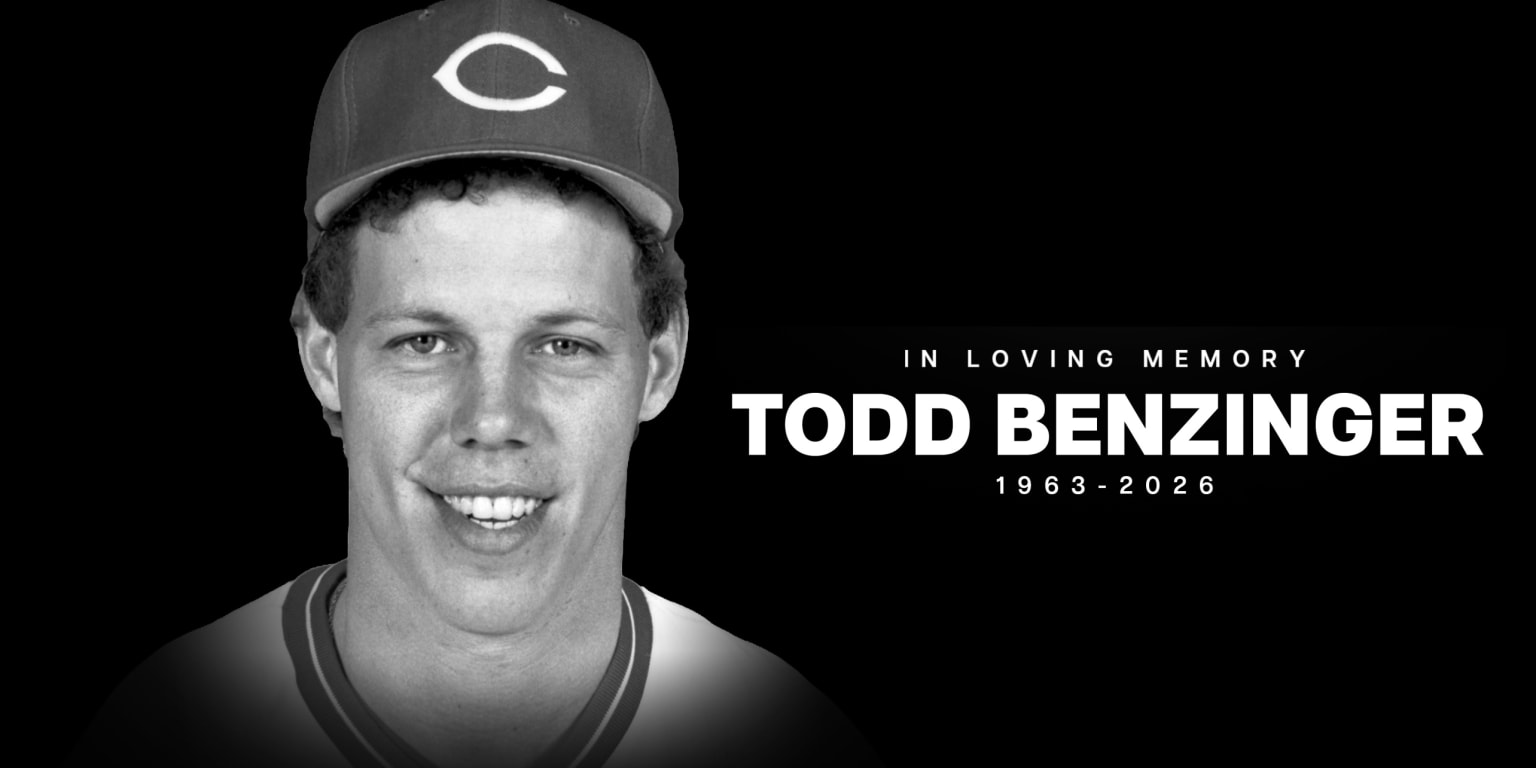
Todd Benzinger never needed a monument to be remembered in Cincinnati. He had something sturdier than bronze: the final out of the 1990 World Series, a routine-looking fly ball settling into his glove and bringing the Cincinnati Reds a championship that still glows in the city’s baseball memory. On Wednesday, news of his death at 63 turned that moment from a highlight into a memorial. For Reds fans, the play did not just end a series. It closed a chapter that had been building for nearly three decades, and Benzinger, a Greater Cincinnati native, became one of the lasting faces of it.
Baseball has a particular way of assigning eternity. Some players spend years carving out respectable careers and are then remembered for one hop, one swing, one catch. Benzinger’s career fits that strange arithmetic. He was not a superstar, not the kind of man who owned the box score every night. Yet on the night Cincinnati completed the sweep of the heavily favored Oakland Athletics in the 1990 Fall Classic, the ball found him, and history did what history always does: it simplified him into a single frozen image, then made it permanent.
The catch that outlived the season
The 1990 Reds were a team with teeth. They took down an Oakland club that was supposed to have the pedigree, the horsepower, the certainty. Instead, Cincinnati won in four straight, a reminder that baseball’s most elegant cruelty is its refusal to honor assumptions. Benzinger’s final catch sealed the series, and it gave the city one of those civic memories that can be recited almost by muscle memory.
That matters because championships are never just sports artifacts. In a baseball town, they become social glue. They get passed from father to daughter, from uncle to nephew, from one summer evening to the next. Benzinger, born in the region he helped deliver a title to, belonged to that story in the most intimate way possible: he was one of us, then he became the man who finished the job. Cincinnati loves that kind of origin tale, the local kid who steps into the center of the picture when the light is hottest.
Some players are remembered for their numbers; Todd Benzinger will be remembered for the moment the city exhaled.
Why a role player can mean more than a star
There is a temptation, especially in modern sports discourse, to flatten importance into star power. But championship teams are built on a wider, quieter architecture. Someone has to play the outfield. Someone has to track the last ball. Someone has to be there when the final scene arrives. Benzinger’s place in Reds lore is a reminder that the connective tissue of a great team can matter as much as the marquee names.
That is one reason his death lands with such force. Fans do not only grieve the famous. They grieve the familiar. Benzinger’s story was never merely about the outs he made or the innings he filled; it was about the way he represented a certain version of baseball identity in Cincinnati, where local roots still carry weight and where the memory of Riverfront Stadium remains tied to the sound of collective release.
The Reds of 1990 were a franchise with depth and nerve, and Benzinger’s final catch is inseparable from that identity. It is the kind of play that can seem ordinary to outsiders and profound to everyone who was there, watching the ball hang in the air as a city prepared to become a champion again.
Cincinnati’s memory, and the way it keeps score
I have always believed that sports cities are measured not only by banners but by the way they preserve the men who carried them there. In Cincinnati, the 1990 Reds occupy a sacred shelf. The years have thinned the roster of living memory, but not the feeling. When a figure like Benzinger dies, the loss is not abstract. It is personal in the way only civic memory can be.
There is also a broader lesson here, one baseball understands better than most sports: permanence is rarely distributed fairly. The stars receive the plaques, the endorsements, the endless retellings. But the players who complete the story can become the ones fans hold closest, because they are attached to the emotional climax rather than the arithmetic of a season. Benzinger’s final out was not just a statistic; it was an inheritance.
For younger fans, this is part of baseball’s old power. A game can turn a working player into a name repeated for decades, not because he was larger than life, but because he was present at the exact instant life changed. That is the kind of immortality only baseball seems to hand out so casually.
What Benzinger leaves behind
Todd Benzinger leaves behind more than a line in a record book or a clip that will keep resurfacing whenever the Reds anniversary machine starts to hum. He leaves behind proof that a franchise’s memory is built from more than its stars. It is built from the players who show up, do the work, and then, on one perfect night, become inseparable from joy.
Cincinnati will remember the final out. It will remember the glove, the ball, the pause before celebration spills everywhere. And it will remember the local kid who made that ending possible.
The city will keep telling it. It always does.
More from Straight From The Bench
Comments
Join the conversation — sign in to leave a comment.
Sign in to commentRelated Stories

Rangers Sebastian Walcott Outfield Drills Signal Big Position Shift
Sebastian Walcott is getting outfield work in the Arizona Fall League, and that tells you the Rangers are at least open-minded about his future. The kid’s bat still drives the bus, but the glove is no

Rico Duguay dies at 69: Rangers remember a fan favorite
Rico Duguay, the flowing-haired Rangers winger who became a Madison Square Garden favorite in the late 1970s, has died at 69. His career carried the charm and the ache of an era.

Brewers vs Rays World Series: ranking the top players
Milwaukee and Tampa Bay bring the kind of balance that wins in October. The stars are obvious, but the bench, the bullpen and the nerves will decide the rest.